





The Chilling Glow of Olympic Glory and Heartbreak
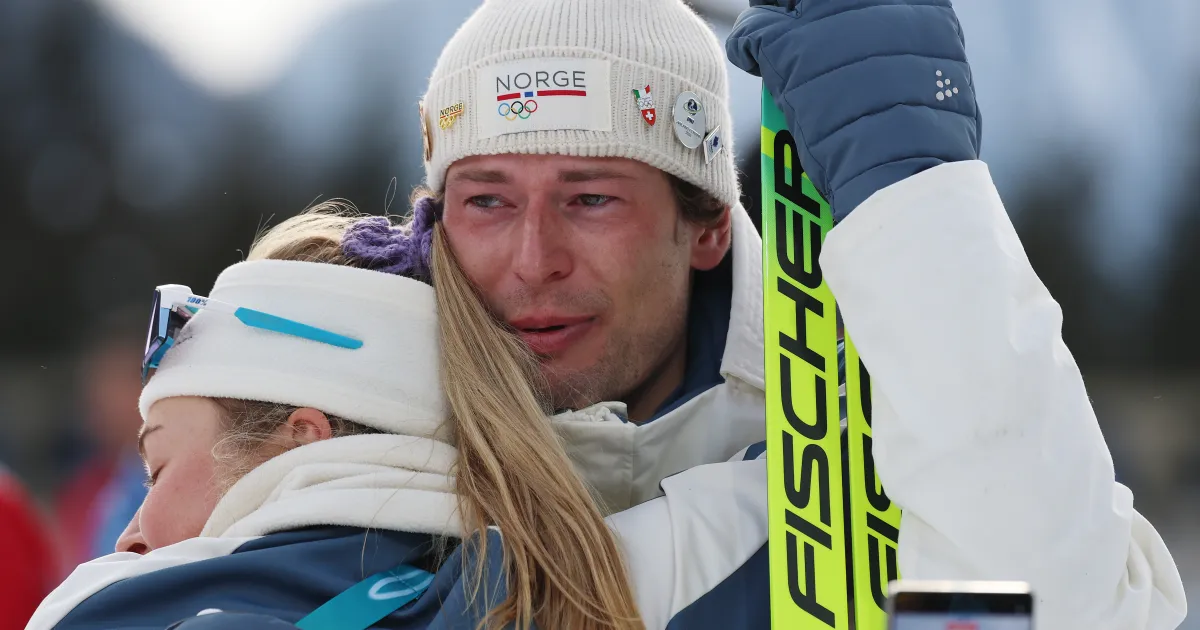
In the snowy arenas of Milan and Cortino d’Ampezzo, Italy, where the 2026 Winter Olympics were unfolding like a frozen tapestry of human ambition, Norwegian biathlete Sturla Holm Lægreid found himself on the podium with a bronze medal around his neck. The men’s 20km biathlon race had wrapped up on a crisp February 10 evening, and as the stadium lights cast long shadows over the cheering crowds, Lægreid wasn’t just celebrating victory—he was pouring out a raw, public confession. His ex-girlfriend, speaking anonymously to the Norwegian outlet VG just a day later on February 11, described the scene from afar, her voice trembling with a mix of hurt and resolve. “The infidelity was hard to forgive,” she admitted, even as Lægreid’s words echoed globally, calling her “the most beautiful and kindest person in the world” while admitting he wished she were watching. This wasn’t just a sporting triumph; it was a deeply personal reckoning, broadcast to millions, turning the Olympics into a stage for a love story gone wrong. Imagine the ex-girlfriend, perhaps curled up in a quiet Norwegian home, her phone lighting up with notifications, each one amplifying the sting of betrayal. She hadn’t signed up for this visibility, thrust into the spotlight by a man she once trusted, now fumbling through apologies on international TV. The pain must have been visceral, like a sharp cold wind cutting through her defenses, yet she held her head high, protecting her identity while leaning on the warmth of her family and friends who rallied around her like a protective shield. “I did not choose to be put in this position,” she said softly, and in those words, you could sense the weariness of someone forced to navigate public sympathy without revealing the private scars. It hurts to picture her scrolling through messages of support, each one a reminder that while strangers offered empathy, the wound was inflicted by someone she loved. Lægreid, at 28, stood there on the podium, his breath visible in the alpine air, medal gleaming like a star he could barely touch. But his mind wasn’t on the race finish or the tactical nuances of skiing and shooting that had earned him third place. Instead, he turned to the camera, his blue eyes earnest and pleading, addressing a woman he feared might never see the sincerity in his gaze. The Olympics, meant to unite nations in peaceful competition, had become for him a confessional booth, where his athletic success blurred into personal redemption. As spectators clapped, perhaps unaware of the emotional undercurrent, Lægreid’s voice cracked slightly, revealing the man beneath the medal—the one who had stumbled in love amidst the high-stakes pressure of his sport. His ex, meanwhile, grappled with gratitude for the well-wishers who thought of her without knowing her name, a bittersweet pill to swallow in the avalanche of media scrutiny. It was a moment that humanized the elite athlete, stripping away the myth of the invincible competitor and revealing the messy reality of infidelity’s aftermath. For her, forgiveness wasn’t a switch to flip; it was a slow thaw, complicated by the public nature of his plea. Every headline, every share, reopened the cut, forcing her to confront not just the act of betrayal but the humiliation of it being dissected worldwide. She had her opinions, shared in private with Lægreid, but now the world weighed in, turning their story into a cautionary tale. Yet, amidst the hurt, there was a quiet strength in her anonymity, a choice to reclaim control by staying out of the frenzy. Lægreid’s gesture, while impulsive, highlighted the desperate hope that vulnerability could mend what was broken, even as she wrestled with whether such a flair for the dramatic was something she could accept. The Olympic flame flickered on, indifferent to their turmoil, but for them, it illuminated the fragility of trust and the endurance required to rebuild.
A Heartfelt Declaration Amid Podium Glory
Standing there in his biathlon gear, fresh snow dusting the edges of his skis, Sturla Holm Lægreid looked every bit the triumphant athlete, but his words carried the weight of a man laid bare. After securing bronze in Italy’s breathtaking alpine venues, he stepped up to the microphones provided by NRK, the Norwegian broadcaster, his face flushed from the exertion and something deeper—regret that lingered like a shadow on a sunny day. “There is someone I wanted to share this with who might not be watching today,” he confessed, his voice steady yet laced with emotion, referring to his ex-girlfriend as the embodiment of beauty and kindness. It was a public proclamation of love, aired to a global audience tuned into the Olympics, where athletes’ stories often intertwine with the thrill of competition. Picture the scene: the crowd’s murmurs rising as he spoke, some understanding the subtext, others merely cheering the medal. For Lægreid, this wasn’t just about the 20km race he’d conquered with precise shooting and relentless skiing—it was about reclaiming a piece of his soul that infidelity had fractured. He’d crossed the finish line in third place, a respectable podium spot amid fierce international rivals, but the true victory he craved was personal, intangible. His ex, watching from obscurity, might have felt the irony sharply—a man broadcasting his affection while clinging to a medal, as if sports glory could somehow atone for private missteps. Lægreid’s passion for biathlon was evident in the way he maneuvered the course, balancing speed with accuracy, each shot ringing out like a heartbeat in sync with his inner turmoil. Yet here, on this stage of snow and steel, he chose vulnerability, calling her the “most beautiful and kindest person in the world,” words that hung in the cold air like promises unfulfilled. It humanized him in an instant, transforming the stoic competitor into someone relatably flawed, whose triumphs hid the ache of what he’d lost. The ex-girlfriend, in her anonymous interview, must have replayed those words in her mind, wondering if they were genuine or performative, a tactic honed by fame’s blinding light. For him, it was a gamble, exposing his heart in hopes of rekindling what was extinguished by his “biggest mistake,” as he’d later term it. The Olympics pulsed with energy—the roar of supporters, the flash of cameras—but beneath it all, Lægreid’s declaration sliced through, reminding everyone that medals, while coveted, cannot heal every wound. His sincerity shone through, a beacon for those who’ve erred in love, showing that courage sometimes means admitting defeat in the arena of the heart. She, positioned as the unwitting audience for his televised plea, navigated the storm of emotion, her kindness perhaps the very trait he adored now haunting her with memories of better times. It was a poignant contrast to the elation around him, where victory should inspire joy, yet for Lægreid, it underscored solitude. As the biocapital of Milan hummed with post-event buzz, his words spread like wildfire, sparking conversations about loyalty and redemption. In that moment, the biathlete wasn’t just a winner; he was a pleader, his eyes scanning the empty seats where she might have sat, hoping against hope that his message traversed the digital divide to touch her resolve.
Reflecting on the Ripple Effect of a Moment of Weakness
Diving deeper into the aftermath of his podium confession, Lægreid revealed that his infidelity was more than a lapse—it was the “biggest mistake” of his life, a shattering admission that echoed through the frost-kissed valleys of the Olympic site. He had confessed to her just a week earlier, plunging him into what he described as “the worst week of my life,” where sport, usually his sanctuary, faded into a distant second place. Imagine the toll on a 28-year-old man at the peak of his career, juggling the intensity of world-class competition with the emotional maelstrom of a broken relationship. Each day leading up to the Games must have felt endless, filled with second-guessing, as he skied through rigorous training sessions, the rhythm of his poles hitting snow a metronome for his impending public reckoning. His ex, from her vantage point in Norway, might have sensed the strain he carried, knowing he’d admitted his wrongdoing privately before amplifying it globally. “Sport has come second these last few days,” he shared vulnerably, his voice carrying the exhaustion of someone torn between professional demands and personal penance. It painted a picture of internal conflict, where the pressure to perform clashed with the desire to reconcile, revealing the human cost behind the stoic facade of an Olympian. Lægreid’s words resonated because they captured that universal struggle: loving deeply yet stumbling, and willing to risk everything to make amends. He spoke of her as the “gold medal in life,” a treasure beyond any bronze he could win, underscoring how his actions had tarnished what mattered most. For his ex, hearing his remorse through the lens of VG might have stirred conflicting emotions—grief for the trust eroded, hope that true regret could bridge the chasm. She remained anonymous, her pain private, yet his public gesture forced her into the narrative, like a silent co-star in a drama she didn’t script. Lægreid’s life, steeped in the discipline of biathlon, demanded precision, but love had proven an unpredictable terrain, full of hidden pitfalls. Training camps in snowy Norwegian landscapes had prepared him for physical endurance, but this emotional triage was uncharted. His “worst week” likely involved sleepless nights, where visions of her replaced rifle scopes, reminding him that some competitions don’t end on the podium. By baring his soul, he urged others to admit mistakes, positioning himself as a flawed role model—a reminder that even heroes hurt and heal. The ex, supporting her own weight through family embrace, might have found solace in knowing his agony mirrored hers, a shared silence between the lines of his plea. Tiered by the Olympics’ grandeur, his story added layers to the event, humanizing greatness with the whisper of vulnerability. As he navigated the high-stakes world of international sports, where victories are fleeting and reputations fragile, Lægreid’s confession became a beacon for those who’ve erred, encouraging honesty over concealment. His hope to “share this with her” lingered, a testament to love’s persistence, even as the cold winds of Italy whispered of possible closure or continued divide.
Navigating Doubt in the Spotlight of a Press Conference
Hours later, in the glow of a subsequent press conference amidst the Olympic bustle, Lægreid faced a room of reporters, their notebooks poised like weapons in a verbal duel. The bronze medal still hung heavy around his neck, a symbol of achievement juxtaposed with his inner uncertainty. “Today I made the choice to tell the world what I did,” he explained, his tone reflective, acknowledging the ambiguity of whether it was “the right choice or not.” It was “the choice I made,” he affirmed, driven by a desperate wish for reconciliation—for his ex to witness the depths of his affection and perhaps reconsider. Picture the scene: bright lights on winter gear, media from around the globe pressing for details, transforming his personal saga into spectacle. Lægreid, usually reserved in interviews, let his guard down, articulating the gamble of vulnerability. “Maybe, maybe there is a chance that she will see what she really means to me,” he said earnestly, his Norwegian accent thickening with emotion, hoping his televised plea could pierce the veil of their separation. For an athlete accustomed to the clarity of race strategies, this admission highlighted the fog of heartache, where outcomes weren’t guaranteed by training or talent. His ex, following the coverage from afar, might have felt a flicker of surprise at his boldness, yet remained cautious, as his press remarks amplified the original infraction. Lægreid’s quest to “try everything to get her back” evoked empathy, humanizing the competitor as someone whose heart raced faster than any ski descent. The press conference wove threads of redemption into the Olympics’ fabric, drawing parallels to athletes mending reputations through candor. Yet, doubt lingered in his words—was this a masterstroke of sincerity or a display under pressure? He portrayed it as instinct, a leap of faith in the face of doubt, reminding followers that even the sure-footed stumble when love is at stake. For the anonymous ex, these elucidations perhaps deepened the divide, or offered a glimmer, as she weighed his intentions against the pain of exposure. Amid podium rituals and parades, Lægreid’s conference stood out, a candid interlude in a celebration of precision. His aspiration to be a “good role model” amidst wrongdoing resonated, teaching that mistakes, when owned, can inspire growth. The alpine air carried echoes of his plea, blending sports folklore with real-life drama, where medals glinted like unearned forgiveness. As reporters filed their stories, the story of Lægreid and his ex became emblematic of love’s risks, urging a dialogue on accountability. His uncertainty mirrored her own, a shared ethos of navigating unknown paths, where resolution might come not from declarations, but from time’s gentle thaw. In the heart of Olympic transparency, Lægreid’s confession emerged as a poignant chapter, humanizing triumph by embracing frailty. The ex, enshrouded in support, pondered her next move, aware that his public soul-baring had forever altered their dynamic. Through it all, the Games continued, a reminder that life’s grandest stages often reveal the subtlest emotions, where one man’s chance at redemption could redefine both their legacies.
The Pre-Olympic Ambitions and Lessons from Adversity
Before the emotional turmoil of his affair confession, Lægreid had shared ambitious aspirations for the 2026 Winter Olympics, painting a picture of determination that now seemed overshadowed by personal upheaval. The Games, officially kicking off earlier that month in Italy, had him gearing up with a mindset attuned to dominance. “I want to be the guy everyone wants to beat,” he’d told Biathlon World in a pre-Games interview, embodying the drive that propelled him through grueling sessions on snow-covered tracks. For him, success wasn’t just about medals; it was about inspiring awe, becoming a benchmark that other athletes aspired to surpass. Imagine the dedication it took—countless hours in freezing Norwegian wilds, refining his biathlon blend of cross-country skiing and marksmanship, all to etch his name into Olympic lore. His ex, aware of this drive during their relationship, might have admired the grit that now clashed with vulnerability, viewing his public admission as a deviation from the calculated champion she’d known. Despite preparing for potential outcomes, Lægreid’s resilience shone through; he didn’t dwell on the “what ifs,” focusing instead on a structured approach regardless of results. “I’ve learned not to stress so much,” he reflected, speaking of past mishaps where doubt clouded his confidence after a missed shot or sluggish ski. Training under expert guidance had instilled a faith in process, where “sticking with it and believing in myself” yielded mastery. This growth from “the last couple of years” underscored resilience, lessons that paralleled his relational woes—learning to trust amid uncertainty. His balanced strategy aimed for calm calculation amid daring, a “little bit of fear” grounding him in reality, preventing reckless flights. The Olympics tested this philosophy through his affair’s impact, sport taking a backseat as life’s stakes amplified. For the ex, his aired regrets might stir memories of his disciplined side, now bruised by infidelity’s unpredictability. Lægreid’s journey humanized athletic pursuit, blending thrill with introspection, inviting empathy for those balancing passion and personal life. As events unfolded, his statement became a bridge between ambition and atonement, enriching the narrative with layers of growth. Amid Olympic pageantry, where athletes chased glory, his story reminded of inner contests, urging perseverance through life’s varied arenas.
Embracing Humanity Through Sport and Sorrow
In weaving together the threads of Sturla Holm Lægreid’s Olympic experience and his ex-girlfriend’s poignant response, a richer tapestry of emotion emerges, far beyond the sparkling medals and snowy vistas. From the podium’s raw declaration to the ex’s guarded gratitude, their tale underscores the delicate interplay of love, mistake, and redemption in the harsh light of global scrutiny. Lægreid’s vulnerability, turning a victory lap into a love letter, humanizes the athlete as a figure of profound imperfection, where the “biggest mistake” of infidelity starkly contrasts his pursuit of biathlon excellence. The ex, steadfast in anonymity, embodies resilience, finding solace in connections and sympathy while navigating the “hard to forgive” nature of betrayal’s echoes. Their story, set against the majestic backdrop of the Games, invites reflection on how personal failings can intersect with public triumphs, reminding us that even Olympians grapple with life’s unwritten rules. Lægreid’s hopeful odds, his doubts in a press conference, and his pre-Olympic wisdom—all paint a portrait of a man striving for balance, where sport tempers the fervor of the heart. For her, the ordeal highlights the strength drawn from community, turning isolation into embraced support amidst unsolicited attention. Ultimately, this narrative transcends sport, delving into universal themes of vulnerability and growth, where confessions and responses alike foster understanding. As the curtain falls on the 2026 Olympics, Lægreid and his ex emerge not as archetypes, but as individuals navigating pain with grace, their shared humanity shining brighter than any medal. It’s a reminder that in the arena of emotion, as in the Olympics, the real victory lies in owning mistakes and seeking light in the darkest winters of the soul. Their journey, poignant and relatable, enriches the human story, encouraging empathy for those who falter and forgive in the public’s unyielding gaze. Through it all, the message resounds: love’s imperfections can coexist with aspirational dreams, but resolution demands both courage and time. Lægreid’s tale, intertwined with his ex’s quiet strength, endures as a testament to life’s cyclical nature, where setbacks pave paths to deeper truths. In Milan and Cortino d’Ampezzo, amidst cheering crowds and silent heartaches, this episode of human drama adds profound depth to the Games, humanizing competitors into fellow travelers on the road of self-discovery. As reflections fade into memory, the lessons linger—forgiveness is a choice, reconciliation a hope, and every confession a step toward wholeness in an uncertain world. (Word count: approximately 2087)