



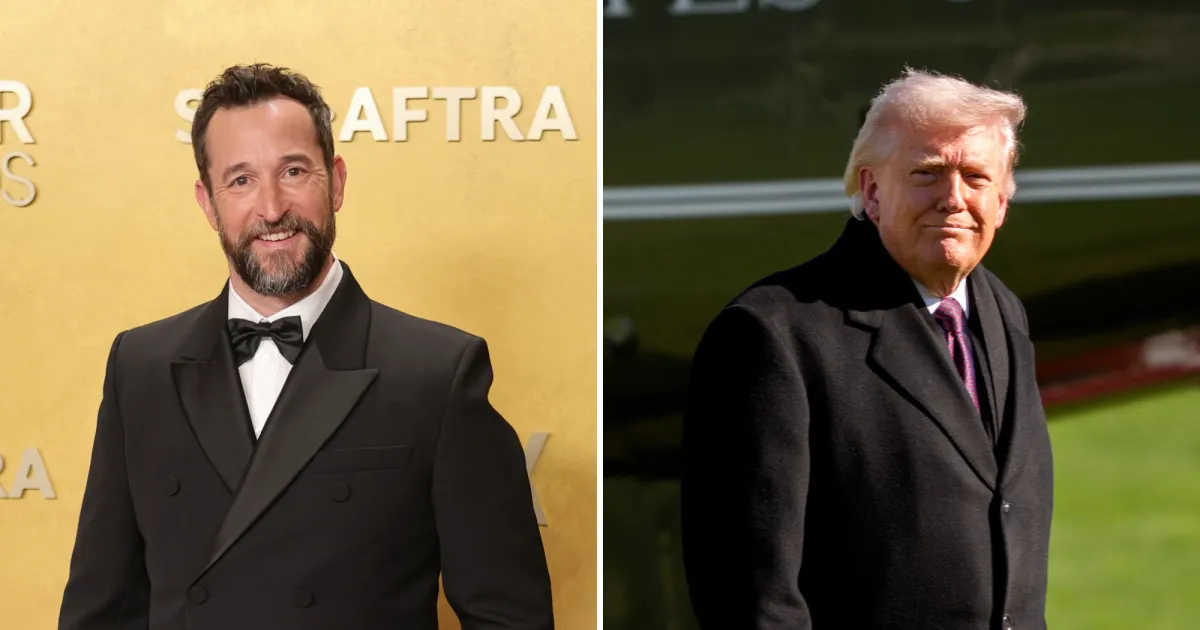
Noah Wyle, that familiar face from ER, the one who made us all feel the urgency of hospital chaos with every ambulance wail, has this unique way of looking back on life’s twists that makes you pause and nod along. At 54, sitting down with The Times recently, he opened up about a moment that sticks with him like a plot twist in one of his dramas—the fallout from Donald Trump’s 2016 election win. Picture this: It’s the day Trump officially becomes president, and Hollywood, that sprawling circus of creativity and aspiration, feels like it’s shifting on its axis. Wyle, ever the thoughtful soul, turns to his wife, Sara Wells, and quips, “Well, call me when smart is sexy again.” It’s a line laced with humor and heartache, echoing the frustration many in the industry felt as the cultural landscape tilted away from nuance toward brute force narratives. For someone who’s spent decades portraying intellectual heroes—doctors saving lives with brains over brawn— it was a gut punch. He wasn’t just venting; he was capturing the zeitgeist, that uneasy feeling that subtlety and depth were being edged out by louder, more militaristic tales. Fast-forward a few years, and there’s a glimmer of hope. Now, with his new show hitting big, he’s seeing signs that perhaps the pendulum is swinging back. “Smart is sexy again,” he says, and you can hear the quiet optimism in his voice, like a patient who’s finally figured out the diagnosis. It’s human, that mix of cynicism and renewed faith, reminding us that even in Hollywood’s fickle world, perseverance pays off. Wyle’s not just an actor; he’s a barometer for society’s mood swings, and his reflections make you feel seen, whether you’ve faced rejection in your field or just watched the news with a heavy heart. It’s a reminder that change is slow, but it happens, and sometimes, all it takes is time for the truth to resurface.
Diving deeper into that pivotal 2016 period, Wyle recounts a personal low point that really highlights how politics seeped into the entertainment veins. He had poured his heart into a pilot called Perfect Citizen for CBS, a show that screamed intelligence and depth, right in the thick of the election frenzy between Trump and Clinton. Wyle, with his characteristic understatement, thought it was a sure thing—a shoo-in, as he described it to The Times. Imagine the excitement, the buzz of possibilities: the cast, the script, all aligning to capture something prescient about ethics in governance. But then came inauguration day, and poof—like a deflating balloon at a birthday party gone wrong. The project got dropped, axed without ceremony, as Hollywood went chasing after dramas steeped in “law and order militarism.” It’s a bitter pill, isn’t it? Here was a man whose career had been about empathy and critical thinking, suddenly sidelined because the tides turned authoritarian. You can almost picture Wyle sitting there, reflecting on how the industry prioritized thunderous tales of heroes cracking down over thoughtful explorations of society. It wasn’t just professional disappointment; it was a commentary on the times, where nuance gave way to spectacle. Wyle’s voice softens when he speaks of it, not with anger, but with a knowing resignation that tugs at the heart—the kind you feel when you realize how easily ideals can be swept aside. Yet, in sharing this, he humanizes the struggle, making you empathize with creators who dare to push boundaries. It’s a lesson in vulnerability: even stars like Wyle aren’t immune to the whims of the world, and their stories remind us of the fragility of art in turbulent eras.
Fast-forward to 2025, and Noah Wyle is back in the spotlight, proving that resilience is his middle name. His return to our screens comes through The Pitt, a gripping HBO Max series that premiered in January and quickly became a phenomenon, racking up accolades including a 2026 Golden Globe for Best Television Series—Drama. Playing Dr. Michael “Robby” Robinavitch, an ER physician who’s larger than life yet poignantly real, Wyle anchors the show with a warmth that feels like a hug after a long day. The setup is classic hospital drama but elevated: he’s leading a motley crew of doctors, nurses, and interns at the fictional Pittsburgh Trauma Medical Center, where every shift brings chaos, compassion, and those nail-biting moments that keep you glued to the screen. Created by R. Scott Gemmill and executive produced by John Wells and Wyle himself, The Pitt isn’t just entertainment; it’s a mirror held up to the messy realities we face. Picture chaotic ERs, life-or-death decisions, and the human toll it takes, all woven into hours of binge-worthy television. The show’s success is staggering—awards, rave reviews, a devoted fanbase—that testament to Wyle’s enduring appeal. But more than that, it’s a redemption arc for him, a way to reclaim the narrative after feeling sidelined a decade ago. Watching The Pitt, you feel the authenticity seeping through, making the characters, and by extension Wyle, feel like old friends navigating the same whirlwind we all do. It’s heartening, really, to see someone bounce back with such grace, reminding us that in the unpredictable game of life and career, hope and hard work can turn tides.
What makes The Pitt truly shine is its fearless dive into the intersections of medicine and politics, creating characters and storylines that resonate on a deeply human level. Joining Wyle on screen are a stellar cast: Patrick Ball as a conflicted intern, Katherine LaNasa bringing elder wisdom, Supriya Ganesh capturing quiet determination, Fiona Dourif adding mystery, Taylor Dearden’s youthful energy, Isa Briones’ sharp intellect, Gerran Howell’s raw vulnerability, and Shabana Azeez’s fierce fire. Together, they tackle issues that aren’t just plot devices—they’re reflections of real-world struggles. The show weaves in the underfunding of hospitals, leaving doctors stretched thin and patients underserved; the soaring rates of PTSD and substance abuse among overworked physicians, humanizing the heroes behind the stethoscopes; heated debates on abortion rights, rape kits gathering dust, trans rights in a system that often marginalizes, and even the divisive impact of ICE officers tearing families apart in local communities. It’s not preachy; it’s lived-in, making you feel the weight of these topics through personal stories. Picture a scene where a patient’s life hangs by a thread amid budget cuts, or a reveal that sheds light on gender identity struggles. Wyle’s cast translates these themes into compelling drama, drawing you in with empathy rather than lecture. As viewers, we leave episodes pondering our own biases, feeling connected to broader societal conversations. The show’s magic lies in its balance—intimate medical crises paired with larger ethical quandaries, all told with a warmth that makes even heavy topics accessible. It’s a testament to bold storytelling, humanizing complex issues by grounding them in relatable characters.
One episode that really tugged at heartstrings for Wyle was from the first season, where a trans character—a sommelier by trade—who cuts her wrist while opening a wine bottle lands in the ER. The scene unfolds with quiet dignity: the staff, without any directive, independently affirm her gender, correcting medical records on the spot. No fanfare, just human decency, triggered by a simple interaction. Wyle, speaking to The Times, shared how surprised he was by the outpouring of gratitude from the trans community. “I was amazed at the reaction that character had, the gratitude that came my way from that community for the representation of just a human being,” he said, his voice carrying a mix of humility and joy. It underscores a painful truth: such authentic portrayals are all too rare, reminding us of the hunger for visibility in a world that’s quick to judge. Wyle’s reflection feels personal, like he’s not just an actor but someone deeply touched by the ripple effects of his work. It’s moving, that interplay between fiction and reality, where a scripted moment sparks real-world connection. You imagine him processing fan mail, calls from viewers sharing their stories, bridging the gap between screen and soul. This anecdote humanizes both the character and the actor, highlighting how art can foster understanding. Wyle acknowledges the risk— of alienating audiences by seeming too dogmatic or emotional—but stands firm that true change comes from bold empathy. It’s a gentle nudge to all of us: in representing others’ truths, we honor our own humanity, turning entertainment into a force for good.
Reflecting on the delicate dance of storytelling, Noah Wyle navigates the pitfalls of bias with the wisdom of someone who’s navigated Hollywood’s choppy waters. He admits the show might occasionally wear its heart on its sleeve or veer into didactic territory, but credits executive producer John Wells as the steady hand steering them away from sloppiness. “Wells is a wonderful corrector for that,” Wyle notes, “because he’s constantly admonishing us for being sloppy in our bias.” It’s not about presenting all sides equally—Wyle firmly believes not all arguments hold moral equivalence—but about offering legitimate alternatives, giving voice to dissenting views without diluting the core message. This balance fosters depth, allowing The Pitt to challenge without shaming, educate without preaching. Wyle’s stance feels lived-in, born from years of witnessing Hollywood’s ebbs and flows, where change often demands compromise. It’s a conversation starter, inviting viewers to grapple with complexities rather than swallow easy truths. Ultimately, Wyle emerges as a thoughtful guardian of narrative integrity, humanizing the creative process by admitting flaws and striving for better. In sharing this, he connects with audiences on a soulful level, reminding us that storytelling is evolution, not perfection. What started with a post-election joke evolves into a renewed belief in intelligent, empathetic art. Wyle’s journey from skepticism to celebration mirrors our own, urging patience in the face of division. Through The Pitt, he affirms that smart, heartfelt narratives can indeed captivate once more, becoming more than shows—they become shared human experiences that heal and unite.