


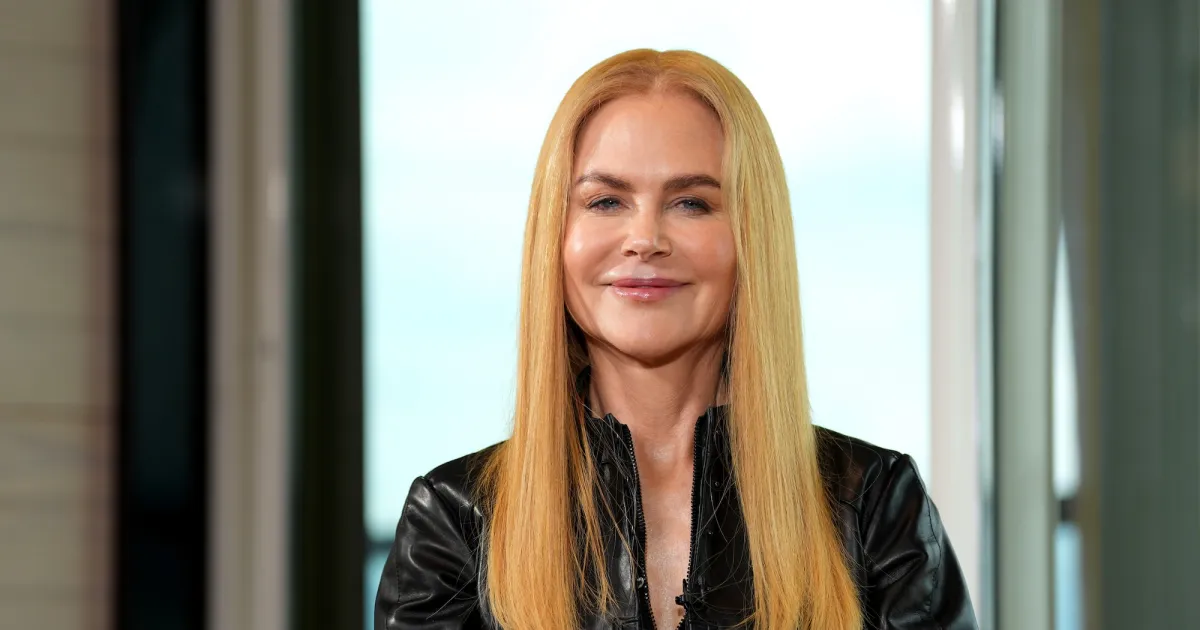
Nicole Kidman, the iconic actress known for her roles in films like The Hours and Lion, has always carried her heart on her sleeve, blending her public stardom with deeply personal revelations about family, loss, and the human condition. At 58, standing before an audience at the University of San Francisco’s War Memorial Gym on a crisp Saturday afternoon in April, she opened up in a way that felt both raw and inspirational. It was a moment where the spotlight illuminated not just a Hollywood legend, but a daughter grappling with the weight of unseen burdens. Kidman spoke candidly about her mother’s passing in September 2024, when Janelle Ann Kidman, a woman who had shaped her world, left this life at the age of 84. In that intimate sharing, the actress painted a picture of vulnerability that many could relate to—loneliness in the face of mortality, the relentless pull of family duties, and the longing for something more in those final moments. Kidman, with her sister, had juggled children, careers, and the demands of caregiving, only to realize the emotional chasm they couldn’t fully bridge. It was during this time that she stumbled upon the concept of a death doula, a role she initially dismissed as “a little weird” but one that resonated deeply as a beacon of impartial comfort.
Reflecting on the scene of her mother’s decline, Kidman described an isolation that cut to the core of her being. As family members, they could provide love and presence, but the act of dying brought a solitude that professional support might alleviate. “Between my sister and I, we have so many children and our careers and our work, and wanting to take care of her because my father wasn’t in the world anymore,” she shared, her voice likely carrying the tremor of memory. This wasn’t just about practical help; it was about solace, a steady hand in the storm of grief. Kidman’s words evoked the universal struggle of balancing life’s vivid chaos with the quiet surrender to death. She saw in this new path—a career she’s now exploring—an expansion of herself, a way to honor her mother’s legacy by learning to provide that very care she wished had been there. The audience, gathered in the gym, might have felt the weight of her story, seeing in Kidman not just an Oscar winner, but a fellow traveler through loss. Her vulnerability turned the talk into a humanizing exchange, reminding everyone that even those on screens grapple with the same fears and hopes: the need for connection as life ebbs away.
Diving deeper, the concept of an end-of-life doula, as defined by organizations like the International End-of-Life Doula Association, became the emotional cornerstone of Kidman’s narrative. An end-of-life doula isn’t just a caregiver; they’re advocates for self-determination, offering psychosocial, emotional, spiritual, and practical support to ensure dignity in the dying process. Kidman portrayed them as impartial figures, sitting by the bedside to validate feelings, facilitate tough conversations, and ease the loneliness that often defines those final days. Imagining such a person during her mother’s illness, she expressed a profound gratitude for the idea, seeing it as a gift she could one day bestow on others. This wasn’t theoretical for her; it was born from personal pain. Kidman’s account humanized the role, transforming it from a niche profession into a lifeline for families tethered by love but stretched thin. Drawing parallels to her own life, she spoke of how her mother’s passing had illuminated the importance of presence without familial obligation—someone who could just be there, a quiet companion in the shadow of mortality. The gym’s atmosphere might have thickened with empathy, as listeners pondered their own experiences with aging parents or the inevitability of saying goodbye.
Flashbacks to earlier losses laced Kidman’s story with even greater depth, painting a tapestry of grief that spanned years. Her father had passed in 2014, a decade before her mother’s death, leaving her with memories of compounded sorrow. Then, in 2024, as she attended the Venice Film Festival, the news arrived like a tidal wave. Through her friend and director Halina Reijn, who accepted an award on her behalf, Kidman’s heartache echoed across the red carpet. “Today I arrived in Venice to find out shortly after, that my beautiful, brave mother Janelle Ann Kidman has just passed,” the statement read, a collision of life and art that felt heartbreakingly real. She continued, “I have to go to my family, but this award is for her… my heart is broken.” This public outpouring wasn’t just about fame; it was a testament to how art imitates life’s tragedies, and how even someone as composed as Kidman could feel the world fissure under the weight of loss. The festival’s glamour contrasted sharply with her internal turmoil, humanizing her as someone whose personas peel away to reveal a core of vulnerability. Recalling these moments, she bridged her personal realm with her public one, inviting the audience to empathize with the actress mourning not one, but two pillars of her world.
Two years before her mother’s passing, in a heartfelt sit-down on NPR’s “Fresh Air” podcast, Kidman had already hinted at the threads of care woven into her life. “We’re down here in Australia primarily to take care of my mother and to have her surrounded by her grandchildren,” she said, her voice embodying the quiet strength of a daughter’s devotion. The challenges of her mother’s health amid the raging Omicron variant added layers of poignancy, yet there were moments of joy, like sneaking her into a gallery after hours to view a Matisse exhibit—a soothing balm for a woman who had raised her in the world of arts. This anecdote painted Kidman as a woman balancing Hollywood highs with the mundane miracles of caregiving, trips to see masterpieces that transcended words. It humanized her mother too, from an abstract figure of loss to a vibrant soul who cherished beauty even in vulnerability. These stories sprinkled throughout Kidman’s reflections showed the warmth of family bonds, the laughter amid sorrow, and the small acts that sustain us against the tide of time.
In the months that followed, Kidman’s tributes kept her mother’s spirit alive, blending remembrance with forward motion. On what would have been her mother’s 85th birthday in March 2025, she posted on Instagram: “Missing Mumma and Papa so much on what would have been her birthday today,” alongside a cherished photo of her parents smiling together. Another post echoed, “Remembering my Mumma on her birthday. Always in my heart.” These digital gestures weren’t mere public displays; they were intimate whispers to a global audience, inviting shared grief and healing. Through them, Kidman’s journey to becoming a death doula felt like a natural extension—a way to honor those who shaped her by ensuring others don’t face the same solitude. As she embarks on this learning path, her story resonates as a powerful reminder of mortality’s grip and compassion’s limitless reach, transforming personal tragedy into a beacon for us all to navigate life’s most profound transitions with grace.