




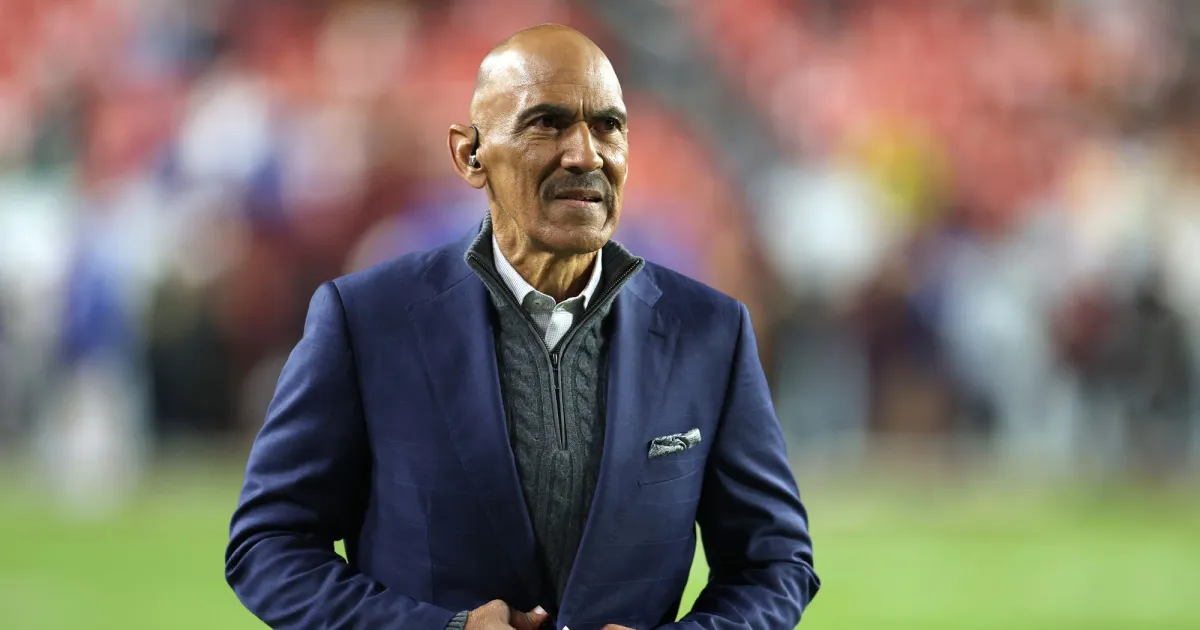
Tony Dungy’s announcement hit like a sudden interception in the fourth quarter, sending ripples through the world of football broadcasting and beyond. On that crisp Thursday afternoon, March 13, the 70-year-old icon shared his news via X, a platform that felt both intimate and far-reaching, just like the man himself. “I have been informed by NBC that I won’t be back with FNIA this fall,” he posted, his words calm and reflective, as if he’d already processed the sting of goodbye. For nearly two decades, Dungy had been a steady presence on “Football Night in America,” offering insightful analysis with the same measured wisdom he’d brought to the sidelines. Fans and colleagues alike had grown accustomed to his thoughtful demeanor, his quiet strength, and his ability to dissect plays with the precision of a surgeon. But now, the page was turning. It wasn’t bitter—Dungy made sure of that. He thanked his “NBC family” profusely, calling the last 17 years “so special.” Imagine the scenes: late-night studio debates under bright lights, the camaraderie of game days turned into broadcast prep days, the laughter shared over bad coffee and even worse jokes about rival teams. Dungy wasn’t just a broadcaster; he was part of the show’s heartbeat, aging alongside it, witnessing the evolution from old-school commentary to modern digital buzz. His exit sparked conversations about loyalty in a fast-paced industry, where contracts and ratings often overshadow relationships. Yet, Dungy, ever the gentleman, focused on gratitude. He reminisced about the countless hours invested, the families invited to events because community mattered to him, and the way broadcasting allowed him to stay connected to the game he loved. As a man of faith, he saw this as another chapter, one directed by a higher coach. His post ended on a note of elegance, not lamentation—proof that Tony Dungy, even at 70, remained unflappable, a role model for handling life’s curveballs with grace.
Delving deeper into his reflections, Dungy highlighted a friendship that had blossomed amidst the chaos of airtime and deadlines. Rodney Harrison, the outspoken linebacker-turned-analyst, had become more than a co-worker; he was a “tremendous friend.” Picture the two men—Dungy, the strategist with the warm smile and Harrison, the passionate firecracker—sparring on air yet supporting each other off it. Their chemistry was magnetic, drawing viewers in with Harrison’s energy and Dungy’s anchoring steadiness. Over the years, they’d shared stories from the field: Harrison’s hits, Dungy’s victories, the kind of tales that build unbreakable bonds. Dungy spoke of lasting memories, like impromptu dinners after tapings or road trips to away games, where they discussed everything from playbook adjustments to life lessons. It wasn’t all football, though; Harrison had seen Dungy navigate personal losses, like the tragic passing of his son, and the depth of their camaraderie extended to family events and charitable work. Dungy’s gratitude toward Rodney was heartfelt, a beacon in his announcement that underscored the human side of broadcasting. Without that connection, the role might have felt lonelier, but together, they’d created magic. Fans often wondered if Dungy’s polite persona clashed with Harrison’s boldness, but that tension was their secret sauce—complementary forces that made “Football Night in America” watchable. As Dungy looked back, he must have felt a pang for those moments, but also pride in the friendships forged. His statement wasn’t just about leaving a job; it was about celebrating the people who made it meaningful, a reminder that in entertainment, authentic relationships trump everything.
Zooming out to his illustrious career, Tony Dungy’s journey in football reads like an American story of perseverance and triumph, laced with humility. It started on the field as a player for the Pittsburgh Steelers in the late 1970s, where he won Super Bowl XIII in 1978, grabbing that Vince Lombardi Trophy with giddy rookie energy. Back then, he was just a young man dreaming big, learning from legends like Terry Bradshaw and Jack Lambert. But his heart leaned toward coaching, and in 1996, he took the helm of the Tampa Bay Buccaneers. For six grueling seasons, he built a program from the ground up—instilling discipline, teaching values like teamwork and integrity that went beyond football. The team improved, but frustrations mounted; Dungy faced skepticism, even from within his own organization, for prioritizing character over quick wins. Yet, his resilience paid off when he moved to the Indianapolis Colts in 2002. There, with stars like Peyton Manning and Marvin Harrison, he orchestrated the Colts’ rise, culminating in Super Bowl XLI victory in 2007—a historic moment as the first African American coach to win the big game. Dungy’s leadership style was revolutionary: he emphasized faith, fitness, and fundamentals, creating a culture of respect. Off the field, he was the devoted family man, balancing coaching demands with raising a family and upholding his Christian principles. His 2016 induction into the Pro Football Hall of Fame as a coach was a crowning achievement, honoring not just wins, but character. Reflecting on this, Dungy saw his broadcasting years as an extension of that legacy, using his platform to mentor young analysts and promote positive change. At 70, he embodied the full circle of football: from player to legendary coach to sage commentator, always with a focus on what matters most—people and purpose.
In the midst of his announcement, Dungy’s deep-rooted faith shone through as his guiding light, proving once again why he’s admired far beyond sports circles. “God has always directed me in these moments,” he wrote, a sentiment that wasn’t just rhetoric for him but a lived philosophy. For Dungy, football was never just about touchdowns; it was about divine purpose. As a devout Christian, he’d often spoken about prayers before games, scripture study sessions with players, and how Covenant Living parental curriculum shaped his approach. Now, facing this transition, he leaned on Romans 8:28: “God works all things for His good for those who love the Lord.” This verse was more than comfort; it was conviction. Dungy probably reflected on past pivots—like leaving coaching in 2008 to pursue other callings—that led to unexpected blessings. His faith community at All Pro Dad, where he mentors fathers, and the myriad outreach programs he supports, reminded him that life’s doors closing often mean new doors opening. He pictured himself at church services, speaking to youth groups, or deepening ties in his community, perhaps coaching in the lives of young people far removed from football stadiums. This wasn’t blind optimism; it was seasoned trust from decades of witnessing “all things” work together. His wife Lauren and children must have been a pillar, sharing prayers and encouragement. Dungy’s human side emerged here: not infallible, but faithful, showing vulnerability in uncertainty about “the next step—whether in football, broadcasting, or church and community outreach.” He couldn’t wait to see God’s plans unfold, a stance that inspired followers worldwide, turning a job loss into a spiritual narrative of hope and renewal.
The backdrop of Dungy’s departure was NBC’s strategic shift, reported in The Athletic just weeks earlier, to revamp “Football Night in America” by taking it fully on the road—a bold move to embrace mobility and freshness. For Dungy, this meant stepping aside from a show filmed partly in-studio, to one chasing the action from city to city, amid the chaos of crowds and hotel suites. The network aimed to amp up energy, lure younger audiences with on-location flair, and compete in a crowded NFL landscape. But for a veteran like Dungy, who’d anchored the desk with reliability for 17 years, it was a departure from the comfort of controlled environments. Reflecting on it, he might have thought of the days when studio discussions felt intimate, allowing for deeper dives into player strategies. Now, the road meant unpredictability: unpredictable weather, travel fatigue, and the thrill of real-time vibes, perhaps sacrificing some analytical depth for spectacle. Dungy, ever adaptable, expressed no resentment—just acceptance, understanding the industry’s need to evolve. His gratitude overshadowed any disappointment, a testament to his character. Fans speculated about politics in the media world, where age and style sometimes influence decisions, but Dungy steered clear of bitterness. Instead, he focused on the positives: the new opportunities for younger voices, and how change propels growth. This revamp could redefine the show, but Dungy’s legacy remained intact— he’d paved the way for thoughtful broadcasting, influencing how football is dissected today. As he pondered his future, the uncertainty was softened by his faith, reminding him and others that endings are just setups for new beginnings.
Finally, amid the buzz of Super Bowl week just prior, Dungy found himself at the center of a mini-controversy that highlighted his unwavering principles, tying neatly into his current crossroads. During a pregame segment, he was pressed about his Hall of Fame votes for the Class of 2026, particularly whether he’d supported Bill Belichick, his former rival from coaches’ rivalries. Belichick, the six-time champion with the New England Patriots, fell short of the votes needed, sparking debates nationwide. Dungy, bound by the secrecy oath of the Hall of Fame committee, refused to comment: “I’m not going to disclose that… I’m not going to put any of my teammates under the bus.” Imagine the scene—cameras rolling, fans shouting, yet Dungy stood firm, his voice steady, valuing the trust and confidentiality of the process over sensationalism. Speculation ran wild; some believed he hadn’t voted for Belichick, citing their philosophical clashes—Dungy’s values-driven style versus Belichick’s win-at-all-costs mentality. But Dungy, the principled leader, prioritized integrity, reminding viewers that debates mattered, but so did respect. This incident showcased his character: loyal to the code, protective of peers, uny Princes swayed by public pressure. In his announcement months later, it felt like a echo—holding firm amid change, guided by faith and ethics. As he bid goodbye to NBC, Dungy embodied resilience, a man ready for whatever God had next, whether reviving his faith ministries or mentoring in new arenas. His story wasn’t just about football; it was about living out truths, one challenge at a time.