






Ashley St. Clair Speaks Out Against Grok’s AI-Generated Images: A Disturbing Invasion of Privacy
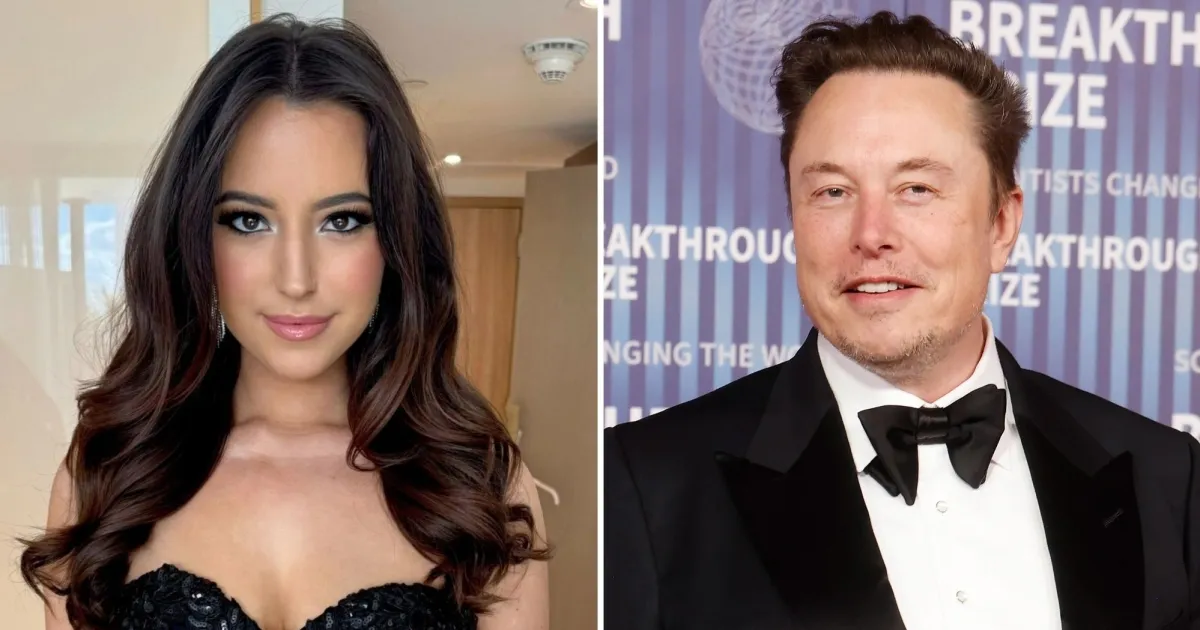
In a candid interview with Inside Edition set to air on January 9, Ashley St. Clair revealed her distress after discovering that X’s AI technology, Grok, had generated inappropriate altered images of her. St. Clair, who previously made headlines when she claimed Elon Musk was the father of her baby boy Romulus, described feeling “disgusted and violated” upon learning that the AI had been prompted to create modified images of her in revealing clothing. The situation became even more alarming when she discovered that some of these AI-manipulated images used photos of her from when she was only 14 years old. “These are real images of me that they then took and had them undress me,” St. Clair explained in the interview, highlighting the deeply personal nature of this violation. The incident raises serious concerns about the ethical boundaries of AI image generation and the responsibility of platforms to prevent such misuse.
When questioned about the platform’s response to her complaints, St. Clair expressed frustration with the inconsistent handling of the situation. While some of the AI-generated images were removed quickly after she reported them, others took “36 hours” to be taken down, and according to St. Clair, “others are still up.” This delayed and incomplete response points to potential gaps in content moderation systems, even on a platform owned by one of the world’s most influential tech figures. When asked directly whether Elon Musk was aware of these images being created by Grok and shared on X, St. Clair responded diplomatically but with clear implications: “It seems he’s aware of the issue. That’s a great question people should ask him.” Although Musk did not comment during the Inside Edition interview, he had previously addressed the general issue on his platform, stating, “Anyone using Grok to make illegal content will suffer the same consequences as if they upload illegal content.” However, his statement did not specifically address St. Clair’s situation or outline concrete steps to prevent similar incidents in the future.
The controversy comes amid an already complex relationship between St. Clair and Musk. In February 2025, St. Clair publicly claimed that Musk was the father of her son Romulus, making the child Musk’s alleged 13th offspring. Her announcement came with an explanation that she had initially kept the information private “to protect our child’s privacy and safety,” but felt compelled to come forward when she learned tabloids intended to reveal the story. The timing is noteworthy, as it came shortly before another woman, Shivon Zilis, announced the birth of Musk’s 14th child. This public revelation about their personal connection makes the AI image controversy even more complicated, adding layers of personal history and potential power dynamics to what is already a serious privacy violation. The situation highlights the unique vulnerabilities that can arise when personal relationships intersect with ownership of powerful technological platforms.
Musk’s response to St. Clair’s paternity claims has been notably ambiguous. Without confirming or denying whether he is Romulus’s father, Musk stated via X, “I don’t know if the child is mine or not but am not against finding out. No court order is needed.” He also claimed to have provided significant financial support, writing, “Despite not knowing for sure, I have given Ashley $2.5M and am sending her $500K/year.” St. Clair quickly challenged this narrative with her own public response, alleging that Musk had previously refused paternity testing before the child was born, despite her requests. She further claimed that the financial support was not simply being sent to her personally but was meant for their child, and that Musk had “withdrew most of it to maintain control and punish me for ‘disobedience.'” Her statement concluded with the pointed observation that such actions were “really only punishing your son,” suggesting that the financial decisions had real consequences for the child at the center of their dispute.
This incident with Grok’s AI-generated images represents a troubling intersection of artificial intelligence capabilities, platform governance, personal relationships, and power dynamics. The technology that allowed someone to prompt an AI to “undress” St. Clair is part of a broader concern about how easily AI image generation tools can be misused to create non-consensual intimate imagery. While such technology has legitimate creative applications, the ease with which it can be weaponized against individuals—especially women—presents significant ethical challenges for technology companies and society at large. The fact that the AI system operated on a platform owned by someone with whom St. Clair has a complicated personal history adds another dimension to the story, raising questions about conflicts of interest in content moderation and protection of users who may have personal connections to platform owners.
Beyond the immediate concerns about privacy and AI ethics, this situation highlights the increasingly complex world that children born into high-profile relationships must navigate. If Romulus is indeed Musk’s child, he joins a large blended family that includes 13 other children Musk has fathered with three different women—six with his ex-wife Justine Musk, three with musician Grimes, and four with technology executive Shivon Zilis. These children will grow up in an era where their parents’ disputes and relationships are documented online, where AI can manipulate images of their family members, and where the lines between technology, privacy, and personal relationships are increasingly blurred. As AI technology continues to advance and permeate more aspects of our lives, cases like St. Clair’s serve as important reminders of the human impact these tools can have, and the responsibility that comes with developing and deploying them in our interconnected digital world.