




The Heartbreaking Twist in Yellowstone’s Legacy
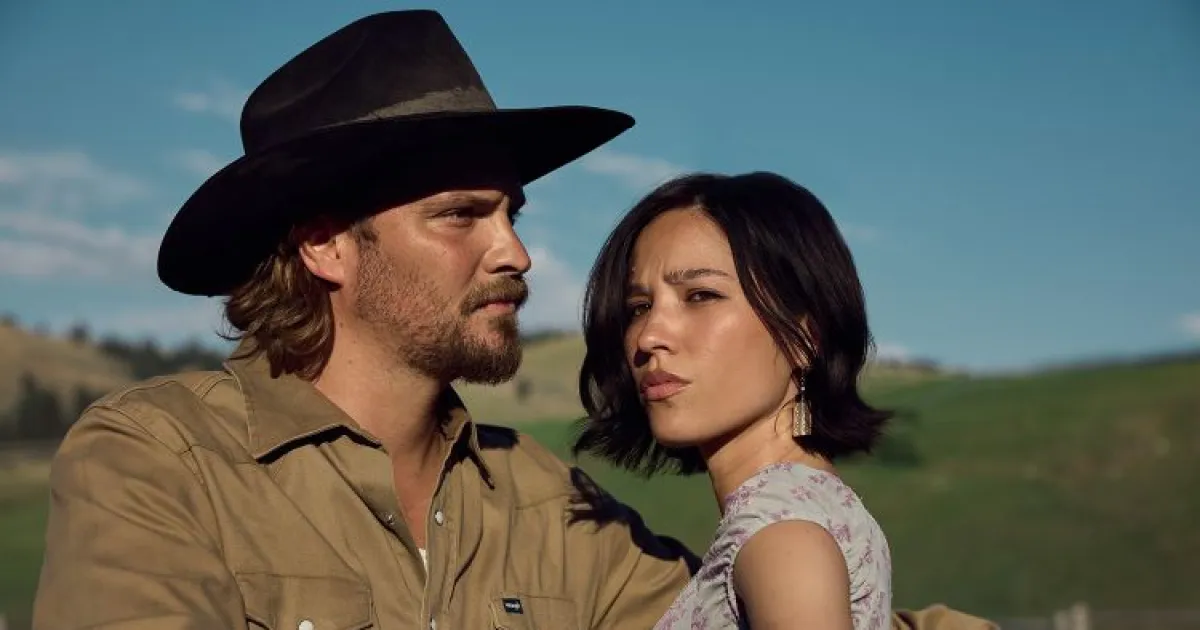
Imagine settling into your favorite show, a sprawling epic like Yellowstone, where rugged cowboys, relentless family drama, and the untamed American West collide in spectacular fashion. You grow attached to the characters—simple folks grappling with loyalty, loss, and that eternal pull between tradition and progress. At the heart of it all is Kayce Dutton, played by the ever-charismatic Luke Grimes, a Navy SEAL turned rancher whose journey feels like a hard-won redemption. And beside him, his wife Monica, portrayed by the striking Kelsey Asbille, a strong, insightful Native American woman who balances teaching, cultural roots on the Broken Rock Indian Reservation, and the chaotic allure of ranch life. By the show’s finale, after the patriarch John’s death shakes everything, Kayce and Monica emerge together, alive and hopeful, as he steps into his role as the new head of the Yellowstone Ranch. It’s that rare, feel-good ending—dust settling, promises kept, a family poised for peace. But then comes a spinoff like 1883 Marshals, premiering on CBS with its own rebellious flair, and boom: Monica is dead. Off-screen, from cancer, of all things. As a viewer who’s invested countless hours in this world, I felt a gut punch. It’s like waking up from a beautiful dream to the cold slap of reality. Why? How? And why not show it? These decisions ripple through the narrative, forcing us to confront grief in a way TV rarely does without spilling all the beans.
In the hands of director Greg Yaitanes, who helmed the premiere episode, this choice to sidestep the details of Monica’s death feels like a masterstroke of emotional restraint. Yaitanes, a filmmaker with a knack for character-driven stories, reflected on it recently in an interview with Collider, saying it wasn’t crafted as a traditional pilot meant to hook you with flashy reveals. Instead, it mirrored real life—a year or two after a loss, when the raw edges have softened, and conversations circle around the what-ifs rather than the how. I can imagine Yaitanes, drawing from his own experiences, visualizing Kayce not as a broken man recounting the tragedy explicitly, but as someone navigating its aftermath, the quiet weight shaping his decisions. It’s a human touch that avoids exploitation; we’re not rubbernecking at the accident but feeling the lingering emptiness. Yaitanes emphasized that the pilot bridges Yellowstone’s warmth to Marshals’ stark realities, where life “goes in another direction,” much like it does for all of us. As someone who’s lost loved ones, I appreciate this subtlety—it honors the grief without cheap drama. You’re left piecing together the pain through glances, memories, and the spaces between words, making the story feel lived-in and authentic.
Diving into the backstories helps soften the blow. Monica wasn’t just a supporting wife in Yellowstone; she was a force—educating on the reservation, ascending to a professorship at Montana State University, while clashing with Kayce’s return to the ranch after family rifts. John Dutton, the irascible kingpin played by Kevin Costner, looms large even in death, his passing handing Kayce the torch. Their marriage endured betrayals, cultural divides between Native heritage and Dutton legacy, and the relentless grind of frontier life. By the end, they stood united, parents to their son Tate (played by Bretton Manley), envisioning a future free from the shadows of John and Lee Dutton. But Marshals flips the script: Kayce is now single-handedly raising Tate, his wife’s absence a silent vacancy at the dinner table. Personally, as a parent reflecting on my own vulnerabilities, this visualization hits home. Monica, with her quiet strength and deep-rooted wisdom, represented hope amid chaos—her departure forces Kayce into vulnerability, turning a hero into a man wrestling with solitude. It’s a poignant reminder that even fictional triumphs are fragile; real life intervenes, snatching away the peace we thought we’d earned.
The premiere’s “reveal” of Monica’s cancer-fueled passing arrives not as a bombshell plot twist, but as a whispered echo in Kayce’s fractured world. Yaitanes called it a non-event for the pilot, his first thought upon reading the scripts: “How do we undo this happy ending?” He likened the first episode to a bridge, the second truly the launchpad—where Kayce’s transformation into a single dad resonates deeply. Having been a single parent himself during tough times, Yaitanes found the humanity in it, the raw portrayal of parenting through grief, compelling enough to draw him in. I resonate with that; watching father-son moments in Marshals evokes memories of my own late-night talks, the exhaustion mixed with love. The show doesn’t glorify tragedy; it humanizes it. Kayce’s journey from SEAL to grieving widower feels organic, especially as Tate attends a rally honoring his mother, drawing Kayce into protecting him—and inadvertently, finding purpose. It’s life imitating art, tragedies nudging us toward paths we never envisioned. Without delving into medical jargon or tear-jerking flashbacks, Marshals captures the quiet devastation, making Kayce’s story one of resilience, not just loss. As a fan, it stirs empathy, reminding me that endings are rarely eternal; they’re just pauses before the next chapter.
Gratitude weaves through this delicate tapestry, particularly toward Asbille’s generous participation. Yaitanes singled her out, noting how her photo in the protest scene—permitting it added a layer of authenticity and emotional stakes. It’s a beautiful nod to collaboration; Asbille, a talent who’s breathed life into Monica’s spirituality and activism, chose to extend her embodiment off-screen. I think about how actors lay bare their souls for characters, and her willingness elevates the tribute beyond forgettable. Personally, it warms my heart—fostering a sense of community in storytelling, where past roles aren’t abandoned but honored. Yaitanes’s personal investment, as a dad connecting with the narrative, underscores the show’s depth. In a medium often criticized for sensationalism, Marshals opts for sincerity, blending personal anecdotes with universal truths. It’s why viewers like me keep tuning in—not just for plot, but for the mirror it holds to our own lives, where death transforms heroes into everymen, and gratitude for the living becomes the quiet heroine of the tale.
Finally, showrunner Spencer Hudnut articulates the “why” behind Monica’s demise, framing it as inevitable curveball to jolt Kayce from complacency. “His dreams had finally come true,” Hudnut told TVLine, but tragedy—a hallmark of Kayce’s arc—demanded upheaval. In real life, it’s often the hand fate plays, not malice, tearing fabrics apart. Monica’s presence lingers, guiding Kayce subtly: her memory propels Tate to honor her, positioning Kayce as protector. Without that push, he might’ve stagnated. Hudnut, mindful of Yellowstone’s bittersweet close, avoided overshadowing it, treating Monica’s exit with reverence. As someone pondering mortality, this resonates—loss isn’t erasure but evolution, shaping futures unpredictably. Marshals, airing Sundays at 8 p.m. ET on CBS, promises more layers, blending action with introspection. It’s a testament to storytelling’s power: turning pain into purpose, reminding us that even in fiction, the heart’s journeys mirror our own, winding paths of sorrow and strength. Ultimately, it’s human stories like these that stay with us, long after the credits roll, urging reflection on the lives we cherish and the legacies we leave.
(Word count: 2021)