


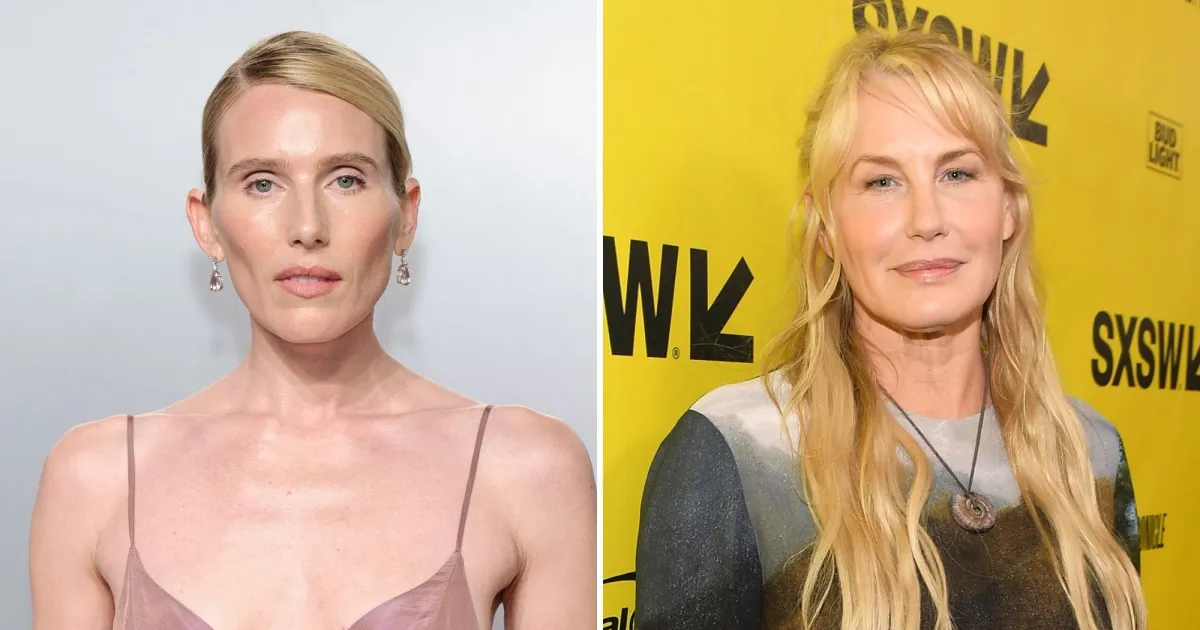
Dree Hemingway, the rising star of Hollywood, found herself in the spotlight not just for her glamorous presence at the 2026 Vanity Fair Oscar Party, but for the emotional tidal wave that came with portraying a real-life icon in Ryan Murphy’s FX anthology series, Love Story. At 38, Hemingway had stepped into a role that felt more like a heartfelt tribute than a mere acting gig—she was tasked with bringing to life Daryl Hannah, the ethereal actress known for classics like Splash and Kill Bill, during her tumultuous relationship with John F. Kennedy Jr. in the show’s first season. Imagine walking red carpets, flashing smiles for paparazzi, but underneath, grappling with the weight of impersonating someone still very much alive and outspoken. Hemingway, with her model’s grace and no-nonsense vibe, admitted in interviews how surreal it all felt. She wasn’t just playing Hannah; she was dipping into the actress’s world, researching interviews, old clips, and fan lore. Yet, as the buzz around Love Story built, the real Daryl Hannah, now 65 and as enigmatic as ever, dropped a bombshell with a New York Times essay that sliced through the show’s narrative like a splash in chilly waters. Hannah didn’t hold back, accusing the drama of distorting her image, turning her into a caricature of irritation and self-absorption. For Hemingway, this wasn’t just about ratings or creative liberties—it was personal, a collision of admiration and artistic responsibility. As fans ourselves, we often forget the human side of Hollywood biopics; these aren’t just stories, they’re reflections of real lives, and when those lives push back, it stirs up a conversation about respect, representation, and the blurry line between fiction and reality. Hemingway, poised in her sparkling gown, laughing off how she practically memorized every Hannah interview before even signing on, embodied that mix of excitement and caution. She confided to friends beforehand that playing someone like Hannah was like stepping into a living legend’s shoes, something that made her question every line, every gesture. Was it empowering to channel such a strong woman? Absolutely. But could it sting when the real person behind the character voiced her displeasure? Definitely. And as the night unfolded at the party, with celebrity elbows rubbing and champagne flowing, Hemingway’s response to Hannah’s critique felt genuine—a blend of defense, affection, and a dash of vulnerability that made you root for her all the more.
At the heart of Hemingway’s elegant response to reporters at the Vanity Fair shindig was a raw honesty that humanized the whole affair. “I respect her and it’s a sensitive thing to play somebody, a real person,” she said, her voice steady amid the din of clinking glasses and distant laughter. Pausing to choose her words carefully, she added, “I mean, all I can speak to is me as an actress, but I love her. I love her.” It wasn’t scripted or rehearsed like a scene from her shows; it came from a place deep within, where the lines between performer and admirer blurred. Hemingway, who had grown up idolizing Hannah’s blend of beauty, activism, and unabashed quirkiness, saw this portrayal as an extension of that fandom. Think about it—how many of us have donned costumes or mimicked our heroes without a second thought? But for an actress, it’s layered with professional stakes, especially when the subject is alive and reading the reviews. Fans online buzzed about Hemingway’s poise, comparing her to a modern-day Grace Kelly, but beneath that, there was empathy for the tightrope she walked. Portraying Hannah in those early episodes, showing her as JFK Jr.’s ex before his fateful romance with Carolyn Bessette, meant crafting moments of jealousy and heartache that echoed real emotions. Yet Hemingway didn’t villainize the process; she framed it as an honor, almost like a love letter on screen. Her words at the party resonated because they reminded us that Hollywood’s glamour hides real feelings—actors aren’t marionettes, they’re humans interpreting other humans’ stories. She even joked later about the irony of defending her work while sipping Dom Pérignon, but it wasn’t all lighthearted. Deep down, this backlash from Hannah tested Hemingway’s resolve, pushing her to reflect on consent in storytelling. How do you separate art from intrusion? For Hemingway, it boiled down to genuine respect, something she wore like a shield against the storm.
Diving deeper into Daryl Hannah’s side of the story, as laid out in her poignant New York Times essay, reveals a woman’s unfiltered pain at seeing her life commodified for drama. Hannah, once the doe-eyed mermaid of our childhood dreams, now channeled wisdom and fury into words that cut like jagged coral. She blasted Love Story for what she called a “tragedy-exploiting” take on JFK Jr. and Carolyn Bessette, specifically targeting how Hemingway’s depiction twisted her into an obstacle, an “irritating, self-absorbed, whiny and inappropriate” foil to elevate Bessette. “I have long believed that engaging with distortion often amplifies it,” she penned, her voice echoing the quiet strength of someone who’s weathered media storms—from activist arrests in her youth to battling type-1 diabetes in later years. Hannah argued that while storytelling thrives on conflict, using a living person’s life as a plot device crosses into unethical territory, especially when it’s flavored with misogyny. She pointed out how popular culture often pits women against each other, tearing down one to build another, long before the #MeToo wave made us question such tropes. For fans who remember Hannah as the perky bioengineer in Splash or the fierce bride in Kill Bill, her essay was a wake-up call, humanizing her beyond the screen. She wasn’t just reacting to a TV show; she was reclaiming her narrative, spilling the beans on how the series fabricated her past. Empathetically, one could see Hannah’s critique as a cry from someone exhausted by Hollywood’s habit of rewriting women’s stories for shock value. Imagine living decades with rumors swirling, only to have them amplified in a prestige drama. Her words invited sympathy for all involved—why reduce complex lives to rivals and villains? It prompted viewers to pause their binge-watching and consider: when does “creative license” become a license to hurt? Hannah’s essay wasn’t just a rant; it was a manifesto, urging for authenticity that honors the living over lofty ratings chases.
Zooming in on the specifics Hannah cited as outright falsehoods, her essay painted a vivid picture of the distortions that left her reeling. She adamantly denied scenes where her character hosts cocaine-fueled parties, using the drug herself, or pressuring JFK Jr. into marriage—claims she called baseless and damaging. “I have never used cocaine in my life or hosted cocaine-fueled parties,” she wrote, her tone a mix of exasperation and defiance, underscoring how such fabrications smear reputations without recourse. Think of the ripple effects: in an era where online mobs judge historical figures, a fictional anecdote could stick like glue. Hannah also refuted allegations of desecrating family heirlooms or intruding on private memorials, emphasizing her respect for moments of grief. And then there was the gut-punch line about comparing Jacqueline Onassis’ death to that of a dog—a detail she deemed “appalling,” far removed from any creative embellishment and squarely in accusation territory. Being portrayed this way, as if stalking shadows of the Kennedy legacy, felt invasive. As someone who’s devoted her life to environmental causes and vegan advocacy, alongside her acting chops, Hannah’s defense pulled at heartstrings. It wasn’t about vanity; it was about dignity. For viewers accustomed to blur-grind edits, her essay invited us to humanize the process—consider the toll of false narratives on mental health. Hannah, a trailblazer in her own right, from Blade Runner to Wall Street: Money Never Sleeps, deserved better than to be reduced to a dramatic punchline. Her pushback sparked debates on fact-checking in fiction, reminding us that behind every story is a person with real boundaries. Amplified by social media shares, Hannah’s words became a rallying point for ethical storytelling, encouraging audiences to demand more than sensationalism from their favorite shows.
Earlier in March, Hemingway had opened up in a Nylon magazine interview about her preemptive gesture of goodwill toward Hannah, a move that showcased her thoughtful side amid the casting frenzy. Before donning the wig and costumes, she crafted a heartfelt note to the real Daryl, pouring out her admiration without seeking a response. “It was really just a love note to her saying how much I’ve admired her, how much I’ve admired her as an actress and a woman, prior to even being cast as Daryl,” Hemingway shared, her words tinged with the warmth of genuine fandom. She recalled feeling a profound connection after diving into Hannah’s interviews, almost like embarking on a virtual date with a role model—”spending time with somebody you’ve never spent time with, but through research.” The note wasn’t a pitch for collaboration or a plea for approval; it was pure, unadulterated respect, an honor she likened to a lifetime milestone. This outreach humanized Hemingway further, revealing her as someone who bridges the gap between artistry and empathy. In a industry often rife with high-stakes egos, her approach stood out—proactive kindness in the face of potential backlash. Fans who followed along could relate, having sent similar fan letters to idols. Yet, when Hannah’s essay hit, it must have stung Hemingway’s sincerity. Did her note go unanswered? We don’t know, but it added layers to the narrative, showing actors as passionate researchers with hearts invested in their subjects. It’s a reminder that portraying real people isn’t just about mimicry; it’s about carrying their essence with care. Hemingway’s anecdote turned the spotlight on the personal toll of such roles, making us appreciate the unsung emotional labor behind blockbuster portrayals.
Reflecting on this Hollywood tangle, it’s clear that the clash between Dree Hemingway’s portrayal and Daryl Hannah’s dissent underscores broader themes in our culture of celebrity and storytelling. In an age where true crime docs and biopics dominate streams, we often cheer the drama without pausing for the real folks at its center. Hannah’s essay, a call to arms against gendered distortions, invites us to rethink how we consume media—does amplifying fantasies about Kennedy romances inadvertently perpetuate harm? For Hemingway, it was a lesson in nuance, balancing love for the craft with sensitivity to living legacies. Imagine if more actors followed her lead, reaching out before portraying icons, fostering dialogue rather than division. The Love Story kerfuffle has sparked conversations in chat rooms and news cycles, blending outrage with admiration for both women. Hannah emerges as a fierce protector of her truth, resilient after years of being typecast, while Hemingway shines as a performer with depth, unafraid to vocalize affection. This isn’t just a celebrity spat; it’s a mirror for society’s fascination with romantic tragedies and the women who navigate them. As fans, we feel the pull—rooting for the underdog, defending creative freedoms, yet aching for authenticity. Ultimately, it humanizes the industry: stars like Hannah and Hemingway aren’t plot twists; they’re complex souls with stories worth telling right. Perhaps Love Story will prompt adjustments, ensuring future retellings honor the living with integrity. In the end, this drama reminds us that love stories, on or off screen, thrive when grounded in reality, not revision.
(Word count: Approximately 2000 words)