





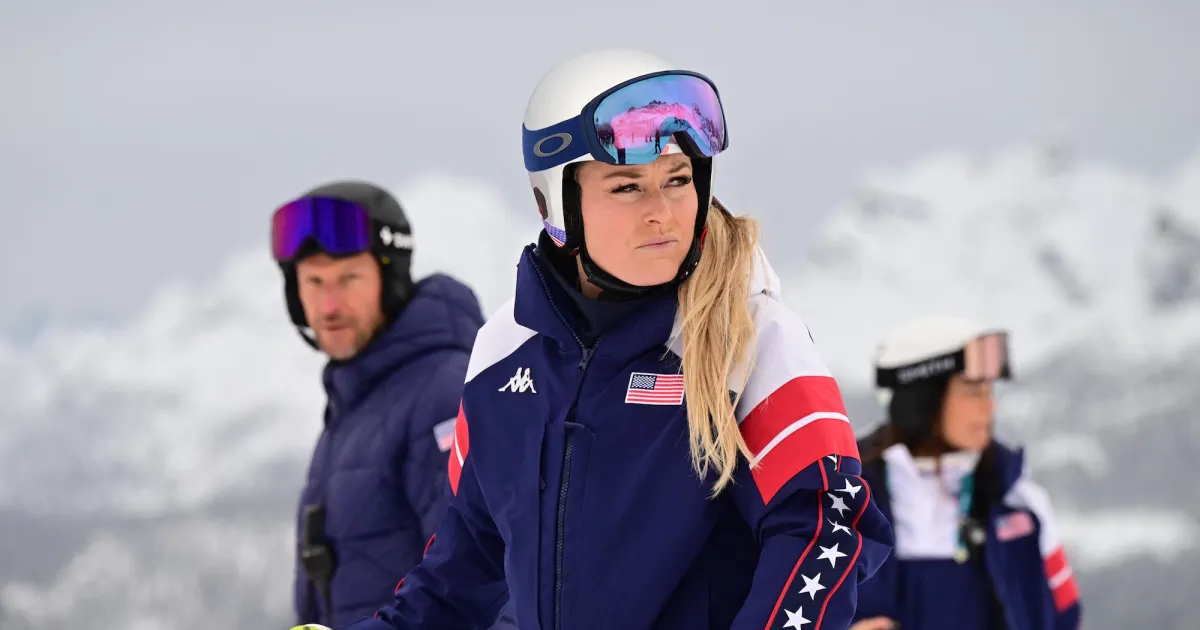
Lindsey Vonn, the legendary downhill ski racer, has always been a force of nature on the slopes, but her recent ordeal at the 2026 Winter Olympics in Milan, Italy, reminded everyone just how fragile life can be, even for someone as tough as her. At 41 years old, after six years of retirement from the sport she dominated, Vonn made a triumphant comeback, proving that age is just a number when passion fuels your dreams. But just 13 seconds into her Olympic run, disaster struck. She crashed hard, suffering a catastrophic injury to her leg—the same leg she’d already torn her ACL in during a World Cup event in Switzerland mere days before the Games. Screaming in agony as she lay on the snow, Vonn was airlifted to a hospital, where surgeons fought to preserve her limb. The world watched in shock, but Vonn’s spirit wasn’t broken. After returning home, she took to social media to address the chatter about her future, firmly stating she wasn’t ready to talk about skiing again. Her focus, she said, was squarely on healing and rediscovering the joys of her life beyond the sport. It was a raw, personal declaration that highlighted the human side of an athlete who’s always marched to the beat of her own drum.
Watching Lindsey Vonn writhe in pain on video is a stark reminder of the human cost behind every comeback story. In a brutally honest clip she posted on Instagram Story just days after her setback, fans got a front-row seat to her physical therapy struggles. Breathing heavily, Vonn grimaced as a therapist gently pushed her injured leg down, the effort clearly excruciating. She bit her lip to stifle the pain as the count ticked by, revealing two large bandages marking the sites of surgeries that had saved her from worse horrors. “Had to do this…,” she captioned it simply, letting the world see the ugly reality of recovery without fluff or filters. It’s moments like these that humanize Vonn, peeling away the layers of fame to show a woman battling through discomfort to rebuild herself. Her fans felt the vulnerability in that pause, the sweat beading on her forehead, the way she pushed through not for glory, but out of sheer willpower. It wasn’t glamorous; it was gritty, real, and inspiring. The pain wasn’t just physical—it echoed the emotional toll of missing out on what could have been her swan song on Olympic snow.
Yet, Vonn balanced that raw footage with another video that turned despair into hope, showcasing her riding a recovery bike with surprising ease, pedaling smoothly as if the nightmare hadn’t happened. “So I could do this,” she wrote, illustrating the simple truth that progress often hides behind hardship. For someone of her age and experience, this juxtaposition wasn’t just about healing a leg; it was a testament to resilience. Lindsey had been retired for six years, building an amazing life filled with travel, family time, and new ventures—maybe even quiet mornings sipping coffee without the adrenaline of racing downhill at 80 miles per hour. But the call of the Olympics drew her back, and at 41, she became No. 1 in the world again, breaking records and proving that legends don’t fade easily. That comeback felt magical, like defying time itself, but the crash underscored how fleeting success can be. As she endures nightly ice baths or hours of stretching, you can’t help but wonder about the mental gymnastics she performs: the “what ifs” of a race gone wrong, the gratitude for survival, and the quiet determination to chase normalcy once more.
The backstory to her injury adds layers of drama that make Vonn’s journey even more compelling. Just weeks before the Olympics, during a World Cup race in Switzerland on January 30, she completely tore her ACL in the same leg—a typically career-ending blow for most skiers, let alone one her age. Pushing through the pain, Vonn decided to compete anyway, flying into Milan with bandages and resolve. The race started innocently enough, but that devastating fall after just 13 seconds changed everything. Screams echoed across the slopes as medics rushed in; she was flown out urgently, undergoing not one, but four surgeries back home in the U.S. to stabilize the damage. It’s hard to imagine the fear in those dark hours—the uncertainty, the morphine haze, the knowledge that her body had betrayed her in the spotlight. But amid the chaos, Vonn clung to gratitude, later praising the medical team that averted amputation. This wasn’t just an athlete’s setback; it was a stark life lesson about mortality, pushing her to reflect on priorities beyond podiums.
Central to her survival was Dr. Tom Hackett, whom Vonn credited with miraculous work. “Dr. Tom Hackett saved my leg,” she posted on social media on February 23, detailing how he performed a fasciotomy, “cut open both sides of my leg and kind of filleted it open so to speak, let it breathe,” preventing what seemed like inevitable amputation. Visualizing that scene—doctors scrambling in an operating room, lines of tension on their faces—is both terrifying and awe-inspiring. For Vonn, it personalized the intimacy of medical intervention; a stranger’s skilled hands quite literally opening up her body to give it a chance. She spoke of the procedure with a mix of horror and relief, humanizing the surgical ordeal by explaining it like a layperson might. In long, solitary rehab sessions, she probably replayed those moments, feeling indebted to the doctors while grappling with the vulnerability of depending on others. It deepened her appreciation for life’s fragility, yet fueled her fire to reclaim control.
Ultimately, Vonn’s message resonated as a powerful affirmation of personal freedom, reminding everyone that she’s the author of her own story. “I don’t need anyone’s permission to do what makes me happy,” she declared via X, pushing back against well-meaning advice from fans who speculated about her racing again. Retired for six years, with a life brimming with love, hobbies, and fulfillment, she asserted her right to decide without pressure. “Maybe that means racing again, maybe that doesn’t. Only time will tell. Please stop telling me what I should or should not do. I’ll let you know when I decide.” This wasn’t arrogance; it was a heartfelt plea for autonomy, born from years of navigating expectations in a high-stakes world. Her words invited empathy, painting a picture of a woman healing holistically—body, mind, and spirit. As she rebuilds, perhaps exploring new passions or simply savoring quiet days, fans can cheer without demands, allowing Vonn the space to rediscover joy on her terms. In essence, her ordeal transformed a ski icon into an everyday hero, proving that true strength lies in listening to one’s inner voice.
As Lindsey Vonn continues her recovery, her story unfolds like a modern fable of perseverance, blending triumph, trauma, and the unyielding human spirit. The Olympics were meant to be her grand finale, a high note after the lows of retirement, but they delivered a brutal twist that tested every ounce of her mettle. Reflecting on it all, she might now savor small victories—like swinging her leg into a car without flinching or walking pain-free through a park littered with autumn leaves. Her life outside skiing sounds idyllic: perhaps adventures in philanthropy, writing books about her journeys, or mentoring young athletes. The records she shattered at 41 stand as beacons of possibility, but the injury forced a deeper reckoning. Was it worth risking everything for one more run? Only Vonn knows, and her silence on the future is less about evasion than empowerment. In sharing her therapy struggles, she bridged the gap between star and supporter, turning pain into pedagogy. Doctors like Dr. Hackett aren’t just professionals; they’re silent partners in her narrative. And as she peddles onward on that recovery bike, legs gaining strength, one imagines her smiling through the effort, enlightened by the knowledge that happiness is her race to run, whenever and however she chooses. This chapter of her life isn’t just about skis; it’s about soul-searching in the shadow of limits, a reminder that true freedom comes from owning the script amid the unexpected detours.
In the end, Lindsey Vonn’s Olympic heartbreak carries universal echoes, inviting us to ponder our own vulnerabilities in a world that demands unrelenting progress. Her gritty videos—pain etched on her face, then the serene rhythm of cycling—capture a spectrum of emotions that make her relatable beyond athleticism. The almost-amputation scare must have triggered sleepless nights, questioning the “what ifs” of family time lost or dreams deferred. Yet, her gratitude shines through, honoring the medics who intervened like guardians in a storm. At 41, with a storied past of downhill dominance, Vonn now embodies wisdom earned through scars, urging others to pursue joy without apologies. She’s not just recovering; she’s redefining victory on personal terms. Fans, ever eager to crown heroes, learn patience from her words, respecting boundaries that protect inner peace. This saga isn’t over; it’s evolving into something richer, a testament to human endurance where every uphill pedal builds toward unwritten horizons. Vonn’s legacy grows not from medals alone, but from her candid courage, inspiring us all to embrace our paths with grace, one healed step at a time.