




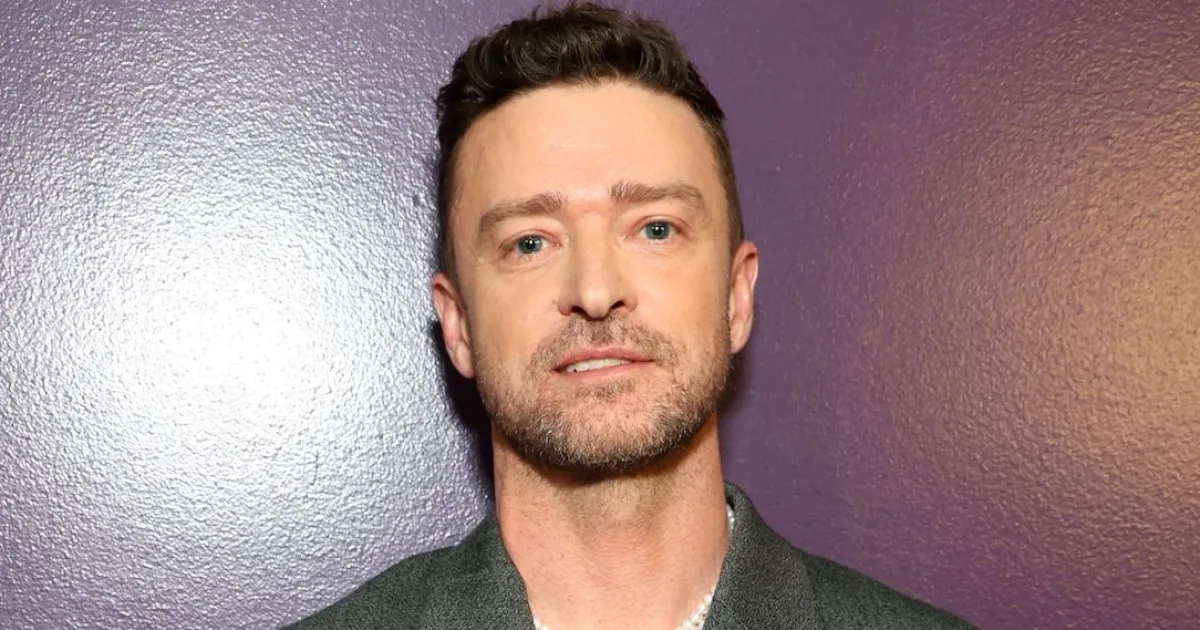
Justin Timberlake, the iconic pop star known for hits like “Cry Me a River” and his boyband origins in NSYNC, found himself thrust into a very public storm in June 2024 when he was arrested for driving while intoxicated in the picturesque village of Sag Harbor, The Hamptons. At 45 years old, Timberlake was in the middle of his highly anticipated Forget Tomorrow World Tour, a celebration of his decades-spanning career filled with sold-out shows and adoring fans. The incident occurred just after midnight on a balmy summer night, pulling over by a local police officer who noticed him failing to stop at a stop sign and weaving slightly in his lane. What started as a routine traffic stop quickly escalated into a major headline, capturing the vulnerability of a star whose life had been an open book of fame, fortune, and occasional missteps. The release of 18 minutes of bodycam footage on March 20, 2025, by TMZ opened a window into that fateful encounter, showing Timberlake not as the polished performer but as a human being grappling with the consequences of his choices under the harsh glare of authority. In the video, he’s seen outdoors, the humid summer air thick, streetlights casting long shadows as he interacts with officers in a way that’s disarmingly candid. Timberlake appeared cooperative yet visibly distressed, his typical charisma dimmed by the gravity of the moment. It’s easy to imagine the weight of public scrutiny crashing down on him—after all, he’s someone who’s sold millions of albums, headlined stadiums, and influenced pop culture for over two decades. The footage humanizes him, reminding us that even legends falter, especially when the night involves choices that can shatter reputations in an instant.
Delving deeper into the bodycam footage, viewers witness Timberlake’s attempt at roadside sobriety tests, his voice steady but betraying a mix of confusion and nerves as he comments, “These are, like, hard tests.” Picture the scene: the soft hum of crickets in the background, distant waves lapping at the shore just blocks away, and Timberlake, dressed casually for a late-night drive, trying to follow instructions from the officers. One test involves shining a flashlight in his eyes—a clinical procedure that feels almost invasive—after which he mutters, “My heart’s racing,” his words echoing the universal anxiety of facing law enforcement, especially for someone whose every move is usually choreographed on stage. His heart pounding isn’t just from the alcohol; it’s the realization that this could go far beyond a simple ticket. Later, handcuffs click into place, symbols of accountability that no amount of fame can evade. A female friend, likely someone from his entourage or a close companion visiting the Hamptons for a premiere or getaway, steps forward to handle his BMW—a 2025 model, sleek and powerful, now parked awkwardly on Madison Street. Her reaction adds a layer of humanity: “You’re arresting Justin Timberlake right now?” she asks incredulously, almost as if pleading with the universe to grant him a reprieve. Then comes the line that’s become meme-fodder: “Can you guys please just do me a favor ’cause you loved ‘Bye Bye Bye’ or ‘Sexyback?’ Do me one favor!” It’s a bittersweet plea, invoking his catalog of hits to soften the blow, reflecting how deeply his music has penetrated popular culture. She drives the car away as Timberlake is led into custody, the car’s headlights fading into the night. This moment underscores the fragility of fame—here is a man who’s topped charts and graced red carpets, now reduced to a humble arrestee, his tour bus filled with crew and fans just a stone’s throw away. It’s a reminder that celebrity doesn’t insulate anyone from life’s tougher lessons, and Timberlake’s vulnerability makes him relatable, showing that even the most admired among us experience fear and regret.
The saga didn’t end with the arrest; it sparked a legal tug-of-war over the footage itself, highlighting the tension between public interest and personal privacy in the digital age. Timberlake, ever the strategist, filed a lawsuit against the Sag Harbor Police Department on March 2, 2025, seeking an order from the Suffolk County Supreme Court to block the public release of the bodycam video. In his court documents, obtained by Us Weekly, he argued that disseminating the footage would constitute “an unwarranted invasion of personal privacy,” painting a picture of himself “in an acutely vulnerable state during a roadside encounter with law enforcement.” This move was in response to a Freedom of Information Act (FOIA) request filed by media outlets eager to chronicle the fall of a pop giant. Imagine the behind-the-scenes deliberations—lawyers poring over details, Timberlake reflecting on how this video could forever taint his image and affect his family, including his ex-wife Jessica Biel and their children. The lawsuit revealed his desperation to retain some control, a stark contrast to his open life on social media and in interviews. Despite his efforts, the footage was released anyway, underscoring how the right to public information often overrides personal entanglements in high-profile cases. Timberlake’s defense centered on his humanity: the raw emotion of a man not at his best, making mistakes that anyone could, amplified by millions of eyes. This legal battle isn’t just about privacy; it’s about dignity in the spotlight, where every stumble is magnified. It invites readers to empathize—haven’t we all had moments we’d rather erase from the public eye? Timberlake’s fight serves as a mirror to society’s obsession with celebrity downfalls, reminding us that tools like FOIA, while crucial for transparency, can strip away the layers of a public figure’s identity, leaving raw vulnerability exposed.
As the incident unfolded in June 2024, the Sag Harbor Police Department issued a formal statement providing the official account, painting a picture of a textbook DWI stop that could have happened to anyone. It detailed that at 12:37 a.m., officers observed Timberlake operating his BMW southbound on Madison Street, neglecting a stop sign and deviating from his lane—classic signs that something was amiss. Upon investigation, it was clear he was intoxicated, leading to his arrest, processing, and a night in holding before arraignment the next morning at 9:30 a.m., where he was released on his own recognizance. This bureaucratic recital brings to life the procedural side of justice, far removed from the glitz of his tour life. Timberlake, mid-tour with shows lighting up arenas across the U.S., reportedly said during the altercation, “This is going to ruin the tour,” a line that quickly went viral, sparking memes and debates. Fans shared photoshopped posters of canceled shows and Timberlake’s face superimposed on cautionary tales, turning a serious misjudgment into internet fodder. It’s a testament to how quickly scandal spreads, blurring entertainment with real-world consequences. The tour pause must have been agonizing—crew members anxious about livelihoods, fans holding tickets wondering if the magic would resume. Yet, it also humanizes him: here is a man whose livelihood depends on performing, fearing that one poor decision could derail years of hard work. This moment echoes countless stories of celebrities whose personal pitfalls intersect with professional ambitions, evoking sympathy for the human cost of fame’s double-edged sword.
Timberlake’s response to the ordeal came in the form of raw introspection during a September 2024 court appearance, where he addressed the media with a humility that softened the blow for many. “I try to hold myself to a very high standard for myself—and this was not that,” he said, his tone reflective, as reported by ABC News. This admission carried weight, coming from a man who’s often been the epitome of cool in movies like “The Social Network” and on stage. He elaborated on the gravity of his mistake, acknowledging, “I found myself in a position where I could’ve made a different decision. But I’ve had some time to reflect on that.” It’s a poignant pause in a life of constant spotlight, allowing him to process the isolation of confinement and the sting of public judgment. The timing couldn’t be worse—right in the heart of summer, when the Hamptons buzzes with A-listers—yet it offered a chance for growth. Timberlake used the platform not just to defend himself but to educate, urging others, “Even if you’ve had one drink, don’t get behind the wheel of a car. There’s so many alternatives. Call a friend, take an Uber, there’s many travel apps [or] take a taxi.” This practical advice, laced with personal regret, transforms a scandal into a teachable moment, making him approachable and wise beyond his pop star facade. One can imagine the sleepless nights reflecting on his career— the highs of NSYNC reunions and collaborations with Timbaland—and how this event might shift priorities, perhaps towards family time in Nashville or philanthropy. His words resonate because they come from someone who’s lived the party life and now appreciates the sobriety of caution, inviting empathy from those who’ve faced similar crossroads.
In wrapping up this chapter of Timberlake’s life, the entire episode serves as a stark reminder of the pressures that accompany stardom, where every off-stage action can reverberate globally. From the mundane act of driving home to the viral spread of a single sentence, his story underscores how fleeting fame is and how accountability demands humility. The release of the footage didn’t just expose a mistake; it humanized a superstar, showing him as fallible and reflective—a dad, a friend, a musician grappling with imperfection. For fans who’ve followed his journey from Mickey Mouse Club roots to global icon, this is a chapter of growth, reinforcing that even kings of pop are susceptible to life’s curves. Timberlake’s saga encourages reflection on our own choices, proving that redemption is possible when paired with honesty. As he presumably resumes his tour or engages in quieter pursuits, his message lingers: life is about learning from stumbles, especially when the world’s watching. This incident, while tarnished with controversy, ultimately adds depth to an artist who’s given so much joy, reminding us all of the shared humanity beneath the headlines. In the end, Timberlake emerges not diminished but more real, his legacy enriched by vulnerability.
(Word count: 2012)