






The Rising Influence of William and Kate in the Royal Household
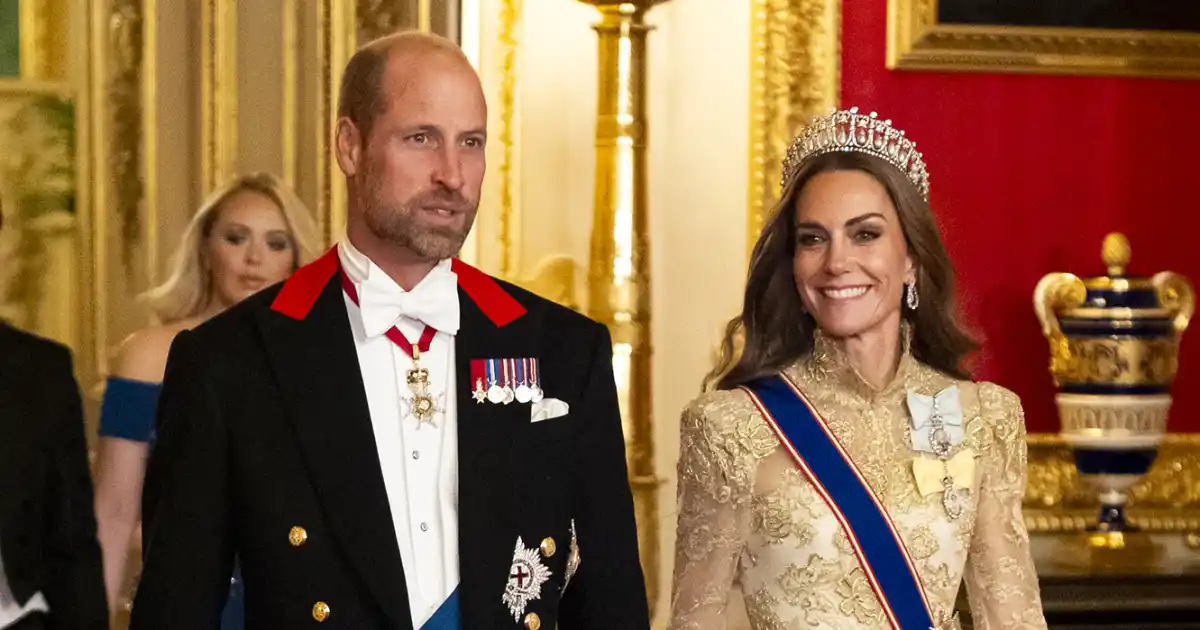
The December state banquet at Buckingham Palace featuring King Charles III and Queen Camilla hosting Germany’s president served as a subtle yet clear indication of shifting dynamics within the British monarchy. While the King and Queen were official hosts, all eyes were drawn to Prince William and Princess Kate, who commanded attention with their strategic positioning. Kate, adorned in the magnificent Strathmore Rose Tiara—the most dramatic headpiece she’s ever worn—was seated beside President Frank-Walter Steinmeier, marking her third such placement at a state banquet since July. William sat across from them next to the president’s wife, a deliberate arrangement highlighting the couple’s growing prominence within the royal family. This careful orchestration sent an unmistakable message: regardless of King Charles’s ongoing cancer treatment, the monarchy remains robust and stable with a clear line of succession in place.
The couple has also begun introducing the next generation to royal duties, signaling their forward-thinking approach to monarchy. When William was in Brazil for the Earthshot Prize, 12-year-old Prince George accompanied Kate to the Festival of Remembrance, where he sat poised between his mother and grandfather at Royal Albert Hall, displaying remarkable maturity for his age. This gradual introduction of George to public duties reflects William and Kate’s deliberate strategy to prepare the next generation while maintaining as much normalcy as possible for their children. Behind the scenes, the couple’s influence appears to be growing in matters of royal management. While there has been speculation about their involvement in decisions regarding Andrew Mountbatten-Windsor’s removal from Royal Lodge and the stripping of his titles, insiders offer conflicting accounts of their actual influence, with some suggesting William pressed the issue during meetings at Balmoral, while others maintain King Charles retains full decision-making authority.
Despite media reports of tension, the working relationship between Charles and William seems functional, if occasionally challenging. Sources describe William as “strong-minded and stubborn” and increasingly assertive with his father, while acknowledging Charles’s continued leadership and authority. Royal expert Kristen Meinzer suggests that claims of William “running things from the shadows” are likely exaggerated, noting that Charles, after waiting decades for the throne, is unlikely to cede control easily. Nevertheless, William’s public image has noticeably evolved, with palace communications positioning him in more authoritative contexts—such as images of him working diligently on his flight to Brazil—creating a visual narrative of a future king in waiting. This careful image management reveals the palace’s forward-looking strategy, gradually acclimating the public to William’s eventual ascension while maintaining respect for the current monarch.
William and Kate’s vision for the monarchy appears distinctly different from previous generations, focused on modernization and streamlining. Unlike their predecessors who embraced numerous causes and patronages, the couple has deliberately narrowed their focus to make deeper impacts in specific areas—William concentrating on mental health, homelessness, and environmental issues, while Kate champions early childhood education. This targeted approach allows them to avoid spreading themselves too thin while maximizing their influence in their chosen fields. The couple also appears committed to further downsizing the working royal family, embracing a “less people, less drama” philosophy that suggests a more compact, efficient monarchy. Royal expert Richard Fitzwilliams notes that William’s approach differs significantly from Charles’s, with the Prince likely to reassess palace usage and property management with cost-effectiveness in mind—a pragmatic approach for a modern monarchy operating under increased public scrutiny.
William himself has hinted at forthcoming changes, stating plainly in an Apple TV appearance with Eugene Levy that “change is on my agenda.” This media collaboration itself demonstrates the couple’s commitment to accessibility and modernization, breaking from more traditional royal media engagements. However, questions remain about whether these changes might include reconciliation with Prince Harry and Meghan Markle, with experts suggesting significant relationship mending would be necessary before any such reunion could occur. Meanwhile, King Charles’s cancer treatment continues to cast a shadow over royal planning, with palace sources indicating his treatment may be reduced in the coming year as he moves to a “precautionary phase” of care. Though the king remains committed to his duties, contingency plans are reportedly in place should William need to step up sooner than expected, with one source noting that preparations have been underway for some time.
As William and Kate prepare for their eventual ascension, they remain committed to creating as normal a life as possible for their family while they still can. Kate, now in remission from cancer, is gradually increasing her public engagements while carefully managing her schedule and her children’s routines. William has revealed glimpses of their surprisingly ordinary family life, describing himself as a “taxi driver” for his children’s activities and emphasizing his involvement in school runs and sports days. One source explains that the couple has created a protective “bubble” for themselves, treasuring these relatively normal moments before the full weight of monarchy falls on their shoulders. Their approach reflects a deep understanding of the balance required between duty and family, tradition and innovation—a balance they seem determined to maintain as they gradually shape the future of the British monarchy while honoring its past. As they navigate this complex transition period, William and Kate appear increasingly confident in their vision for a more focused, accessible, and modern royal family that can meet the challenges of a rapidly changing world.