



The 2025 “Battle of the Sexes”: When Entertainment Overshadowed Sport
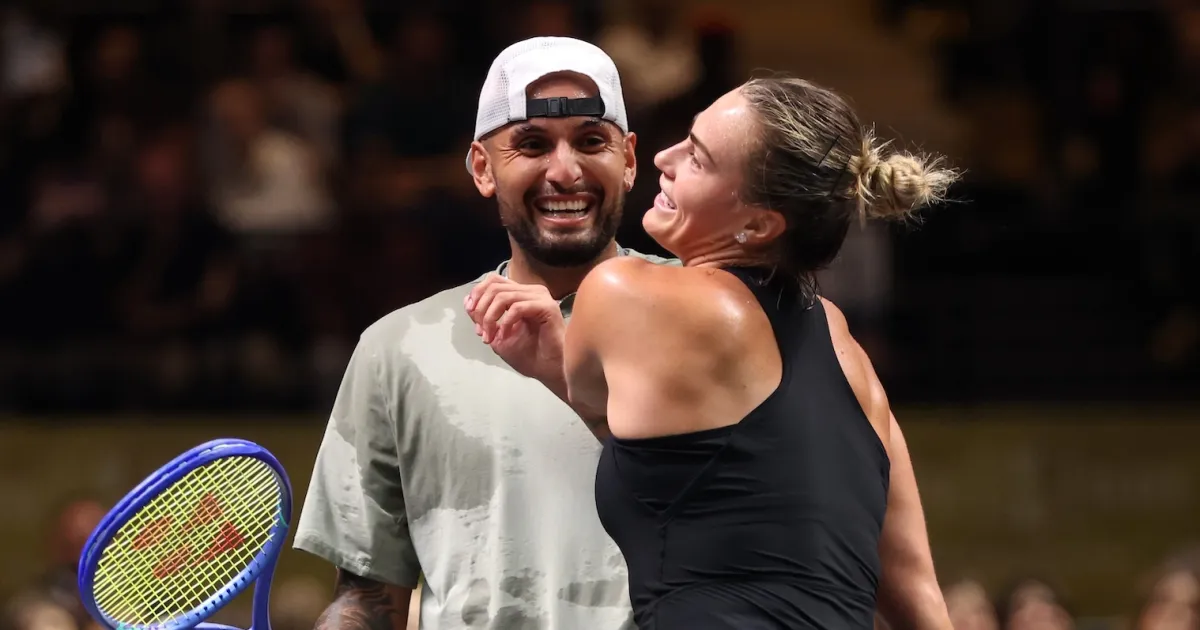
In the luxurious setting of Dubai on December 28, 2025, tennis fans witnessed a much-hyped revival of the “Battle of the Sexes” as Nick Kyrgios defeated women’s world No. 1 Aryna Sabalenka in straight sets, 6-3, 6-3. Unlike its historic 1973 predecessor—when Billie Jean King’s victory over Bobby Riggs marked a watershed moment for women’s sports—this contemporary version seemed to miss the mark on cultural significance while stirring controversy across social media. The matchup between an injured male player ranked 671st and the reigning women’s champion prompted immediate online backlash, with many questioning the purpose and messaging behind the exhibition. Despite modified rules designed to level the playing field, including a smaller court for Kyrgios and limiting both players to a single serve, the outcome did little to advance meaningful conversation about gender in sports.
For Sabalenka, the challenge represented more than just a tennis match; it was an opportunity to inspire younger generations of women. “By putting myself in this situation, playing a guy, I’m inspiring the next generation of women to be great, to challenge yourself, to be strong,” she explained during a pre-match press conference. Her perspective reflected genuine intentions to showcase female athletic prowess and mental toughness on a global stage. After her defeat, she maintained an optimistic outlook, suggesting that the experience would prepare her for a potential rematch: “I feel like next time I play him I’m going to know the tactics, his strengths and his weaknesses, and it’s going to be a better match, for sure.” This resilient mindset demonstrated the champion’s competitive spirit, even as critics questioned whether the exhibition ultimately undermined rather than elevated women’s tennis.
Kyrgios, still rehabilitating from injuries that had sidelined him for nearly 18 months, approached the contest with unexpected nervousness. “I was nervous,” he admitted post-match. “I don’t think many people would have put their hand up to be in this position. The score line was close, I was under the pump there.” His candid acknowledgment revealed the peculiar pressure of the situation—winning would seem expected given biological advantages, while losing could potentially damage his reputation. Despite this pressure, Kyrgios showed respect for his opponent, praising Sabalenka’s athleticism: “She’s an amazing athlete, when she was moving side to side she was playing shots that some of the top men play. She was right there, it could have gone either way.” This sportsmanship offered a bright spot in an otherwise contentious event, highlighting the mutual respect between the competitors even as the match’s broader implications drew criticism.
The stark contrast between this exhibition and the original 1973 Battle of the Sexes couldn’t be more pronounced. When King defeated Riggs in straight sets at the Houston Astrodome, it represented a genuine cultural milestone that advanced the cause of women’s equality both on and off the court. That contest arrived at a pivotal moment in the women’s rights movement and helped legitimize female athletes’ demands for equal prize money and recognition. By comparison, the 2025 Dubai spectacle—despite its high production value and global attention—lacked clear purpose beyond entertainment value. With women’s tennis now firmly established as a respected and lucrative professional sport, the necessity of such gender-based competition seems questionable at best and potentially counterproductive at worst.
Social media reactions reflected widespread skepticism about the match’s value and message. “Does Sabalenka even realize how stupid this makes her look? Battle of the Sexes… girl, so embarrassing,” wrote one critic, while another questioned: “Who actually looks good coming out of this? The 659th ranked player in male tennis just beat the Women’s world number 1 pretty comfortably in the end despite the rules being in her favor. What a farce.” Others framed the outcome as evidence in ongoing cultural debates: “A big L for the ‘men and women are the same’ crowd.” These reactions highlight how such exhibitions risk reinforcing biological differences rather than celebrating the distinct value and excellence of women’s sports on their own terms. Rather than creating meaningful dialogue, the match seemed to entrench existing perspectives on both sides of gender discussions in sports.
As the tennis world moves forward from this controversial exhibition, important questions remain about how best to showcase and celebrate women’s athletics. Perhaps the lesson from Dubai is that direct male-female competitions may no longer serve the intended purpose of advancing women’s sports. The 1973 Battle of the Sexes succeeded because it challenged deep-seated assumptions about female athletic capability at a time when such prejudices limited opportunity and recognition. Today’s landscape, while still imperfect, has evolved significantly. Modern celebrations of women’s sports might be better served by highlighting the unique skills, strategies, and excellence of female athletes competing at the highest level of their respective competitions, rather than measuring them against male counterparts. Ultimately, Sabalenka’s courage in accepting the challenge deserves respect, regardless of the outcome or subsequent criticism—but the tennis community might benefit from finding more constructive ways to inspire the next generation of female athletes.