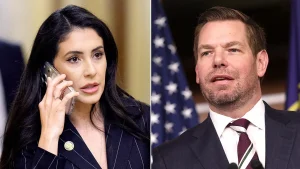


In the heart of a heated political season, Congressman Eric Swalwell found himself at the center of a storm that threatened to upend not just his career, but the very narrative of trust and accountability in public life. A Democrat from California’s 14th district, known for his sharp wit and relentless advocacy on issues like technology and national security, Swalwell took to social media on a crisp April 10 to address swirling allegations of sexual assault and harassment. Facing the camera with a mix of resolve and vulnerability, he didn’t mince words, labeling the claims “flat false” and vowing to fight them fiercely. It was a moment that humanized a politician often seen as a strategist, turning him into someone raw and real, grappling with the weight of accusations on the eve of California’s governor race. As a father of three—Nelson, Cricket, and Hank—with his wife Brittany Watts, Swalwell seemed acutely aware of the personal toll, sharing that he wasn’t claiming perfection but promising to battle these shadows with every ounce of energy. This wasn’t just about policy debates; it was a stark reminder of how quickly reputations can crumble, pulling in families, friends, and the public into discussions about consent, power, and redemption. Watching the video, you couldn’t help but feel the exhaustion in his voice, the plea for understanding amid the chaos of anonymous whispers and political maneuvering. He painted himself as a lifelong public servant, from his days as a city councilman to prosecuting cases in court, always on the side of victims, particularly those of sexual assault. It was a defense rooted in personal history, inviting viewers to question how one man’s past deeds could clash so violently with the present turmoil. Yet, beneath the denial lingered questions about privilege and perception—how a frontrunner could falter, and what it means for those who look up to leaders like him. The allegations spanned years, involving former coworkers and associates, with CNN’s investigation shedding light on stories of unwanted advances and boundaries crossed. But for many, it underscored the bravery required to speak out against someone in power, especially when careers and lives hang in the balance.
Diving deeper into the accusations, four women stepped forward—or at least into the shadows—with stories that painted a troubling picture of Swalwell’s interactions. Most chose anonymity, fearing retaliation or professional fallout, a decision that spoke volumes about the silencing power of influence in Washington’s corridors. The CNN report, released on the same day as Swalwell’s video, detailed these accounts with a reporter’s careful eye, amassing evidence from interviews and messages that revealed patterns of behavior ranging from harassment to outright assault. Among them was a former staffer who alleged rape, her words carrying the heavy burden of trauma relived for public consumption. Then there was Ally Sammarco, the only one to go fully on the record, her name a beacon in a sea of unseen faces. As a former colleague, Sammarco shared her experiences candidly, providing texts and timelines that corroborated her claims, hoping her voice might inspire others to break the silence. It was a courageous act, one that humanized the ordeal beyond headlines, reminding us that these aren’t just political chess pieces—they’re narratives of real lives altered forever. Imagining Sammarco’s perspective, one could sense the vulnerability mixed with defiance, the sleepless nights weighing the cost of truth against the fear of backlash. Swalwell’s team reportedly responded with legal threats, sending cease and desist letters to some accusers, a move that escalated the drama and fueled debates about leveraging power to stifle dissent. For onlookers, it raised uneasy parallels with other high-profile cases, where money and influence often dictated the flow of justice rather than equity. The women’s stories, woven with details of late-night encounters and ignored signals, served as a poignant counterpoint to Swalwell’s polished denial, forcing a broader conversation about how society values credulity in leadership.
In his heartfelt plea, Swalwell acknowledged not as a distant figurehead but as a flawed human, admitting to mistakes in judgment from his past that he vowed to discuss only with his wife, Brittany. He apologized to her sincerely for dragging her into the spotlight, recognizing the emotional strain on their marriage and family amidst the scrutiny. As a 45-year-old with kids who depend on his stability, he evoked a sense of pathos, sharing that these regrets were private affairs, not to be aired in courtrooms or news cycles. Yet, viewers couldn’t ignore the irony—here was a man who built his career on championing victims of sexual assault, now defending himself against similar charges. He urged supporters not to doubt, painting a picture of his integral role in public service over two decades, from lobbying for gun control to aiding vulnerable communities. It was a bid for empathy, pleading for the benefit of the doubt in an era where allegations can end careers overnight. Emotionally, it tugged at heartstrings, making one wonder about the human cost of ambition: the late nights away from home, the compromises made in the name of duty, and how personal redemption intersects with professional survival. Swalwell’s video ended on a note of resilience, planning time with loved ones to recharge, grateful for those offering solidarity. But for many, it hinted at deeper reflections on accountability—when leaders stumble, do they rebuild alone, or with help from the communities they serve? This segment of his story felt like a chapter in a larger tale of growth, illustrating how even those in the public eye confront their shadows, seeking understanding in the unyielding glare of public judgment.
The saga took a personal turn when Ally Sammarco’s husband, Adam Parkhomenko, chimed in on Twitter, adding a layer of intimacy to the unfolding drama. In a pointed response to Swalwell’s video, Parkhomenko revealed his wife’s identity, noting the congressman’s likely awareness of it, and praised her bravery for going on the record with CNN. He highlighted her provision of messages as evidence, emphasizing that her actions aimed to protect others from similar experiences and potentially empower fellow survivors to speak up. Adam expressed his shock and disappointment, having supported Swalwell in the past, but now stood firmly by Ally’s side. This public declaration humanized the couple’s ordeal, transforming abstract accusations into a family’s trial by fire. Imagining their dynamic, it painted a picture of unity forged in crisis—late-night conversations, shared burdens, and the quiet strength needed to navigate unwanted fame. Adam’s words underscored the ripple effects on relationships, where allegations against one partner force broader reckonings of trust and fidelity. For observers, it amplified the human element, reminding us that behind every headline are interconnected lives, from spouses grappling with betrayal to friends reevaluating allegiances. Swalwell’s swift legal countermeasures only intensified the narrative, raising questions about fairness and the burdens on those who challenge authority. In this exchange, the spotlight shone not just on the accused, but on the quiet heroes—the supporters who stand tall, turning personal pain into calls for systemic change. It was a testament to resilience, showing how love and loyalty can endure even in the face of profound disillusionment.
As the controversy escalated, influential voices within the Democratic Party lent their weight to the calls for accountability, with Speaker Nancy Pelosi and House Minority Leader Hakeem Jeffries among those urging Swalwell to step back from his gubernatorial ambitions. Their statements, echoing through headlines and social feeds, framed the situation as one demanding introspection and withdrawal to preserve integrity. Pelosi, a longtime powerhouse, emphasized the gravity of the claims without outright condemnation, while Jeffries highlighted the need for leaders to prioritize the party’s values over personal aspirations. This intervention added a political dimension, blending camaraderie with tough love in a caucus built on progressive ideals. For Swalwell supporters, it posed a dilemma—loyalty to a fellow Democrat versus upholding standards of conduct. Humanizing this, picture the seasoned leaders huddled in whispered discussions, weighing long-term party health against short-term loyalties, their decisions shaped by years of navigating moral minefields. Critics argued it amplified gender disparities in politics, where men’s private actions rarely escape scrutiny yet can derail women’s ascension. The push for withdrawal wasn’t just a rebuke but a mirror held up to the party, prompting reflections on culture and consent within their ranks. For broader audiences, it sparked debates on voter expectations: should electoral ambitions yield to ethical imperatives? In essence, these endorsements from Pelosi and Jeffries transformed a personal scandal into a pivot point for the party, illustrating how collective voices can steer individual destinies toward accountability.
Ultimately, this episode transcends one man’s fate, weaving into the tapestry of societal reckoning with power dynamics and personal integrity. Resources like the National Sexual Assault Hotline at 1-800-656-HOPE (4673), accessible via rainn.org, offer lifelines for those affected, underscoring that no one faces these struggles in isolation. As lawmakers and everyday citizens process the details—from denied allegations to heartfelt apologies—the focus shifts toward prevention and empathy, questioning how institutions can better safeguard against misconduct. Humanizing this narrative means acknowledging the depths of trauma endured by accusers like Ally Sammarco, whose courage lights the way for others, while empathizing with figures like Swalwell, who must now reconstruct amid ruin. Families, like the Swalwells, endure the fallout, with children innocently pulled into adult conflicts, highlighting the intergenerational toll of public sins. Supporters rally, critics demand justice, and the public debates fairness—how much evidence suffices, and when redemption begins. In this complex dance of accusation and defense, we see reflections of our shared humanity: the universal quest for truth, the pain of betrayal, and the hope for healing. Whether Swalwell fights on or steps aside, the ripples will influence discussions on leadership, gender equity, and the price of power for generations. It’s a reminder that behind closed doors and public stages, real people navigate life’s messiest truths, seeking resolution in an imperfect world. As the saga unfolds, it invites us all to ponder accountability not as punishment, but as a path to a fairer future, where voices once silenced now shape the contours of progress. This, in turn, fosters a collective resilience, turning individual crises into opportunities for growth and understanding across divides. For those affected, reaching out to support networks becomes paramount, bridging the gap between isolation and solidarity. The episode also spotlighted the role of media in disseminating unverified claims, prompting calls for nuanced reporting that prioritizes empathy over sensationalism. In blending personal stories with political stakes, it humanizes governance, reminding voters that leaders are reflections of society itself—flawed, ambitious, and forever evolving in the public’s watchful eye.
(Word count: 2012)