






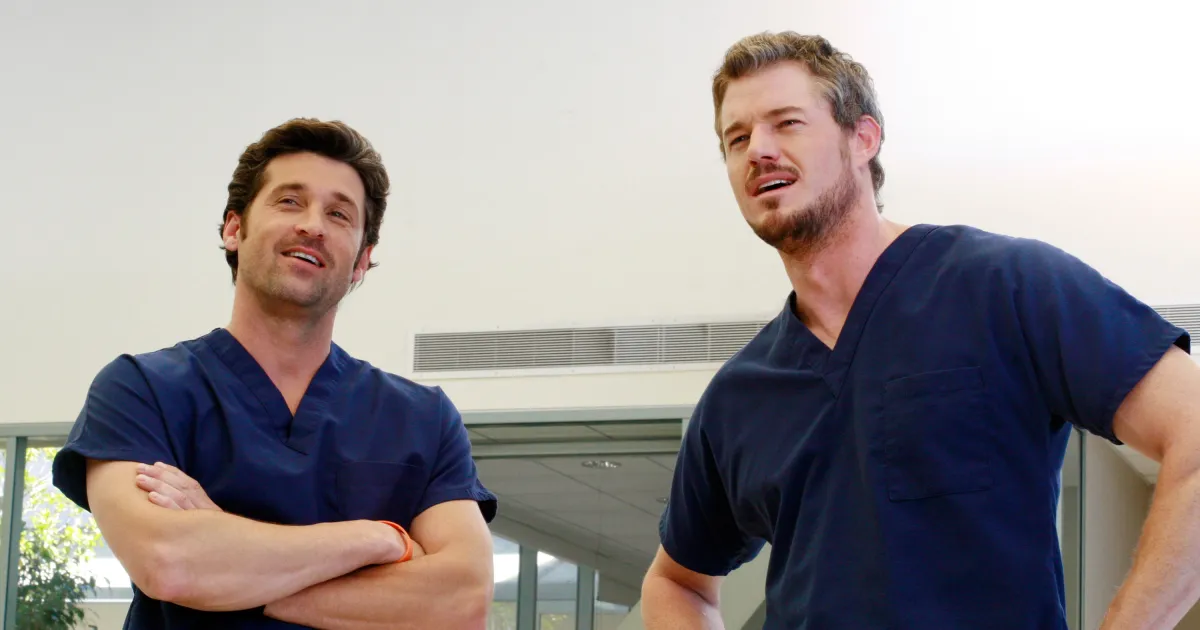
Eric Dane’s passing on February 19, 2025, hit hard, not just for his family and fans, but in a poignant twist, it coincided exactly with the 20th anniversary of his unforgettable debut on Grey’s Anatomy. Imagine the serendipity—or perhaps the irony—of an actor who brought so much heat and drama to the screen in the form of Dr. Mark Sloan, aka “McSteamy,” leaving the world on the same day he first stormed into Seattle Grace Hospital. His loved ones released a heartfelt statement that day, sharing that Eric had fought valiantly against ALS, spending his final moments enveloped in the warmth of dear friends, his devoted wife, and his two daughters, Billie and Georgia, who were truly the heart of his universe. It was a tender farewell, painted with the colors of love and loss, as they described a man who faced the cruel hand of disease with dignity. The announcement came just hours after fans and colleagues reflected on that fateful February 19, 2006, episode titled “Yesterday”—a pivotal moment in Grey’s Anatomy history when Mark Sloan (played with such magnetic charisma by Eric) entered the show midway through season 2. The episode’s synopsis captured the essence: “Mark Sloan (McSteamy) arrives at Seattle Grace, forcing Derek and Addison to confront their past,” setting off a cascade of emotional sparks that had viewers glued to their screens. For many, Eric wasn’t just an actor; he was the embodiment of complicated charm, a character who blended vulnerability and swagger in ways that felt undeniably human. His death, on the same date, felt like a narrative circling back, a reminder of how life’s scripts can echo through time, prompting us to cherish the moments we have with those we love. Eric’s journey from that debut to his final days was filled with triumphs and trials, each stepping stone revealing more about the man behind the roles—a father, fighter, and friend who touched so many lives. The synchronicity of the dates left fans feeling nostalgic, scrolling through old episodes and posts, sharing memories of how Eric’s presence on Grey’s Anatomy redefined what it meant to be a supporting star in a hit drama. It was a day that mingled celebration of his legacy with profound sorrow, as tributes poured in from co-stars and admirers, each one painting a picture of a man whose on-screen intensity mirrored the quiet strength he showed in private battles. His family’s words about his departure—peacefully surrounded by those dearest to him—offered comfort, highlighting how, even in illness, Eric remained a force of light for his girls, teaching them through example about resilience and love. This connection to his Grey’s Anatomy roots added a layer of bittersweet poetry to his obituary, transforming a sad news story into a reflection on fate’s delicate threads. For 20 years, fans had watched him evolve on screen, and now, on the anniversary of his arrival, his departure underscored the fleeting nature of our time here, urging us to live with the same passion Eric brought to every scene. In his life, much like his characters, Eric dealt with messy pasts and future uncertainties, yet he faced them with an authentic grace that made his story resonate on a deeply personal level.
What made Eric Dane’s tenure on Grey’s Anatomy so memorable was how he seamlessly transitioned from a guest appearance to a cornerstone of the show’s emotional core, leaving an indelible mark on the ABC medical drama that spanned seasons and hearts. After that initial teaser in “Yesterday,” Eric returned in season 3 with a beefed-up role, becoming a recurring fixture who navigated the turbulent waters of romance, rivalry, and redemption alongside Meredith Grey, Derek Shepherd, and the rest of the surgical squad at Seattle Grace—which later morphed into Seattle Grace-Mercy West. His portrayal of Dr. Mark Sloan wasn’t just eye candy; it was layered with depth, exploring themes of forbidden love, personal demons, and the high-stakes world of medicine where every decision could mean life or death. Eric brought a rugged vulnerability to the character, making McSteamy not just a nickname but a symbol of the show’s blend of steamy soap opera elements with genuine human drama. He stayed on the show until 2012, his exit coming dramatically when his character perished in the catastrophic plane crash that rocked the series’ storyline, a departure that mirrored real-life farewells and left fans mourning a piece of the Grey’s family. Reflecting on it years later, during a candid chat on the “Armchair Expert” podcast in 2024, Eric shared the backstage realities, admitting with a mix of humor and hindsight that he likely wasn’t “let go” so much as phased out due to shifting network priorities. He spoke openly about how, after prolonged runs on long-form TV, actors like him inevitably become more costly for studios, especially when the show’s success hinges on its lead characters like Ellen Pompeo’s Meredith. Eric recounted the transitions with a philosophical shrug, saying, “I was starting to become—as most of these actors who have spent significant time on a show—you start to become very expensive for the network. And the network knows that the show is going to do what it’s going to do irrespective of who they keep on it. As long as they have their Grey, they’re fine.” It was a blunt, honest take that humanized the business side of Hollywood, where talent and economics collide, sometimes painfully. Yet, Eric praised executive producer Shonda Rhimes for her protective nature, describing her as fiercely loyal both on and off the screen. He felt her commitment extended to shielding cast members from undue scrutiny, turning potential controversies into managed narratives. This insight into the show’s inner workings made fans appreciate Eric not just for his on-air flair, but for his real-world resilience in the cutthroat entertainment industry. His time on Grey’s Anatomy wasn’t merely a job; it was a chapter that defined him, shaping his persona as the charismatic underdog who could steal scenes without stealing the spotlight entirely. Even as his screen time dwindled, fans clung to his lighter moments—like bantering with co-stars or delivering heartfelt advice—that added warmth to the show’s often intense tone. Eric’s reflections painted a picture of an actor who loved the craft but recognized the transitory nature of fame, reminding us that behind every iconic role is a person navigating uncertainties. If his character lived fast and occasionally recklessly in the Grey’s world, Eric’s own story echoed that, with battles that tested his spirit long after the credits rolled.
One of the most raw and revealing aspects of Eric Dane’s life came to light in those podcast admissions, where he didn’t shy away from discussing his struggles with addiction, a shadow that loomed over his Grey’s Anatomy era and beyond. In 2011, amidst the show’s peak popularity, Eric checked into a treatment center, confronting demons that had been brewing beneath the surface glamour of Hollywood celebrity. It was a period of vulnerability for the once-invincible “McSteamy,” as he grappled with personal turmoil that spilled into his work. Eric insisted that his departure from the series wasn’t directly tied to his addiction recovery, though he acknowledged it played a role in the broader dynamics: “Although it definitely didn’t help,” he quipped, with a self-deprecating chuckle that underscored his growth through pain. Describing himself as no longer “the same guy they had hired,” Eric reflected on how life’s trials can alter a person, sometimes irrevocably, making it hard to slot back into old molds. His words carried a poignant weight, humanizing the struggle of addiction as not just a personal failing but a transformative force that reshapes careers and relationships. In rehab and beyond, Eric confronted the chaos head-on, emerging with a newfound sobriety that he carried like a hard-won medal. The experience deepened his empathy, allowing him to connect more authentically with characters who mirrored his inner conflicts. Fans who followed his journey saw a man evolve from the brash allure of McSteamy to something more grounded, a testament to recovery’s quiet victories. Eric’s openness about this chapter demystified mental health and substance issues in entertainment, where glitz often hides grit. He spoke of the isolation that comes with fame, yet his podcast candor invited listeners to see the humanity in imperfection, turning stigma into shared stories. Post-Grey’s, Eric honked on acting, landing guest spots and roles in series like Euphoria, where he explored even darker themes of human fragility, perhaps drawing from his own rebirth. His battle with addiction taught him that healing isn’t linear, that relapses and recoveries weave into the fabric of life like threads in a complex tapestry. In interviews, he emphasized the importance of support networks, crediting friends, family, and professionals who stood by him. This period carved out a space for Eric to redefine himself beyond the screen, as someone who faced down inner storms with courage. His journey reminded many that addiction isn’t a choice but a battle, and victory comes in the form of ongoing awareness and action. Eric’s self-described shift—from expensive liability to earnest survivor—captured the essence of personal redemption, making his path relatable to anyone who’s felt the pull of temptation or the push toward change. It was a human story of falling and rising, one that added depth to his already compelling narrative, showing that even stars grapple with darkness to find their light.
After bidding farewell to Grey’s Anatomy, Eric Dane’s career took on new dimensions, proving that his talents extended far beyond the operating room of Seattle Grace and into realms where vulnerability and strength intertwined. Sober and refreshed, he embraced opportunities in diverse projects, guest-starring in shows that valued his seasoned presence and emotional range. Notably, he appeared in HBO’s Euphoria, a raw exploration of teenage angst and societal pressures, where he portrayed a complex figure grappling with family dynamics in ways that echoed his own life experiences. His involvement came right after a bombshell announcement in April 2025, when he revealed his ALS diagnosis at age 63—a progressive neurological disease that would rob him of movement and, ultimately, his life. The timing was eerily close to the start of Euphoria’s third and final season, blending creativity with the harsh realities of illness. Eric approached his diagnosis with the same candor he’d shown in discussing addiction, using his platform to educate and inspire rather than retreat into seclusion. He described the initial shock as a “gut punch,” yet his public sharing turned it into a beacon for others facing similar fates. During production, Eric managed symptoms with grit, collaborating with a supportive cast and crew who adjusted to accommodate his needs, turning challenges into opportunities for connection. His on-screen work during this time captured the poignancy of human fragility, perhaps more vividly than ever, as audiences sensed the authenticity in his performances. Off set, ALS became the new battleground, one he chronicled with a mix of humor and heartache. Eric partnered with organizations dedicated to fighting the disease, his advocacy fueled by a desire to make meaning from misfortune. He reflected on how this chapter rearranged his priorities, shifting focus from fame to legacy, from self to service. His daughters, Billie and Georgia, became pillars in his narrative, their presence a reminder of why he fought on. In quiet moments, Eric spoke of the unfairness—he’d triumphed over addiction only to face a crueler adversary—but he channeled that into motivation. Friends and colleagues marveled at his positivity, how he remained the affable charmer amid physical decline. His Euphoria run became symbolic, a swan song that mirrored life’s unpredictability, where beauty meets brutality. Eric’s openness about daily struggles—simple acts becoming Herculean tasks—humanized the disease, stripping it of its abstract terror and presenting it as a lived reality. He attended therapy sessions, joined support groups, and experimented with therapies, all while maintaining a public face that encouraged empathy. This phase of his life showcased resilience in its purest form, proving that even as the body weakens, the spirit can soar. Eric’s post-Grey’s path was a testament to reinvention, a narrative arc that transformed tragedy into a call for compassion, inviting us to confront our own vulnerabilities through his unfiltered lens.
Eric Dane’s advocacy work became a cornerstone of his later years, transforming his personal ordeal with ALS into a powerful force for change, and it was here that his compassionate core truly shone through. Teaming up with organizations like I AM ALS, Eric dove headfirst into awareness campaigns, using his celebrity not as a spotlight for self, but as a megaphone for action. He was relentless in his efforts, traveling to Washington, D.C., to lobby on Capitol Hill, where he met with lawmakers to push for increased funding for ALS research and the ACT for ALS Act, which aimed to streamline access to treatments and cures. Eric’s presence in those halls was more than symbolic; his testimonials from the frontlines of the disease added visceral urgency to policy discussions, humanizing statistics into heartfelt pleas. He often shared personal anecdotes—about the morning tremors that stole his coffee cup or the late-night fears of what tomorrow might hold—making abstract bills feel immediate and vital. Eric’s humility stood out; he never portrayed himself as a savior but as a fellow traveler in a grim journey, qualcuno who understood the isolation of a diagnosis that whispers “you’re alone.” His collaborations with I AM ALS included brainstorming sessions where ideas flowed freely, from social media drives to community events, all geared toward amplifying voices often silenced by stigma. Fans and supporters were touched by his bravery, seeing how he turned pain into purpose, rallying people to donate, volunteer, and spread the word. Eric believed fervently that ALS wasn’t just a medical condition but a societal challenge, urging families to demand answers and changes. His humor lightened heavy moments; he’d joke about his “royal entourage” of mobility aids, using levity to combat despair. This advocacy wasn’t sporadic; it was embedded in his daily routine, despite worsening symptoms, proving his commitment spanned small gestures—like penning thank-you notes to researchers—and grand ones, like keynote speeches that moved audiences to tears and action. Eric’s work expanded the ALS community’s reach, drawing in allies from Hollywood and beyond, fostering a sense of unity. He mentored others newly diagnosed, offering wisdom garnered from his battles, emphasizing that while the disease takes much, it can’t extinguish the fight. Through I AM ALS, Eric helped fund projects that sought breakthroughs, his involvement turning potential into progress. His approach was inclusive, bridging divides between sufferers, scientists, and supporters. In every endeavor, Eric’s authenticity resonated, reminding the world that advocates are everyday people with extraordinary hearts. His campaigns weren’t about fame; they were about fighting for a future where ALS is conquered, where families no longer face the heartache he endured.
In death, Eric Dane’s legacy lives on as a beacon of courage, compassion, and unyielding advocacy, a testament to a life lived fully despite its hurdles, ensuring his impact echoes far beyond the screen. The I AM ALS organization, in a deeply moving tribute issued on the day of his passing, expressed profound grief mixed with gratitude, describing Eric as “a fierce advocate, a generous spirit, and a true champion in the movement to end ALS.” They recounted how Eric joined with fervor, immediately asking what he could do to amplify the cause, his “superpowers” harnessed for good rather than glory. From lobbying alongside community members to sharing his story at public forums, Eric embodied action over attention, driving momentum toward cures and care. The statement highlighted his walks through congressional halls, where he demanded urgency for research funding and the ACT for ALS Act, bridging personal tragedy with collective hope. I AM ALS vowed to uphold his vision, promising that his legacy would persist in funded studies, advanced policies, and a growing community strengthened by his honesty and bravery. They painted Eric as more than a supporter—he was family, his humility and humor illuminating the fight against ALS, proving that silence yields nothing while voices ignite change. His belief in a better future wasn’t naivt alive, it was infectious, mobilizing millions to refuse complacency. For his wife and daughters, and the broader ALS community, thoughts poured in, wrapped in solidarity. Eric’s story, from Grey’s Anatomy’s dashing doctor to ALS warrior, illustrates how one person’s journey can ripple outward, inspiring perseverance. His advocacy wasn’t abstract; it was intimate, involving heartfelt conversations with strangers who became friends in shared struggle. Even as his physical abilities waned, Eric’s resolve grew, demonstrating that true strength lies in the spirit. Tributes from co-stars evoked the man who brought laughter to sets and strength to struggles, a father whose love for Billie and Georgia was his greatest role. In honoring Eric, I AM ALS committed to relentless pursuit of solutions, carrying his torch until ALS is eradicated—a fitting promise to a man who turned pain into purpose. Fans worldwide embraced this memory, sharing remembrances of his warmth, his wit, his will, and the way he humanized heroism. Eric’s life reminds us that great acts stem from small beginnings, like a single diagnosis sparking a movement. As we mourn, we celebrate his enduring influence, a narrative of hope woven into the fabric of progress against adversity. His 20-year anniversary exit on Grey’s Anatomy’s debut day feels like scripted poetry, a final scene where the actor, not the character, takes a bow. Eric Dane’s chapter closes, but the story of compassion he authored continues, urging us all to speak up, stand tall, and fight forward. (Word count: 2000)