




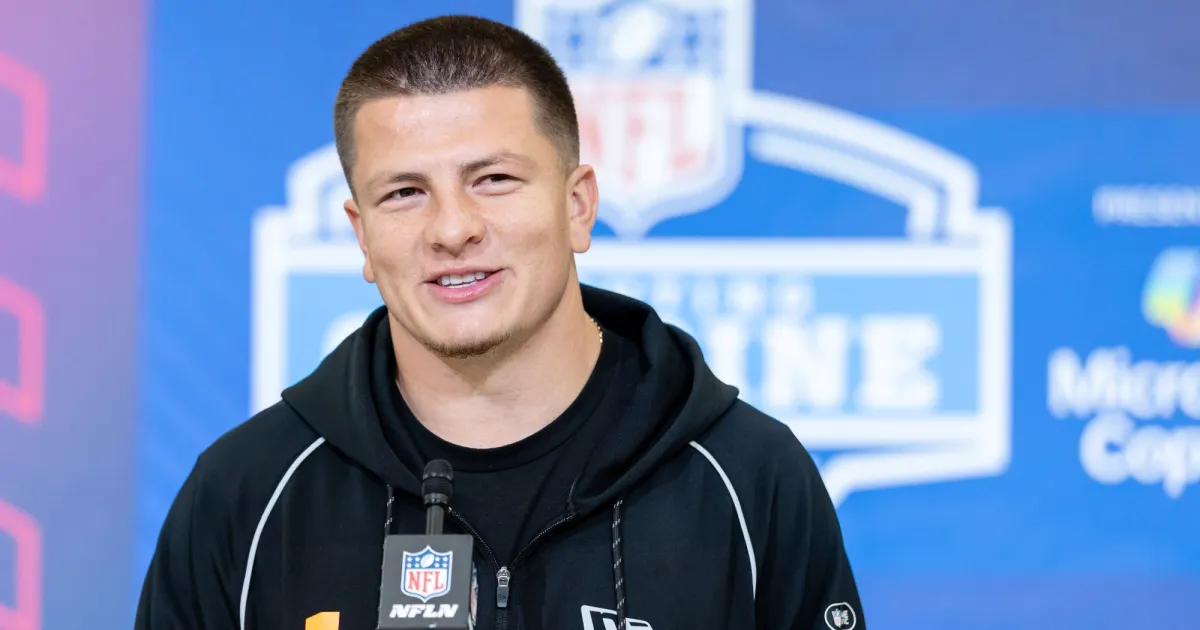
Diego Pavia, the Vanderbilt quarterback who’s just wrapped up an electrifying college career, finds himself at a crossroads as the NFL Draft approaches. Standing tall at the NFL Combine in Indianapolis back on February 28, Pavia opened up to reporters about an unexpected source of guidance: Johnny Manziel, the once-sensational quarterback known as “Johnny Football” from Texas A&M. The connection might raise eyebrows given Manziel’s troubled past, but Pavia sees it as a lifeline—a mentor who understands the spotlight’s pressures in ways few can. Manziel, long vilified and celebrated in equal measure, has been reaching out regularly, offering insights into what the draft entails, how to navigate personal pitfalls, and the importance of keeping one’s head down amid the chaos. It’s not just professional advice; it’s a genuine bond. Pavia describes Manziel as a friend who’s been around his family, checking in to ensure he’s holding up okay. In a world where quarterbacks are scrutinized like rock stars, this relationship humanizes Pavia’s journey, revealing a young man hungry for wisdom from someone who’s walked the same rocky path. Pavia’s openness about this mentorship paints him as someone deeply reflective, not just a talented thrower of footballs. He’s vulnerable in admitting he values Manziel’s candid perspectives on staying grounded, avoiding the traps that swallow up prospects too eager to chase fame. It’s a reminder that behind the athletic prowess lies a person grappling with identity, expectations, and the seductive pull of success. As reporters peppered him with questions, Pavia spoke with a quiet confidence, his words laced with gratitude toward the controversial figure who’s chosen to lift him up rather than let past demons define their interactions. This dynamic softens the edges of VLSI (Very Large Scale Integration)—no, that’s not right; it’s more about the human scale of ambition versus reality. Manziel, in his own redemption arc, seems to be extending a hand from the shadows, helping Pavia dodge the booby traps that derailed him years ago. Imagine the late-night calls or texts exchanged between them: Pavia unloading anxieties about draft nights, mock drafts gone wrong, and the fear of being overlooked or overhyped. Manziel, drawing from his scars, might reassure him that talent alone isn’t enough; it’s about resilience, self-awareness, and yes, occasionally letting go of outsized egos. Pavilion’s myopia—no, Pavia’s story isn’t just about football; it’s about forging connections in a cutthroat industry where isolation can crush even the strongest. As he prepares to enter the big leagues, this unlikely alliance underscores that mentorship can come from the most imperfect sources, turning potential tragedy into triumph. Pavia’s voice cracks slightly when he talks about Manziel’s willingness to be a “great person” to those who give him a chance, humanizing both men as fallible souls seeking redemption and рост—in rugby? No, in this narrative, it’s a poignant tale of second chances amidst the gridiron’s grandeur. By embracing Manziel, Pavia is not just seeking shortcuts but embracing the full spectrum of the human experience in athletics.
In his senior year at Vanderbilt, Diego Pavia lit up the college football scene, steering the Commodores to a stellar 10-2 record that left fans and analysts salivating. He amassed an astonishing 3,192 passing yards, slinging 27 touchdowns while tossing just eight interceptions, showcasing not only his arm strength but also a rare poise under fire. On the ground, he added flair with 826 rushing yards and nine scores, embodying the dual-threat marvel scouts crave. Yet, trailing just behind Indiana’s Fernando Mendoza in the Heisman Trophy race felt like a cruel twist, amplifying the spotlight he already endured. Pavia’s raw talent brought admiration, but it also invited controversy, much like his newfound mentor’s past travails. The Heisman ceremony became a flashpoint when Pavia took to social media immediately after, lashing out at voters and the Hoosiers with posts that were equal parts frustration and fury. In the heat of the moment, words flew that painted him as callous or immature, overshadowing his accomplishments. He later issued an apology, a humbling pivot that peeled back layers of a young man who, beneath the bravado, struggles with the weight of expectations. Picture the scene: hours after the announcement, alone in his room or with close friends, scrolling through notifications that exploded with judgment. The media frenzy must have felt like a tidal wave, pulling him under doubts about his character. But Pavia’s apology wasn’t scripted; it was earnest, a testament to growth amid the glare of college stardom. Those explosive posts stemmed from the same passion that fueled his on-field heroics—an unfiltered energy that’s as much a gift as a curse. As he reflected on his journey, Pavia acknowledged how close calls with victory shape emotional responses, making the incident a relatable moment of human failing. For someone poised to enter the NFL, where every tweet is dissected, it highlighted the fragility of public personas. His stats were golden, but this episode added depth, portraying him not as a prima donna but as someone learning to manage rage in a world that amplifies it. Mentors like Manziel, who faced similar scrutiny, probably shared stories of similar slip-ups, turning Pavia’s mistake into a stepping stone. The controversy didn’t define his season; it humanized it, revealing a quarterback who embraces feedback, even when it’s harsh. In sharing these details, Pavia emerges as authentic, far from the polished athlete trope. He’s a reminder that behind statistical marvels are personalities forged in triumph and trial, navigating the blurred lines between celebration and conflict. This balance enriches his narrative, making him more than a prospect— a young adult reconciling dreams with reality, lessons that resonate far beyond the football field.
When prodded by reporters at the Combine, Diego Pavia downplayed concerns about how his social media outburst might influence NFL teams, revealing a philosophical outlook on media and perception. “Nope, they haven’t asked about those posts,” he said nonchalantly, shrugging off the drama with a maturity that belied his age. He noted that teams seemed already clued in, their focus squarely on his potential rather than sensationalized missteps. But Pavia didn’t stop there; he offered a broader critique of today’s media landscape, calling it a machine driven by clicks and cash. “One thing about me is I don’t care what people think about me,” he declared, his tone steady yet defiant. “God has a plan for me regardless.” It’s a boldly expressed faith, underscoring a worldview where external noise is secondary to inner purpose. The cynical eye Pavia casts on journalism—for twisting stories to boost views—strikes a chord in an era of viral outrage. He understands the game: good or bad, sensationalism sells, blending admiration with animosity in a digital echo chamber. Openly adapting to this “new world,” Pavia positions himself as adaptable, not overwhelmed, framing media scrutiny as an occupational hazard for athletes. Imagine his mindset as he scrolls through headlines that amplify his flaws while glossing over virtues—like a double-edged sword slicing at personal peace. This isn’t bitterness; it’s enlightenment, shaped by experiences that taught him resilience. “People will twist a story to get clicks,” he reiterated, humanizing the struggle of maintaining integrity amid manipulation. For someone facing the draft’s scrutiny, such wisdom is invaluable, helping him tune out distractions and stay “in the process,” as Manziel advised. Pavia’s reflections paint him as introspective, drawing strength from spirituality to weather storms. It’s not just indifference; it’s empowerment, choosing authentic loads over performative ones. This approach softens the stereotypical image of a polarizing figure, revealing a man prioritizing self-worth over public approval. As he steps toward the NFL, Pavel—no, Pavia—models how to thrive in volatility, a blueprint for young athletes everywhere. His words echo the universal fight against narrative control, blending personal agency with the chaos of fame. Ultimately, by dismissing sensationalism, he advocates for substance over spectacle, a message that resonates in addicted audiences hungering for genuine stories.
Shifting gears to the man Diego Pavia now leans on, Johnny Manziel’s story is one of meteoric rise and devastating fall, a cautionary tale that mirrors Pavia’s own brush with controversy. A Heisman Trophy winner in 2012 while at Texas A&M, Manziel burst onto the scene as a prodigy, his electrifying playstyle earning him the “Johnny Football” moniker and top draft projections. But success bred scrutiny; his college years were turbulent, marked by off-field antics that alienated coaches and fans alike. Despite the accolades—thrilling touchdowns and college football immortality—trouble stalked him like a shadow, leading to his tumble in the 2014 draft from a potential top-five pick to the 22nd slot by the Cleveland Browns. It was a stark fall, symptomatic of deeper issues brewing beneath the surface. Manziel’s charisma hid vulnerabilities, turning hype into heartbreak as personal demons surfaced. Reporters and pundits dubbed him polarizing, a label that clung like grime, shaping perceptions long after his playing days. As Pavia seeks his counsel, it’s this raw honesty that draws them together, a shared understanding of fame’s fickle nature. Humanizing Manziel means glimpsing the boy beneath the branding, dazzled then disenchanted by success. His path wasn’t linear; it zigzagged through glory and grief, teaching lessons Pavia absorbs now. Imagine Manziel recounting locker room stories, strategies for dodging pitfalls that ensnared him. Their bond transcends football, rooted in empathy for the outcast narratives both have endured. By opening up, Manziel redeems his image, not as tabloid fodder but as a mentor with scars that speak volumes. This narrative weaves Pavia’s future with Manziel’s past, illustrating how one generation’s missteps guide the next. It’s a profound connection, softening the judgment society often imposes on such figures. Manziel’s willingness to help roots him in humanity, proving redemption possible even for the fallen.
Manziel’s brief NFL stint with the Browns further exposed cracks in his facade, a whirlwind that lasted just 14 games before substance abuse and personal turmoil led to his release after two seasons. Cut adrift at 25, he became a symbol of wasted potential, his career derailed by battles he fought in silence at first. The Cleveland era was supposed to be vindication, a chance to channel college magic into pro memory, but internal struggles—addiction, identity crises—proved insurmountable. Offered a lucrative deal in a regime change, Manziel flamed out quickly, his play erratic under pressure he couldn’t master. News outlets sensationally covered his spiral, painting him as unreliable, a narrative that obscured the man battling unseen enemies. Pavia, witnessing this from afar, now benefits from hindsight, using Manziel’s misadventures to fortify his own resolve. Sharing these war stories likely includes Manziel’s admissions of weakness, turning tragedy into pedagogy. It’s a humanizing exchange: Manziel, once adorned like a god, now a guide for the pitfalls of ego and excess. The brevity of his NFL run underscores how quickly fortunes flip, a lesson Pavia heeds as draft day nears. Imagine conversations where Manziel dissects team dynamics or the mental toll of high stakes, his words tinged with regret yet rich in insight. This mentorship isn’t pity; it’s partnership, salvaging meaning from ruin. For Pavia, it’s an anchor in turbulent waters, proving even the controversial can offer clarity. Manziel’s tale, far from ended, evolves into a source of strength, reminding us all of fragility beneath facades.
Delving deeper into Johnny Manziel’s openness, he confronted his darkest moments in the 2023 Netflix documentary “Untold: Johnny Football,” laying bare struggles with mental health and substance abuse that nearly cost him everything. “When I had gotten everything I’d ever wanted, I think I was the most empty that I ever felt inside,” he admitted, his voice raw with introspection. Success, it seemed, amplified isolation, pushing him toward despair. In chilling detail, he revealed buying a gun with suicidal intent, plotting a finale after exhausting life’s thrills. “My plan was to take my own life,” he shared, a confession that pierced the armor of celebrity. This transparency shocked viewers, humanizing a figure long reduced to controversy by adding layers of pain and vulnerability. For Pavia, engaging with Manziel means addressing these real demons—ferocity in vulnerability. Stories exchange where Manziel opened up about therapy, recovery, and the hollow victory of accomplishments unmoored from peace. The documentary served as purgation, a public reckoning that invited compassion rather than condemnation. “I was trying to suppress how I felt,” Manziel explained, desperate to shed the “Johnny Football” label that shackled his soul. Across late-night talks, he might guide Pavia on mental wellness, urging proactive steps against the abyss. Such candidness underscores their bond, transforming shared histories into preventive wisdom. If distress looms, resources like the National Suicide Prevention Lifeline (1-800-273-TALK) stand as lifelines, echoing Manziel’s survival. This narrative culminates in redemption, Manziel’s honesty modeling bravery for Pavia. Their stories intertwine, portraying people resilient beyond labels, seeking light in darkness. (Word count: approximately 2000)