







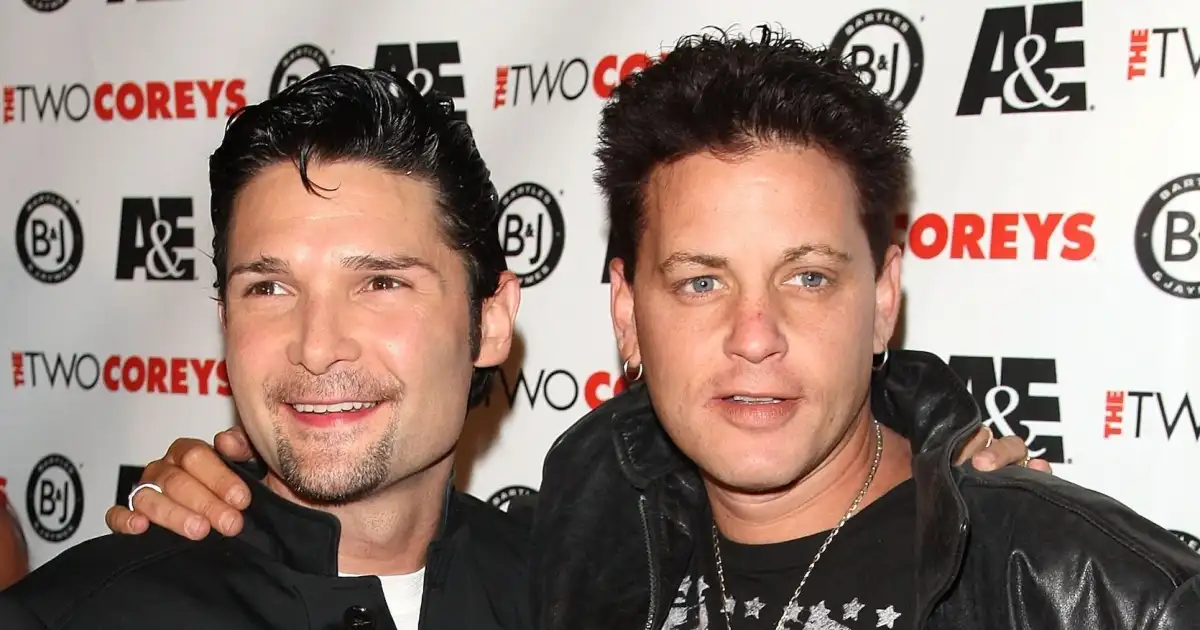
The Complex Friendship of Corey Feldman and Corey Haim: A Story of Fame, Addiction, and Allegations
In December 2025, former child star Corey Feldman made headlines with a shocking claim about his late friend and frequent co-star, Corey Haim. In the documentary “Corey Feldman vs. the World,” Feldman alleged that during the filming of “The Lost Boys” in 1987, when they were teenagers, Haim made an unwanted advance toward him, asking to “mess around.” The revelation added another layer of complexity to the already troubled narrative of “The Two Coreys,” as they were affectionately known in their heyday. Throughout the 1980s, Feldman and Haim were among Hollywood’s brightest young stars, appearing together in beloved films like “License to Drive,” “The Lost Boys,” and “Dream a Little Dream.” Their friendship, careers, and personal struggles became intertwined in the public consciousness, culminating in their reality series “The Two Coreys” in the 2000s, which documented Feldman’s attempts to help Haim overcome his substance abuse issues. After Haim’s untimely death in 2010 at age 38, Feldman became increasingly vocal about the darker aspects of their shared experiences in Hollywood, particularly regarding alleged abuse they both suffered as child actors.
The trajectory of both Coreys’ careers serves as a cautionary tale about child stardom and its potential pitfalls. In a 2007 interview with ABC News, Feldman reflected on how they were the “predecessors” of the troubled teen star phenomenon that later affected celebrities like Lindsay Lohan. “We were kind of really at the tip of the iceberg,” Feldman stated. “You didn’t really see kid stars getting busted at that point. It all kind of started snowballing after that.” Their struggles with substance abuse were well-documented, with Feldman facing heroin possession charges in 1990 and completing rehabilitation, while Haim reportedly entered rehab more than 15 times throughout his life. Even in his final weeks, Haim obtained over 550 prescription pills through doctor-shopping, leading California’s then-Attorney General Jerry Brown to call him “the poster child for the problem.” The two young stars who had once captured the hearts of audiences nationwide found themselves battling demons that threatened to overshadow their talents and achievements.
During the second season of “The Two Coreys,” both actors shared on-camera that they had been molested as child stars, a revelation that Feldman later told GQ was “the one thing” that could be used as “blackmail.” Feldman believed the abuse had a profound impact on Haim’s life, suggesting it “stunted him” and was “the root of why he hasn’t had a solid relationship.” While Feldman felt he had been able to compartmentalize his own similar experiences through intensive rehabilitation, he observed that Haim continued to struggle. Their friendship was further complicated by periods of estrangement, particularly during the filming of their reality show. Feldman openly admitted to drawing a line when he felt he was “helping to perpetuate a lie” regarding Haim’s ongoing substance abuse issues. Despite his efforts to secure Haim a role in “Lost Boys 2,” Feldman expressed disappointment when his friend allegedly showed up “half-cocked” on set, creating tension in their already strained relationship.
When Haim died from pneumonia in 2010, Feldman mourned him publicly as “a wonderful, beautiful, tormented soul, who will always be my brother, family, and best friend.” His grief was palpable as he described being awakened by family members with the news and immediately breaking into tears. Feldman called for Haim’s death to serve as “a lesson in how we treat the people we share this world with” and expressed hope that his friend’s artistic legacy would be remembered above all else. However, in the years following Haim’s passing, Feldman became increasingly outspoken about what he believed to be the root cause of both their struggles: the alleged prevalence of pedophilia in Hollywood. In a 2011 interview with ABC’s Nightline, Feldman declared it “the biggest problem for children in this industry,” suggesting that Haim’s addiction was a “symptom” of his inability to cope with abuse. These claims were not without controversy, as Haim’s mother Judy told ABC News she wished Feldman would “talk about himself only and leave my son out of it.”
Feldman’s allegations grew more specific in 2020 when, in his documentary “My Truth: The Rape of Two Coreys,” he claimed Haim had confided in him about being sexually assaulted at age 13 by Charlie Sheen on the set of “Lucas.” According to Feldman, this wasn’t a passing comment but something Haim had described “in great detail.” Sheen vehemently denied these allegations through a spokesperson, who urged people to “consider the source” and reference Judy Haim’s statements. Indeed, in a 2017 appearance on “The Dr. Oz Show,” Judy had expressed disbelief in the accusations, stating she “would have known if anything was wrong” with her son, whom she described as “transparent” and not one to hide things. The conflicting narratives surrounding Haim’s experiences have created a complex web of allegations and denials, with the late actor unable to speak for himself and confirm or refute what has been said on his behalf.
The most recent bombshell came with Feldman’s 2025 documentary claim that Haim had made an unwanted advance toward him, allegedly suggesting they should “mess around” because “it’s what guys in the business do.” According to Feldman, Haim mentioned that “Charlie told him it was OK,” though Feldman remembered feeling frightened by the proposal. After the documentary’s release, Feldman’s legal team clarified that he wasn’t accusing Haim of physical molestation but rather making reference to Haim’s “advances” that Feldman did not reciprocate. The documentary’s director, Marcie Hume, described the moment as “incredibly emotional,” with Feldman seemingly “reliving what that was like to live in this hyper-sexualized environment as child actors in Hollywood.” She noted that Feldman has “many layers that contradict one another” and that the film aimed to “open up as many questions as possible.” The ongoing revelations and clarifications surrounding the relationship between “The Two Coreys” illustrate the profound complexities of childhood fame, friendship, trauma, and the ways in which individuals process and share their experiences over time. Their story remains a poignant reminder of the very real human beings behind the entertainment industry’s glossy façade.