






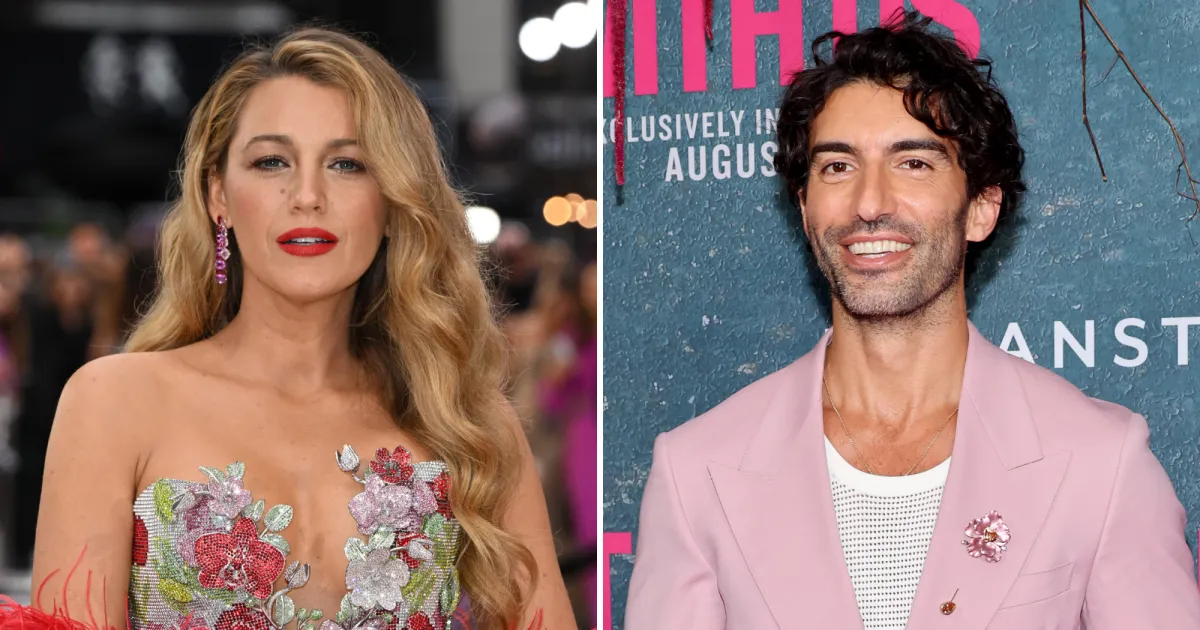
Blake Lively’s voice, warm and a bit hesitant, cut through the quiet February afternoon as she recorded a lengthy voice memo to Justin Baldoni. It was early 2023, weeks before the cameras were set to roll on It Ends with Us, the film adaptation of Colleen Hoover’s bestselling novel that promised to be a career-defining project for both of them. At 38, Blake wasn’t just an actress anymore; she was a wife, a mother to four young children, and someone navigating the wild chaos of adapting to life in the spotlight while craving a sliver of normalcy. This memo wasn’t part of some scripted scene—it was raw, personal, a digital letter sent from one creative soul to another in a moment of vulnerability. She hoped Justin was doing well, she said, her tone carrying the genuine concern of a friend who valued their bond. “Hey. I hope you’re so well. Just wanted to connect just to put something on their radar. So, between us. Like, this is so premature for me to even share this with you. All good, all good stuff.” Those opening words, obtained by Us Weekly from newly unsealed court exhibits, revealed a woman piecing together her priorities, not with cold calculation but with the emotional weight of someone who had juggled it all—and was starting to crack under the pressure.
Delving deeper into the past few months, Blake reflected on her conversations with her husband, Ryan Reynolds, who had become her confidant in the whirlwind of their expanding family. They had just welcomed their fourth child, little Olin, who was barely two years old, joining daughters James, now 11, Inez at 9, and Betty, 6. Motherhood wasn’t just a role for Blake; it was a full-time adventure filled with late-night feedings, laughter echoing through their home, and the constant worry that comes with raising little humans in a world that never slows down. “I was talking to Ryan and I was like, ‘I don’t know if I should share this,’ but he was like, ‘You guys have such a great trust, you know. Fill him in,'” she recounted in her voice memo, her voice softening as she leaned on that shared wisdom. Ryan, with his quick wit and unwavering support, had reassured her that trust between her and Justin was a pillar they could build on. It made sense—after all, working together on a project as intimate as It Ends with Us required that kind of rapport, where personal lives intertwined with professional ones. Blake imagined their collaborative energy turning a poignant story about love, resilience, and abuse into something cinematic and resonant, much like her roles in films that had showcased her emotional range. Yet, here she was, pausing to share this private update, her words a bridge between her hectic reality and the upcoming demands of screen life.
The heart of Blake’s confession lay in the exhaustion that motherhood and impending work schedules brought crashing down on her. She spoke candidly about the lack of a baby nurse in their household, a detail that painted a picture of sleepless nights and unrelenting tasks. “We still don’t have a baby nurse,” she admitted, her voice tinged with a mix of humor and fatigue, as if joking about it was the only way to cope. Returning to work so soon after giving birth felt daunting, especially when another film commitment loomed before It Ends with Us. “Just the idea of going back to work every day right away and also the idea of, you know, prepping for our movie and wanting to work out every day and all that and yet being on set every day. I’m like, ‘What have I done?'” The panic was palpable—she’d committed to that other project out of a sense of obligation, giving her word and sticking to it like the principled person she strove to be. But the calendar was ruthless: shooting in March would mean plunging back into the grind mere weeks after Olin’s arrival, when her body and mind were still recovering. Blake envisioned the emotional toll—waking up exhausted, rushing kids this way and that, all while trying to bring her A-game to a role that demanded physical shape and emotional depth. It wasn’t just the logistics; it was the fear of missing those tender moments with her children, the guilt of choosing career over cuddles, scenarios that any parent could relate to in the quieter hours.
Drawing from that vulnerability, Blake proposed a bold idea to Justin: could they tweak the production timeline? She recognized it as “selfish,” her tone apologetic yet hopeful, as if she was balancing assertion with grace. “Obviously there’s selfish reasons I’m telling you this,” she said, voicing the internal tug-of-war many women face in prioritizing their needs. If Justin could shift things two weeks earlier, it might align perfectly—not just for her sanity, but perhaps for the project itself. She painted a picture of how this adjustment could let her breathe, focus solely on It Ends with Us without the shadow of another shoot hanging over her. The irony wasn’t lost on her; here she was, an actress who thrived on control and preparation, feeling the fabric of her life unravel. “What I would love about that,” she mused about the possibility of an earlier start, “is that Ryan and I have also been really stressed about spending a month apart.” Extended separations were unfamiliar territory for their close-knit family, where the longest they’d endured was less than two weeks. Blake’s words evoked the ache of absence, imagining quiet dinners at home turned solitary, bedtimes without Ryan’s playful banter, all while the kids adjusted to a mother’s temporary void. “None of it is your problem,” she added quickly, framing her plea as a friendly chat rather than a demand, underscoring the respect she held for Justin as both a collaborator and a friend.
As the nearly five-minute memo wound down, Blake wrapped up with a touch of self-deprecating charm, her voice lifting slightly as if to lighten the mood. “So nice talking to you. Not talking to you, this is so sad. This is my social interaction these days, just talking into voice memos.” It was endearing, revealing a human side beneath the celebrity facade—a woman so caught up in newborn duties and household chaos that a recorded message stood in for a real conversation. She wished Justin well, sending love to his family who she’d never met, closing with a gentle “Take care, bye.” In that final sign-off, there was a sense of longing for connection in an industry that often felt isolating, where promises to call back evaporated amid scripts and sponsors. Blake, with her graceful poise and family-first ethos, had poured her soul into those words, hopeful that Justin would understand the chaos behind the curtain. Little did she know at the time how this intimate outreach would later intersect with the dramatic turn her life was about to take, proving that even heartfelt memos could reverberate in unexpected ways. Fast forward a year to 2024, and the Hollywood narrative shifted dramatically when Blake filed a lawsuit against Justin, accusing him of sexual harassment and reputational damage tied to It Ends with Us. Embarrassed and defiant, Justin denied the claims, filing a countersuit that was dismissed a year later in 2025. As the pair gears up for a May trial, the voice memo stands as a poignant artifact—a window into the pre-production anxieties that now fuel a bitter feud. Blake, in recounting those “good, great stuff” moments, perhaps didn’t foresee how trust could fracture, leaving her to navigate the fallout with the same resilience she brought to her family life. This isn’t just about Hollywood egos; it’s a reminder of how personal vulnerabilities, when aired in a public sphere, can escalate into full-blown conflicts, blurring the lines between friendship and professional rivalry. Fans of the film can’t help but wonder how these behind-the-scenes tensions colored the project’s authenticity, with Blake’s emotional pleas now enshrined in court records as evidence of a bond under strain.
Looking back, Blake’s decision to record that memo encapsulates the universal struggle of modern working mothers, especially those in high-profile roles. Raising four kids while chasing dreams on screen isn’t a glamorous photoshoot—it’s a marathon of compromises, sacrifices, and “what if” questions. By sharing her panic about back-to-back shoots, she humanized the glamour, showing that even stars grapple with the messiness of life. Ryan’s involvement highlights the teamwork in their marriage, where open conversations paved the way for candid reveals. And proposing a timeline shift? It was her way of advocating for herself, a lesson in prioritizing mental health amidst societal pressures that demand women “do it all.” The lawsuit’s shadow adds layers of irony; what began as a friendly heads-up morphed into allegations that rocked the industry, painting Justin not just as a director but as someone entangled in controversy. As trial approaches, public opinion remains divided—some see Blake as a victim standing her ground, others question the narrative. Regardless, her voice memo endures as a testament to vulnerability’s power, urging readers to empathize rather than judge. In an era of social media and instant news, moments like these remind us that beneath the headlines, real emotions drive the stories we consume.
The broader context of It Ends with Us ties into these revelations, as the film’s themes of overcoming trauma resonate deeply with Blake’s professional journey. Playing a role inspired by Hoover’s novel, she brought depth to characters battling inner and outer conflicts, mirroring her own push through overwhelming schedules. Yet, the production’s turbulence, from early memos to courtroom battles, underscores how creative projects can become battlegrounds for personal grievances. Justin, in defending his side, maintains that co-stars like Blake had input, yet the memo suggests a different dynamic—one of anticipatory openness turned sour. For fans, this saga isn’t mere tabloid fodder; it’s a cautionary tale about trusting instincts in collaborative spaces. Blake’s willingness to admit selfishness in her request speaks to a culture where admitting needs is progress, even if it leads to discord. Emotionally, reading her words evokes sympathy for the isolation she describes—voice memos replacing real talk, a hallmark of postpartum haze. As May’s trial looms, one can’t help but hope for resolution, allowing the art of the film to speak louder than the drama surrounding it. Ultimately, this story humanizes Blake from icon to relatable figure, navigating love, work, and conflict with fortitude. Her family’s unwavering bond shines through, proving that in the absence of peace, personal strength can guide the way forward.