




Harlan Coben on Fiction vs. Reality: The Art of Mystery Storytelling
Bestselling author Harlan Coben, known for his gripping mystery novels that have sold over 100 million copies worldwide, has recently ventured into the world of true crime television with his new CBS docuseries “Harlan Coben’s Final Twist.” In an exclusive interview with Us Weekly, Coben revealed fascinating insights about his creative process and the delicate balance between fiction and reality in his storytelling. Unlike many thriller writers who deeply research actual cases, Coben deliberately maintains distance from the details of true crimes. “I will see a case, I’ll look at the headline and that’ll maybe spark something. But I never want to dig into it,” he explained. This approach allows him to create wholly original narratives without being constrained by real events. He prefers to ask “what if” questions that transform a simple headline into something entirely new, giving him the creative freedom that has become his trademark in the literary world.
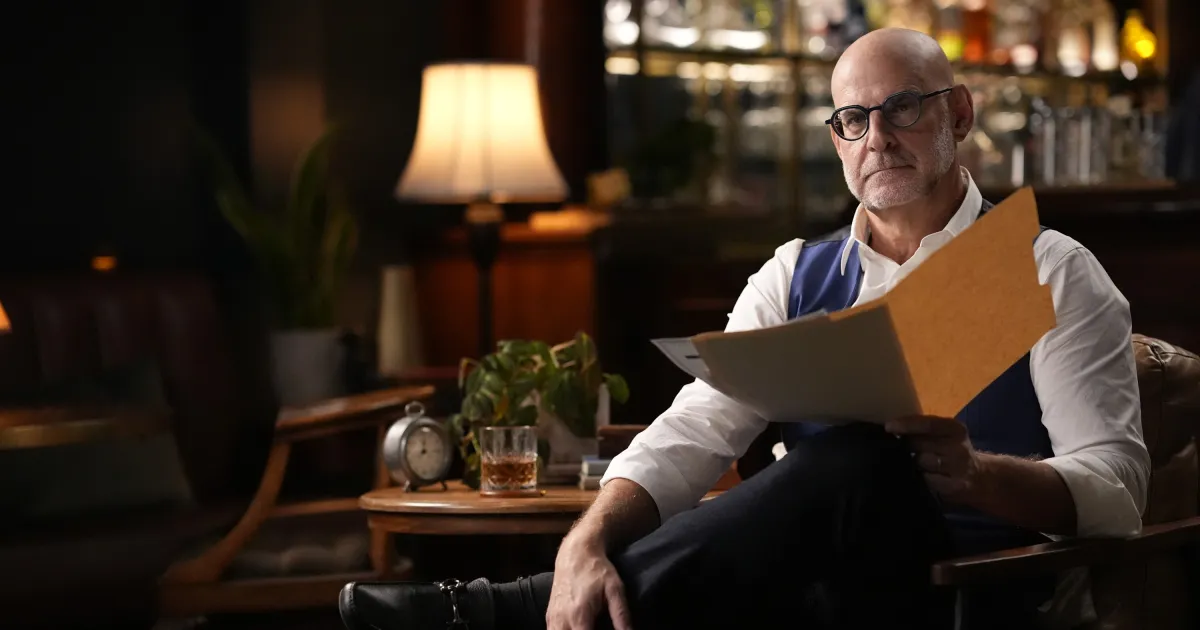
The transition from crafting fiction to hosting a true crime series has been an eye-opening experience for the acclaimed author. “Final Twist,” which premiered on January 7th, explores what drives seemingly ordinary people to commit extraordinary crimes. Each episode presents a new mystery with Coben himself guiding viewers through the labyrinth of hidden motives, buried secrets, and unexpected revelations. The experience has deepened his appreciation for the unpredictable nature of reality. “I’m more intrigued than I’ve ever been,” Coben admitted, noting that these true stories often contain twists that would be dismissed as unrealistic if presented in fiction. “If I had written the first episode — or any of the episodes of Final Twist — as a novel or if I made it into a TV show, I would have gotten 8 million emails saying, ‘Oh, this is so unrealistic. This could never happen.’ Of course, this is all true.”
This stark contrast between fiction and reality has become one of Coben’s most significant revelations while working on the docuseries. “Fiction has to follow certain rules. Reality doesn’t,” he observed, highlighting how this fundamental difference shapes storytelling across mediums. In fiction, authors must maintain a certain level of plausibility to keep readers engaged, but true crime often shatters these boundaries with developments that defy conventional narrative logic. This realization has been both humbling and inspiring for Coben, who confessed he didn’t fully appreciate “exactly how much that goes on” until immersing himself in these real-life cases. The project has allowed him to explore the psychology behind criminal behavior while maintaining his storyteller’s perspective—focusing on the human elements that drive people to cross moral and legal lines.
For Coben, stepping in front of the camera represented a significant departure from his comfortable position behind the scenes. The transition from creator to presenter brought unexpected challenges and moments of self-consciousness. “I am used to being behind the camera so I’d be sitting in the trailer and they’d be like, ‘OK, we’re calling the talent out on set.’ I wouldn’t even budge. I’m like, ‘Oh, wait. This time we’re talking about me,'” he recalled with amusement. Despite his initial hesitation, Coben embraced the opportunity to guide viewers through these complex stories, believing his presence helps “keep it grounded in a different way.” This personal involvement adds another dimension to the show, allowing him to build a direct connection with the audience while leveraging his expertise in crafting compelling narratives.
The docuseries format presented unique challenges compared to fiction writing, particularly in terms of structural constraints. While Coben has complete freedom to shape his novels however he chooses, “Final Twist” required condensing complicated true stories with all their twists into a cohesive hour of television. “True crime is being devoted to the fidelity of the actual story,” Coben explained, highlighting the responsibility to remain faithful to facts while still creating engaging entertainment. This balance demanded a different kind of storytelling discipline, one that respects the truth while recognizing the needs of the television medium. Each episode explores how ordinary people harbor extraordinary secrets, culminating in shocking revelations that prove truth is indeed stranger than fiction—a theme that resonates throughout Coben’s literary work as well.
Despite his successful foray into television hosting, Coben remains committed to his first love—writing. When asked about future on-screen opportunities, he responded cautiously: “Let’s do a step at a time. I still prefer writing. I still prefer creating things.” For Coben, the docuseries represents an “interesting experiment” rather than a career pivot, offering both himself and his fans “a little bit of something else” beyond his novels and scripted adaptations. As “Harlan Coben’s Final Twist” airs Wednesday nights on CBS, viewers get a rare opportunity to see the master of mystery apply his narrative instincts to real-life cases, bringing his unique perspective to the true crime genre while maintaining the suspenseful storytelling that has made him a household name. Through this new venture, Coben continues to explore the thin line between ordinary and extraordinary, between those who follow societal rules and those who break them—territory he has masterfully charted throughout his illustrious career.