






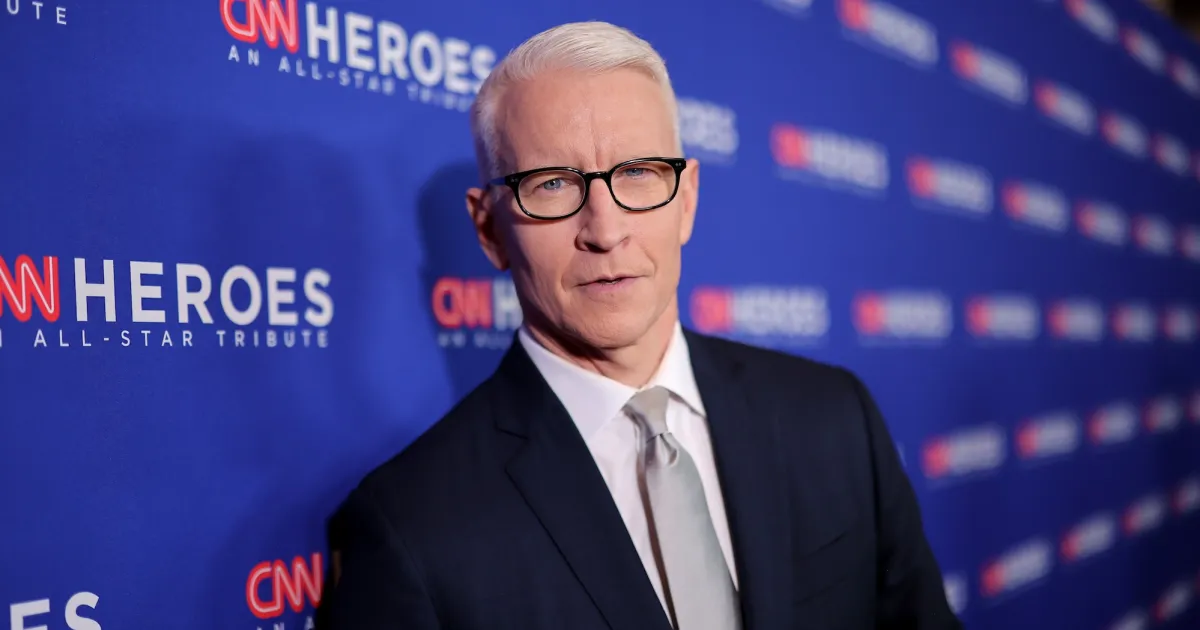
Anderson Cooper’s decision to step away from 60 Minutes after nearly two decades marks a poignant chapter in his illustrious journalism career, blending professional achievement with the heartfelt pull of family life. At 58, the seasoned reporter and anchor chose to bid farewell to the iconic CBS series, a role that had defined much of his public persona since 2007. On February 16, he shared this news publicly, marking the end of an era where he balanced two high-profile jobs with grace and energy. People were quick to reflect on how Cooper embodied the essence of modern broadcasting—courageous in the field, insightful in interviews, and always ready with a blend of empathy and sharp wit. His departure isn’t just about a job change; it’s a reflection of life’s natural progression, where priorities shift toward the people who ground us most. Cooper’s path has been one of resilience, from losing his father in a boating accident as a child to overcoming his mother’s struggles, all while carving out a space in a male-dominated industry. This announcement feels like a quiet acknowledgment that even icons need to recharge, to nurture the personal before the public. Fans and colleagues alike mourned the loss of his presence on the Sunday night show, where stories of war, injustice, and human triumph became more compelling under his narrative. But it’s also a celebration of his CNN anchor role, where he’s hosted prime-time specials that dissect global issues with unflinching honesty. The balance he’s sought for years—between breaking news and investigative journalism—now tilts toward a legacy that’s about more than ratings; it’s about real connections in a world that often feels disconnected.
In his statement to Variety, Cooper spoke with characteristic warmth, expressing gratitude for the opportunities 60 Minutes afforded him. “Being a correspondent has been one of the great honors of my career,” he noted, highlighting the “amazing stories” and collaborations with top-tier producers and crews that made each piece resonate deeply. The job wasn’t just work; it was a platform for Cooper to shine a light on untold tales, from political upheaval to personal tragedies, often venturing into dangerous territories like war zones or disaster-stricken areas. His fearless approach earned him acclaim, including multiple Emmys for segments that combined journalism with human storytelling. Yet, beneath the accolades lay a man grappling with the passage of time and the fleeting nature of childhood. “I have little kids now,” he confessed, a simple phrase that deepened his professional legacy into something profoundly personal. Those children—Wyatt, 4, and Sebastian, 3—represent a new frontier for someone who once joked about not having a traditional family structure. Coming from a background where he relied on friends as surrogate family after his father’s death, Cooper’s revelation underscores a universal truth: we all seek stability in changing times. His decision not to renew the contract stems from a desire to weave more fully into the fabric of everyday parenting, a quiet rebellion against the 24/7 grind that journalism demands. In an industry where burnout is common, Cooper’s choice feels like a gentle advocacy for balance, reminding us that even heroes need downtime to simply be dad, not just the anchor.
Cooper’s journey with 60 Minutes began in 2007, a leap from his CNN roots into a program with a storied history dating back to 1968. Joining a lineup that included legends like Mike Wallace and Ed Bradley, he brought a fresh voice to the table—one infused with personal touch and emotional depth. Early segments showcased his knack for empathy, whether interviewing survivors of natural calamities or exposing corporate malfeasance. Over nearly 20 years, he tackled stories that pushed boundaries, from climate change impacts on vulnerable communities to the opioid crisis ravaging American families. His reporting wasn’t just factual; it was humanized, pulling viewers into the narratives with vivid details and thoughtful questions that revealed the complexities of the human condition. Amid this, Cooper’s CNN commitments grew, with his show “Anderson Cooper 360°” becoming a nightly fixture offering sharp analysis and in-depth discussions. The strain of juggling both networks, especially during live events like the New Year’s Eve specials with Andy Cohen, highlighted the toll on his personal life. Those late nights and early mornings on air clashed with the chaos of building a family, prompting him to reevaluate. Recent negotiations with CBS hinted at a possible extension, but Cooper’s heart leaned toward a slower pace, one where he could mentor aspiring journalists without sacrificing the joy of bedtime stories. This pivot isn’t retreat; it’s evolution, a testament to how life’s demands reshape even the most driven among us. His influence extends beyond CBS, inspiring a generation to pursue truth with compassion.
The announcement also brought renewed attention to Cooper’s deeply personal story of fatherhood, a journey that began in secret and blossomed into public joy. During a May 2020 CNN Town Hall, he revealed welcoming his first son via surrogate, a moment broadcast live that captured the nation’s heart. “I don’t really have a family, so my friends have become my family,” he explained in a later Howard Stern interview, echoing sentiments from his tumultuous upbringing. Raised by a mother who struggled with grief after losing her husband—the designer Gloria Vanderbilt’s son—Cooper often felt the absence of stable parental figures. “When I was a little kid, it was just my mom and my brother,” he shared, longing for the simple gestures like a ball game outing that could have fostered connection. This vulnerability fueled his approach to parenthood, leading him to co-parent with his ex-partner, Benjamin Maisani, a nightclub owner he dated from 2009 to 2018. Their breakup transitioned into partnership, proving that love can morph into enduring family bonds. Maisani, described as “a great guy,” brought stability, offering the two-parent dynamic Cooper wished he had. In his People magazine interview, Cooper marveled at this arrangement, noting how it provided structure and laughter amidst the unpredictability of raising children. Mauritius, where Cooper now resides, became a haven, far from the media glare, allowing for a semblance of normalcy. This narrative isn’t just celebrity gossip; it’s a mirror for anyone who’s pieced together family in unconventional ways, blending romance’s end with life’s beginnings.
Expanding their family in February 2022 with a second son, Benjamin, underscored Cooper and Maisani’s commitment to a nurturing environment. The boys, surrounded by parents who speak French and English, blend cultures seamlessly, promising a bilingual, worldly upbringing. Cooper candidly shared how parenting defied the neat scripts he imagined as a reporter. His nocturnal CNN schedule meant Maisani handled bedtime rituals, a “natural” delegation that fostered trust and teamwork. Mornings brought shared awakenings, milk in hand, before the whirl of daycare and work. Yet, Cooper’s humor shone through his bafflement at French exchanges, joking that the kids might be “plotting against me.” This lightheartedness masks the challenges: the exhaustion of single-minded focus on toddlers, the guilt of missed milestones, the joy of first steps. Living in a vibrant island nation, Cooper experiences a life unrehearsed, from beach outings to quiet reflections, contrasting sharply with his high-stakes reporting. Maisani’s nightclub background adds a dash of glamour and unpredictability, turning family time into adventures. Cooper’s openness about this dynamic humanizes him, stripping away the poised journalist mask to reveal a father learning daily—much like any parent navigating tantrums, sleeps, and hopes. It’s a reminder that behind every story he tells on camera is a personal one unfolding at home, rich with emotions that make us all relatable.
Ultimately, Cooper’s shift to prioritize family and CNN signals a recalibration of success, valuing presence over prestige in an era of constant connectivity. His sons’ laughter becomes the new anchor point, an antidote to the world’s heaviness he reports on. Balancing careers, as described, involves sacrifices—scaling back production travel in favor of video calls or remote edits. The New Year’s Eve specials, with their festive energy and banter, offer pockets of delight amid responsibility. Cooper’s legacy, enriched by this choice, inspires others to cherish imbalance when it leads to fuller lives. He’s not abandoning journalism but redefining it, perhaps mentoring through CNN platforms or advocating for work-life harmony. As he embraces fatherhood fully, memories of his own losses soften into wisdom passed to Wyatt and Sebastian. This departure feels like closure and renewal, a human story of growth amidst fame’s glare. Cooper, ever eloquent, teaches us that true depth comes from vulnerability, family, and the courage to say yes to the heart’s quieter calls.