




Just last month, the streaming world was rocked when Guillermo del Toro dropped his fresh take on Frankenstein straight onto Netflix, sending chills through unsuspecting viewers who expected another typical horror flick but got a gorgeously gothic masterpiece instead. And now, fast-forward just a bit, and here comes Maggie Gyllenhaal with a wild, punk-rock edge on the very same classic story in The Bride! It’s fascinating how two filmmakers can draw from the same wellspring of Mary Shelley’s iconic novel and end up with such wildly divergent results—one steeped in del Toro’s heartfelt, atmospheric horror, the other pulsing with rebellious energy and a modern twist on identity and revenge. Frankenstein isn’t just a tale; it’s a chameleon of a story that has morphed countless times on screen, each adaptation peeling back new layers of humanity, monstrosity, and the fear of playing God. To celebrate The Bride! hitting theaters this weekend, we’re diving headfirst into some of the best spins on Victor Frankenstein and his doomed creature. From the groundbreaking 1931 Universal classic to del Toro’s ambitious 2025 rebirth, we’ve ranked our top five adaptations that keep the Frankenstein legacy alive and kicking. It’s a list that blends nostalgia, laughs, and genuine scares, reminding us why this story keeps haunting our collective imagination. As we go through these picks, think about how each one resonates with today’s world—questions of science ethics, loneliness, and what it means to be “human” feel even more urgent now, from AI debates to social isolation. Del Toro’s version, for instance, tugs at your heartstrings because it humanizes the Creature in a way that’s both terrifying and deeply empathetic, echoing real-life struggles with identity and belonging. And while The Bride! might take its inspiration further by empowering the female perspective—turning the Bride into a fierce, unapologetic force—it’s these earlier adaptations that paved the way. Let’s start with a quirky, heartfelt favorite that proves Frankenstein can be sweet as well as spooky.
Tim Burton’s 2012 stop-motion wonder Frankenweenie flips the script by shrinking the epic scale of Shelley’s tale into something intimately suburban and kid-friendly, yet tinged with Burton’s signature blend of whimsy and melancholy. At its core, it’s the story of Victor Frankenstein, played with nerdy charm by Charlie Tahan, a young boy who’s an outsider in his ordinary town, finding solace only in his loyal pit bull terrier, Sparky. Tragedy strikes when Sparky chases a baseball during one of Victor’s rare moments of stepping out of his shell—literall y pulled into playing the game to impress his dad—and gets hit by a car. Heartbroken, Victor turns to science class for inspiration, rigging up a homemade experiment to jolt Sparky back to life. It’s a nod to the original novel’s themes, but Burton scales it down to a boy’s grief and ingenuity, turning resurrection into a metaphor for childhood loss and the magic of imagination. But Victor’s success doesn’t stay private; his classmates catch wind and start reviving their own pets—a dead hamster, a fish, even a turtle—leading to a parade of undead chaos that spirals into comedic mayhem. What makes Frankenweenie stand out isn’t just the film’s meticulous black-and-white animation, which feels like a loving reboot of Burton’s 1984 live-action short starring Shelley Duvall, but how it captures that raw Burton essence: eccentric characters voiced by his go-to stars like Catherine O’Hara as Victor’s mom or Martin Short as his beleaguered dad, and designs that pop with playful creativity. There’s a scene where the revived pets form a bizarre, glowing parade at night that mirrors the lonely monster’s quest for connection, yet it stays accessible and fun. Burton seems to pour his love for practical effects and stop-motion into this one, a technique that’s almost a lost art in today’s CGI-dominated world. Watching it, you feel that enthusiasm bubbling through—here’s Burton at his most enthusiastic, before heavier projects like Alice in Wonderland dulled some of his spark. It’s not just an adaptation; it’s a personal love letter to the joys of creativity amid bullying and loss, proving the Frankenstein mythos can inspire hope rather than despair. And in a weird way, it resonates today with how kids bury themselves in screens or science kits to cope with real-world rejection. Victor’s journey from grieving boy to accidental mad scientist feels achingly human, reminding us that invention often starts from a place of personal pain.
If you crave something lighter that trades spine-tingling fear for belly laughs, Mel Brooks’ 1974 comedic gem Young Frankenstein is the antidote, transforming Shelley’s grave tale into a parody that’s still hilariously fresh today. Gene Wilder stars as Dr. Frederick Frankenstein—pronounced “Fron-ken-shteen”—a brilliant surgeon desperately trying to escape the shadow of his infamous grandfather, the original Victor. Haunted by family baggage (pun intended), Frederick reluctantly inherits his grandpa’s sprawling Transylvanian castle, complete with secret labs and hilariously ominous servants. Curiosity gets the better of him when he discovers Victor’s diary, and before long, he’s channeling his ancestor, aiming to succeed where old Victor failed—by creating “the perfect 24-foot pituitary giant with an almost human brain.” The humor ramps up absurdly when Frederick’s monster, brought to life with Peter Boyle’s over-the-top performance, ends up with the wrong brain—a “normal” one from a dim-witted criminal instead of the genius’s. Boyle delivers with gusto, his monster’s misadventures leading to slapstick chase scenes, romantic entanglements, and classic lines that have become comedy gold. Remember “It’s alive… it’s alive”? Here, it’s twisted into iconic bits like “What hump?” in response to a hunchbacked assistant, or “Abby… normal” as Frederick descries the brain mix-up. Peter Boyle’s stoic, misunderstood beast even falls for a deaf village girl in a quirky rom-com subplot that subverts horror tropes entirely. Brooks, the master of satire, doesn’t shy from poking fun at the genre’s clichés—think faux-German accents, exaggerated lab sets, and cameos from comedy legends like Teri Garr as Igor the hunchback. But beneath the laughs, Young Frankenstein nods to deeper Frankenstein themes, like the ethics of playing God and the loneliness of being an outsider. Frederick’s arc from dismissal to reluctant family bonding feels warmly human, echoing today’s struggles with inherited expectations or genetic legacies. It’s astonishing how well the 1970s humor holds up; Brooks’ timing transcends eras, making it feel timeless. In an age of reboots and parodies, this film is a reminder that satire can be both smart and silly, turning a gothic nightmare into a joyous romp that leaves you chuckling about the absurdity of mad science—and modern life in general.
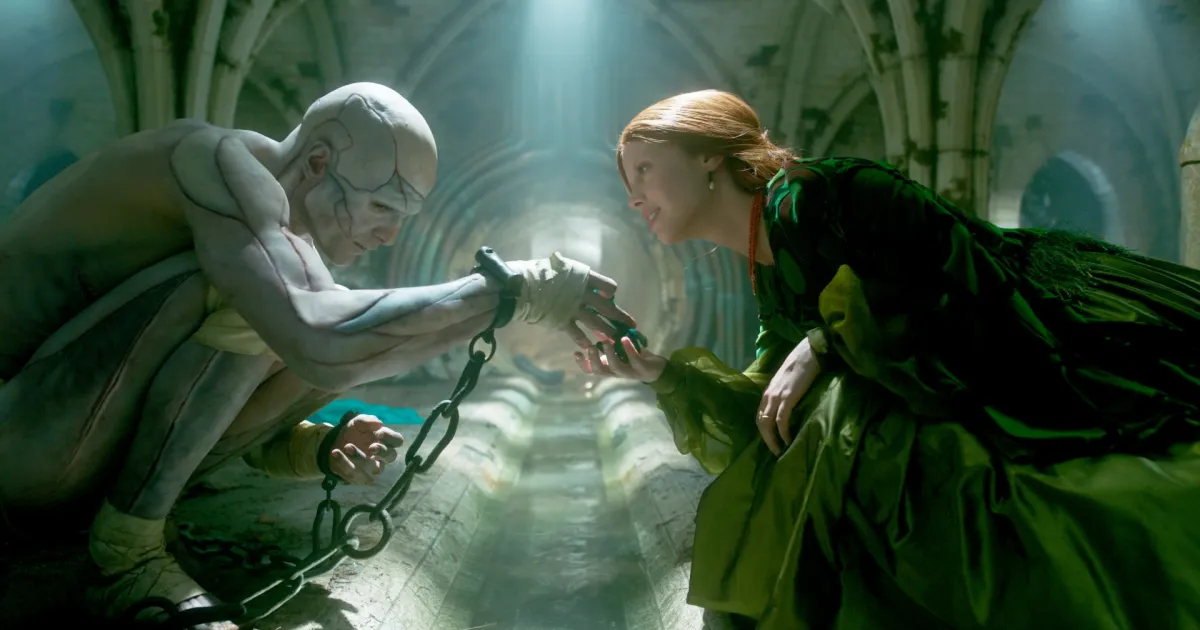
Guillermo del Toro’s 2025 Frankenstein adaptation shifts gears dramatically, bringing a poetic, highly personal depth to Mary Shelley’s story that feels like the director’s lifelong passion project finally realized. As a self-proclaimed fan of the novel since childhood, del Toro infuses it with his signature touch: lush, immersive worlds that blur the line between beauty and horror. Here, Victor Frankenstein—portrayed with intense dedication by Oscar Isaac—isn’t the wild-haired rogue of myth but a brilliant, privileged surgeon expelled from the Royal College of Surgeons in Edinburgh for his blasphemous experiments in reanimating the dead. Enter Christoph Waltz as the enigmatic arms dealer who funds Victor’s ambitions, drawing eerie parallels to today’s tech moguls bankrolling questionable biotech ventures. Victor succeeds in crafting the Creature, played by a hauntingly empathetic Jacob Elordi, a being stitched from discarded bodies that awakens with primal curiosity but struggles against its imposed humanity. Unlike other takes, del Toro dwells on the Creature’s emotional turmoil—its search for identity amidst a world that sees it only as a monster—leading to poignant moments of betrayal and escape. The film avoids bombastic action, instead emphasizing gothic atmosphere through stunning production design: misty Scottish moors, intricate labs filled with del Toro’s usual flair for practical effects, and creatures that blend the monstrous with the pitiful. Elordi’s performance is a revelation, infusing the Creature with childlike innocence and quiet rage, evoking the pathos of someone finally confronting abandonment. Isaac’s Victor is equally compelling, a man consumed by ambition yet wrecked by morality, humanizing the scientist as a figure of tragic flaws. Del Toro weaves in subtle nods to his influences—think influences from stop-motion to personal losses—making it a deeply felt exploration of isolation and creation. In our world of genetic engineering and IVF debates, the film feels prescient, asking who gets to decide life’s boundaries. It’s not just an adaptation; it’s a love letter to the story’s heart, reminding us that true horror stems from our capacity for empathy, or lack thereof. Watching it, you feel moved rather than scared, a testament to del Toro’s mastery of emotional resonance in a genre often fixated on scares alone.
Stepping back to the roots, James Whale’s 1931 Frankenstein from Universal Pictures is the one that etched the monster into our cultural DNA, from the iconic image of Boris Karloff’s flat-headed, bolt-necked behemoth to the shivers it still delivers. Director James Whale, no stranger to subversive classics, takes Shelley’s novel and distills it into a tight, thrilling nightmare about obsession and its consequences. Colin Clive’s Dr. Henry Frankenstein is the driven scientist, pushing boundaries in a remote lab to piece together life from the dead—a mirror to Victorian hubris and the dawning age of science. When his creation awakens, it’s neither the eloquent philosopher of the book nor a dumb brute, but a misunderstood entity, childlike and violent in fits, grappling with a world that rejects it. Karloff’s portrayal, under heavy makeup and restrictive costumes, conveys volumes through subtle movements and mournful eyes, turning the monster into a tragic anti-hero. The climax, with an angry mob torching the windmill where the Creature hides, symbolizes the peril of unchecked prejudice, from mob justice to fears of “otherness.” Despite its age—almost a century old—the film remains entertaining, blending budding special effects (early sound cinema was revolutionary) with Whale’s queer-coded undertones, evident in the scientist’s fraught relationships. It explores madness vs. genius in a way that feels alarmingly modern, resonating with current discussions on mental health and ethical science. Karloff’s performance is legendary, pioneering the silent speaking style that defined early horror stars. Yet, even as del Toro’s version pushes boundaries, this one’s simplicity endures—it’s pure cinema, eerie and thought-provoking, a spooky season staple that asks: what if creation outlives its creator? In an era of endless reboots, Whale’s vision reminds us of horror’s power to inspire empathy for the damned.
At the pinnacle of our list sits Bride of Frankenstein (1935), the exquisite sequel that not only matches but eclipses the original, transforming Shelley’s narrative into a profound meditation on loneliness, desire, and the perils of hubris. James Whale returns to direct, but this time with a sharper focus on themes that feel eerily contemporary—queer subtext, gender subversion, and the human need for connection. Boris Karloff reprises his legendary Creature, now on the lam, wreaking havoc as he seeks meaning in a hostile world, while Colin Clive’s Henry Frankenstein is coerced into one last experiment: crafting a mate for the monster under threat from the devious Dr. Pretorius (Ernest Thesiger). Elsa Lanchester’s Bride emerges as a sparkling, near-silent force, her jutting hair and angular features becoming an icon of defiance. The film’s blend of gothic horror, campy wit, and genuine pathos makes it a tour de force—moments of terror give way to humorous absurdity, yet it never loses its emotional core. Whale cleverly embeds subversive elements, slyly commenting on societal norms amid the Hays Code’s censorship, turning the Bride’s awakening into a feminist roar. Yes, it’s aged remarkably, its queer readings growing bolder with time, positioning the Creature’s plea for companionship as a universal cry. Universal Horror at its zenith, it balances scares with intelligence, proving sequels can soar. Why top our list? Because it humanizes the monster’s quest, mirroring real struggles with alienation while adding layers of modernity. In 1935, this was bold; today, it’s timeless, urging us to confront our fears of difference. If Frankenstein adaptations teach one thing, it’s that monstrosity lives within us all. And with films like del Toro’s and now Gyllenhaal’s keeping the flame alive, the legend endures, ever-evolving, ever-relevant. So, grab your popcorn, but not for horror alone— for the humanity hiding in the shadows.