






The Perfect 10: Prime Video’s Cinematic Masterpieces
What makes a movie perfect? Is it the way it captures the dark underbelly of society through biting satire? Perhaps it’s found in absurdist humor that challenges our perceptions of reality. Or maybe perfection lies in meticulous period pieces or heartwarming tales of unexpected romance. As Watch With Us highlights this week, the definition of cinematic perfection is subjective—but that won’t stop us from celebrating what we consider to be flawless films available on Amazon Prime Video. From psychological thrillers to quirky comedies, these selections represent storytelling at its finest, each achieving that rare 10/10 status that makes them worthy of your time and attention.
American Psycho stands as a masterpiece of satirical horror that continues to disturb and fascinate audiences decades after its release. Christian Bale delivers an unforgettable performance as Patrick Bateman, a Wall Street yuppie whose immaculate morning skincare routine and elite social connections mask a disturbing hobby: murder. As Bateman narrates his increasingly unhinged experiences, the line between reality and delusion blurs, leaving viewers questioning everything they’ve witnessed. Director Mary Harron brilliantly adapts Bret Easton Ellis’s controversial novel into a razor-sharp critique of 1980s consumer culture, toxic masculinity, and wealth obsession. The film’s genius lies in its darkly comedic elements—Bateman’s earnest monologues about Huey Lewis and the News before committing brutal acts, his business card anxiety, his shallow relationships with colleagues and his fiancée (played by Reese Witherspoon). Unfortunately, some viewers misinterpret Bateman as an aspirational figure rather than a satirical cautionary tale, completely missing the point of this incisive social commentary that remains frighteningly relevant today.
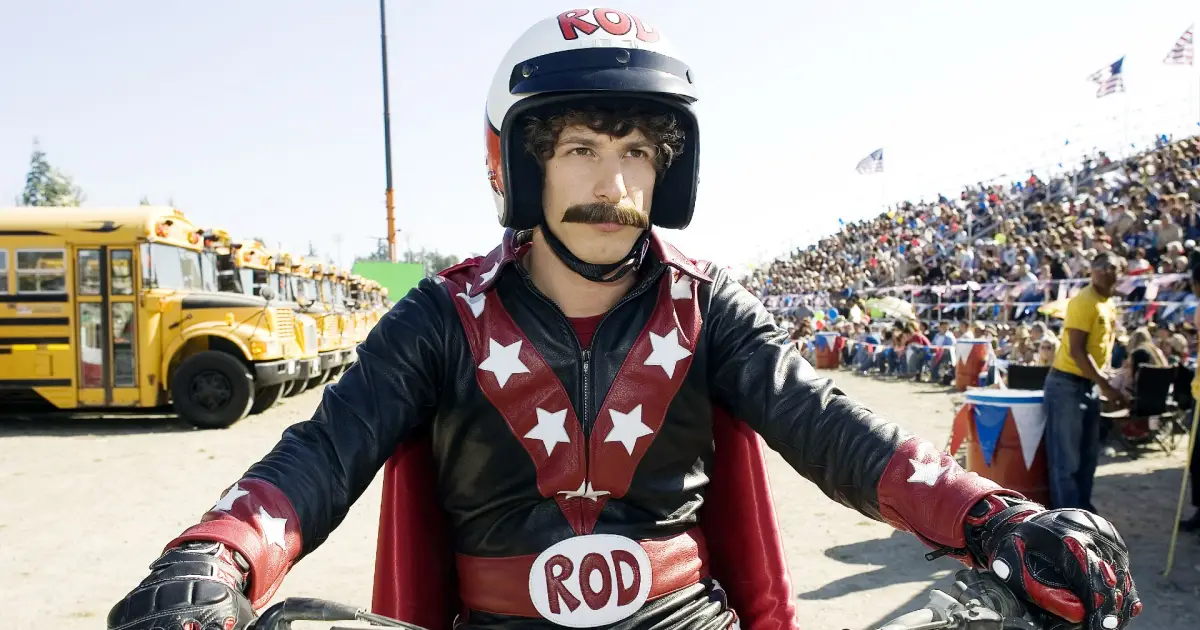
The Lonely Island comedy team delivers unexpected brilliance in Hot Rod, a film that masterfully blends absurdist humor with genuine heart. Andy Samberg stars as Rod Kimball, an accident-prone aspiring stuntman determined to earn the respect of his disapproving stepfather Frank (Ian McShane). When Frank falls ill, Rod concocts a seemingly impossible stunt—jumping a motorcycle over fifteen school buses—to raise money for his treatment. What could have been a forgettable comedy becomes something special through the film’s unique comedic sensibility. Director Akiva Schaffer embraces an anti-comedy approach where the jokes often come from subverting expectations rather than delivering obvious punchlines. The film’s random interludes (like an unexpected forest dance sequence that devolves into chaos), deadpan delivery, and commitment to its bizarre internal logic create a cult classic that rewards repeat viewings. The supporting cast, including Bill Hader, Danny McBride, and Will Arnett, elevates the material with performances that find the perfect balance between absurdity and sincerity. While initially underappreciated upon its release, Hot Rod has rightfully earned its place as a beloved comedy staple that defies conventional formulas.
Wes Anderson’s The Grand Budapest Hotel achieves visual and narrative perfection, creating a meticulously crafted world that feels both fantastical and emotionally authentic. Set in the fictional European country of Zubrowka, the story follows legendary concierge Monsieur Gustave (Ralph Fiennes) and his loyal lobby boy Zero (Tony Revolori) as they become entangled in a murder mystery and inheritance dispute following the death of Gustave’s elderly lover, Madame D. (Tilda Swinton). Anderson’s signature dollhouse aesthetic reaches its pinnacle here, with every frame composed like a painting—pastel color palettes, symmetrical compositions, and intricate set designs creating a visual feast. Yet beneath this stylized surface lies a surprisingly poignant meditation on memory, fascism, and the passing of an era. The film operates as a story within a story within a story, its narrative layers reflecting how history becomes memory becomes myth. Fiennes delivers one of his finest performances, balancing Gustave’s fussiness and vulgarity with unexpected tenderness and principle. The sprawling ensemble cast—featuring F. Murray Abraham, Adrien Brody, Willem Dafoe, Saoirse Ronan, and Edward Norton among many others—creates a rich tapestry of characters who populate this enchanting yet melancholic world. Anderson achieves something remarkable: a film that’s simultaneously whimsical and profound, hilarious and heartbreaking.
In Punch-Drunk Love, director Paul Thomas Anderson transforms Adam Sandler, typically known for broad comedies, into a revelatory dramatic performer in one of cinema’s most unconventional yet moving love stories. Sandler plays Barry Egan, a novelty item salesman with severe social anxiety, prone to emotional outbursts and constantly belittled by his seven overbearing sisters. When Barry meets the sweet-natured Lena Leonard (Emily Watson), he finds someone who accepts him despite his peculiarities, but their budding romance faces threats from both Barry’s internal struggles and his entanglement with a phone-sex extortion scheme run by the volatile Dean Trumbell (Philip Seymour Hoffman). What makes this film extraordinary is Anderson’s ability to translate Barry’s emotional state into pure cinema—surreal interludes of abstract colors, disorienting sound design, and Jon Brion’s percussion-heavy score create a sensory experience that puts viewers directly into the protagonist’s anxious mindset. Anderson finds beauty in unexpected places: a harmonium abandoned on a street, a pudding cup loyalty program, the fluorescent lighting of a supermarket aisle. These elements combine to create a uniquely tender portrait of how love can provide clarity and purpose to a chaotic existence. Watson delivers a perfectly understated performance opposite Sandler, creating chemistry that feels both unlikely and inevitable. Punch-Drunk Love accomplishes something rare—it’s experimental in form yet deeply accessible in its emotional truth.
The films highlighted represent perfect 10/10 cinema for different but equally compelling reasons. American Psycho’s biting satire reveals uncomfortable truths about capitalism and masculine identity through its unflinching dark humor. Hot Rod elevates seemingly silly comedy to art through commitment to its unique vision and underlying emotional authenticity. The Grand Budapest Hotel demonstrates how meticulous craft and aesthetic precision can create not just visual beauty but profound emotional resonance. And Punch-Drunk Love shows how unconventional storytelling techniques and unexpected casting choices can result in one of cinema’s most touching explorations of human connection. What unites these disparate films is their complete mastery of their intended goals—each knows exactly what it aims to accomplish and executes that vision flawlessly. They remind us that perfection in art isn’t about fitting into predetermined categories but rather achieving a singular vision with such confidence and skill that we can’t imagine the work existing any other way. These Prime Video selections offer viewers not just entertainment but transformative experiences that showcase the unique power of cinema at its absolute best.