





Imagine for a moment the sheer wonder of holding in your hands a relic from a time when the world was a vastly different place—nearly 290 million years ago, during an era long before dinosaurs roamed the Earth, when the air was thicker, the landscapes alien, and life was just beginning to make its bold leap from water to land. Your lungs are quietly doing their job right now, expanding and contracting with every breath you take, powering your body without a second thought. But did you know that the intricate system behind that crucial function has ancient roots, dating back further than you might imagine? A groundbreaking fossil discovery in an unexpected spot—an Oklahoma cave, of all places—has shed light on how this vital mechanism first evolved in early reptiles. It’s a story that’s equal parts scientific marvel and a reminder of our deep connections to the past, turning what we take for granted into something truly extraordinary.
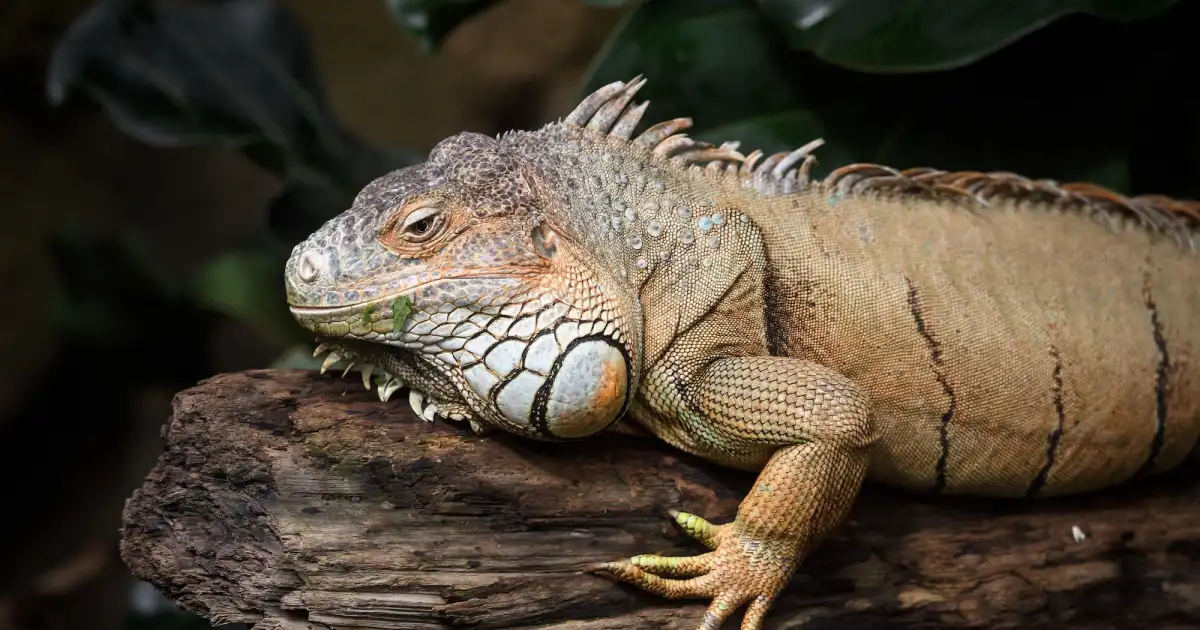
Picture this: Two small specimens of an ancient reptile called Captorhinus, each about the size of a bearded dragon you’d see basking under a lamp on TikTok, were found preserved in a way that defies the usual fragility of fossils. These weren’t just dusty bones crumbling under the careful brush of archaeologists; they were mummified, their skin, cartilage, and even traces of ancient proteins intact after millions of years entombed in mineral-rich water and crude oil. Discovered and detailed in a 2026 study published in the journal Nature, these Captorhinus fossils hail from around 289 to 286 million years ago, a span when early reptiles were pioneering the way for the diverse life we see today. What makes this find so jaw-dropping is the level of preservation—something scientists rarely encounter. Most fossils only capture hard structures like bones and teeth, but here, preserved cartilage in the rib cage and shoulder regions offers a window into the soft anatomy that usually vanishes into the ether of time. It’s like finding a perfectly preserved cavity in a tooth from an extinct species; suddenly, you have tangible evidence of how the animal lived, moved, and most importantly, breathed. For researchers, this isn’t just a cool artifact—it’s a game-changer, providing direct clues about the evolution of respiration that textbooks could only speculate on before.
Delving deeper into the implications, this mummified fossil has profoundly altered our understanding of how breathing evolved. Before these finds, the transition from aquatic to terrestrial life involved less efficient methods like buccal pumping, where early amphibians and their fish ancestors used the mouth and throat to force air into the lungs—a technique fine for watery or damp environments but woefully inadequate for sustained energy in dry-land adventures. Oxygen intake was limited, endurance curtailed, and the potential for vigorous activity severely hampered. Enter costal aspiration, the rib-driven mechanism seen in Captorhinus, where the chest expands and contracts to draw in air more effectively. It’s exactly how you breathe right now: your brain sending signals, muscles contracting, lungs filling with refreshing oxygen. Scientists can now pinpoint this evolutionary leap to nearly 290 million years ago, shattering previous timelines and painting a clearer picture of how vertebrates ditched their ancestral constraints. This shift didn’t just improve breathing; it fueled higher metabolisms, enabling creatures to venture further, climb higher, and diversify into countless terrestrial niches. The study’s author, perhaps hunched over a lab table with gloves on, must have felt a thrill as they realized these specimens were rewriting biology’s playbook, turning hypothetical diagrams into solid, evidential truths.
Now, let’s draw a line from these prehistoric reptiles to you, the reader, sipping coffee or scrolling through this article. Your own breathing system is a direct descendant of that ancient costal aspiration, refined by countless generations of evolutionary tweaks. In humans, it’s a beautiful symphony involving the ribs and the diaphragm—a dome-shaped muscle at the base of your lungs. When you inhale, the diaphragm contracts and flattens downward, like pulling down on a lever, while muscles attached to the ribs lift them upward, expanding your chest cavity. This creates a vacuum of negative pressure, sucking air in through your nose or mouth, down your windpipe, and into your lungs’ alveoli, where oxygen seeps into your bloodstream to energize every cell. Exhaling is the reverse: the diaphragm relaxes, the chest recoils naturally, pushing stale air back out. Over millions of years, this system has evolved to handle feats as varied as sprinting across a field, belting out a karaoke tune, or even sustaining life through deep sleep. Without this heritage from creatures like Captorhinus, you’d be gasping through buccal pumping like a fish out of water—inefficient, exhausting, and utterly unsuited for the active modern life you lead. It’s a humbling thought: every deep breath you take is a tribute to an evolutionary innovation that started small in a lizard-like reptile, echoing through time to power marathon runners, opera singers, and everyday humans alike.
What truly fascinates me about this discovery is how that single breakthrough branched out into a wild array of adaptations across species, showcasing nature’s creativity. Reptiles, including modern lizards and turtles, stick mostly to those rib-powering movements for breathing, their chests heaving like bellows to meet their needs. Mammals, on the other hand, added a diaphragm for more precise control, allowing for the varied demands of hibernation, sport, or stress responses—think of a dog panting or a whale surfacing for air, each leveraging this flexible system. Then there’s the avian twist: birds evolved unidirectional airflow through their lungs, paired with air sacs that act like internal balloons, enabling them to soar at incredible altitudes without tiring. All of these innovations trace back to the same foundational shift away from primitive throat pumping, illustrating how one ancient reptile’s ribcage redesign set off a domino effect of biodiversity. Captorhinus, as an early amniote, was part of this wave; its eggs evolved the ability to survive on dry land, breaking free from water’s confines and, when paired with superior breathing, paving the way for the burst of terrestrial species we know today—from furry mammals to scaly reptiles. The preserved cartilage and connective tissue in these fossils aren’t just anatomical curiosities; they’re proof positive of how these structures supported such a radical lifestyle change, quietly reshaping our textbooks and even how we view our own bodies. It’s like uncovering the roots of a family tree that explains your love for hiking or bird-watching, tying personal habits to prehistoric pioneers.
In reflection, this Oklahoma cave discovery isn’t merely a footnote in paleontology; it’s a profound link to our shared history with the animal kingdom. It humanizes the science, making us appreciate the mundane act of breathing as an epic tale of survival and adaptation. Imagine the scientists’ excitement—pulverizing the air in heated debates over the specimens, their flashlights cutting through the cave’s shadows to reveal secrets hidden for eons. Or consider the parallels in daily life: how a simple fossil redraws the map of evolution, reminding us that the oxygen coursing through your veins has powered everything from tiny reptiles scurrying through Permian forests to astronauts breathing recycled air in space. As we grapple with modern threats like pollution or climate change that affect our lungs, understanding this 290-million-year-old legacy could inspire better conservation efforts. After all, the system that fuels your every breath is a testament to resilience, a bridge between the ancient past and the present. So next time you pause to take a deep breath—perhaps after a long run or a stressful day—remember Captorhinus, the little mummified reptile that started it all, and let it spark a sense of awe for the evolutionary wonders that keep you alive and thriving.