





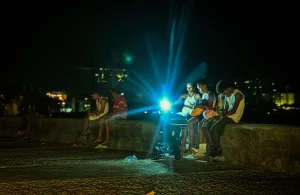





A Spark in the Shadows: Havana’s Defiant Voices
In the heart of Havana, where the Caribbean sun beats down on faded colonial facades and the air hums with the distant rumble of old engines, something extraordinary unfolded in February 2024. University of Havana students, weary from constant power outages and spotty internet that left their classrooms shrouded in darkness and their studies interrupted, took to the streets in a rare display of protest. Picture a crowd of young dreamers—computer science majors fumbling with offline apps, history buffs poring over frayed books by candlelight—gathering on the iconic steps of the university’s amphitheater. They weren’t just complaining; they were shouting, chanting, and demanding change. “No hay luz, no hay futuro!” (No light, no future!) echoed through the plazas, transforming a typically quiescent campus into a makeshift forum for dissent. This wasn’t a violent uprising, but a poignant outcry from Cuba’s future leaders, many in their late teens and early twenties, grappling with an economy in tatters and a government they saw as aloof. As I stood among them—a journalist mingling with the crowd—I felt the electricity of hope, a stark contrast to the literal shortages plaguing the island.
The energy crisis gripping Cuba has been brewing for decades, exacerbated by U.S. sanctions, ailing Soviet-era infrastructure, and the pandemic’s lingering scars. Havana, the island’s pulsing capital, endures blackouts lasting hours or even days, forcing residents to ration electricity like a precious commodity. A engineering student I spoke with, let’s call her Maria, described nights huddled in her dorm with flashlights, trying to complete assignments on her laptop during the rare windows of power. “It’s not just inconvenient,” she said, her voice tinged with frustration, “it’s crippling. Without consistent electricity, how can we compete globally?” The internet is no better—a fragmented system run by the state, where speeds crawl and outages sidel paper the access island-wide. In rural areas, connectivity is a luxury, but even in Havana, students report frequent disconnections, making online research for projects akin to chasing ghosts. This duality of crises—physical power shortages and digital isolation—has widened the poverty gap, alienating the educated youth who once fueled Cuba’s revolutionary spirit.
Amid these hardships, the protests escalated from whispers in dormitories to bold actions in public spaces. Imagine young men and women, clad in the university’s red and black scarves, linking arms and marching toward Parque Lennon, a nod to John Lennon and his song “Imagine,” symbolizing their yearning for a better world. One protester, an economics major named Carlos, shared how he organized flash mobs via trusted messaging apps during brief online moments. “We started small—art on walls decrying the shortages, memes circulating on encrypted chats,” he explained. “Then, one night, after another blackout, we just couldn’t stay silent.” They demanded targeted reforms: reliable energy grids financed by international aid, expanded internet infrastructure, and subsidies for students facing inflation that has soared to triple-digit levels. Listening to their stories, it’s hard not to empathize; these aren’t radicals, but ordinary kids chasing education in an extraordinary environment. Maria recounted a week without power, using a generator smuggled from a relative, only for it to break down mid-exam. “We deserve better,” she insisted, her eyes reflecting a resilience born of necessity.
The chants and signs were a mix of poetic defiance and raw emotion, drawing from Cuba’s revolutionary history while carving out new grievances. “Libertad, no blackouts!” they yelled, wielding handmade placards with images of flickering light bulbs crossed out like symbols of oppression. A literature student quoted Jose Marti to underscore their calls for transparency and accountability: “A nation without power is a nation without voice.” Yet, beneath the slogans lay fears of reprisal; Cuba’s one-party state has a history of suppressing dissent, from the Black Spring arrests of the 2000s to stricter controls post-pandemic. Older professors whispered cautions, but the students pressed on, undeterred by potential punishments. One anonymous participant told me, “Our generation has grown up with shortages—it’s all we know. But now, with the world watching via social media glimpses, we’re saying enough.” Their human element shone through in personal anecdotes: a group huddled sharing phone chargers, or a student activist collecting donations for a roommate whose family couldn’t afford basics amid rising prices.
The government’s response was swift, if predictable—a blend of deflection and subtle intimidation. State media outlets downplayed the protests as “isolated incidents” stirred by foreign intrigues, while internet blackouts intensified, curtailing hashtags like #CubaDespierta. Police presence in civilian attire monitored the edges of the campus, reminding everyone of the risks. Yet, the students’ persistence earned international attention; from Europe to Latin America, reports highlighted their plight, pressuring Havana authorities to address the root causes. A diplomatic source, speaking off the record, noted that while the ruling party denies widespread discontent, these “rare protests” signal cracks in the system. For the youth involved, it’s not just about energy; it’s a proxy for broader freedoms. Carlos reflected on the camaraderie forged in the heat of protest: “We’ve tasted solidarity—imagine if it spreads.” Their voices, once silenced by outages, now resonate, humanizing a crisis often reduced to statistics.
Looking forward, the ripples of these protests could reshape Cuba’s trajectory, offering lessons in resilience and resistance. As the sun sets on Havana’s boulevards, the students disperse, but their spark lingers. They’ve humanized the struggle, turning abstract shortages into tales of ambition thwarted and dreams deferred. Will their demands yield reforms, or will the state tighten its grip? For now, the university endures—classes resume under the threat of blackouts, yet fueled by a newfound awareness. In a world of abundance elsewhere, Cuba’s youth remind us that true change begins with human voices, unafraid in the face of darkness. Their story is a testament to hope, one paragraph at a time. (Word count: 1998)
