




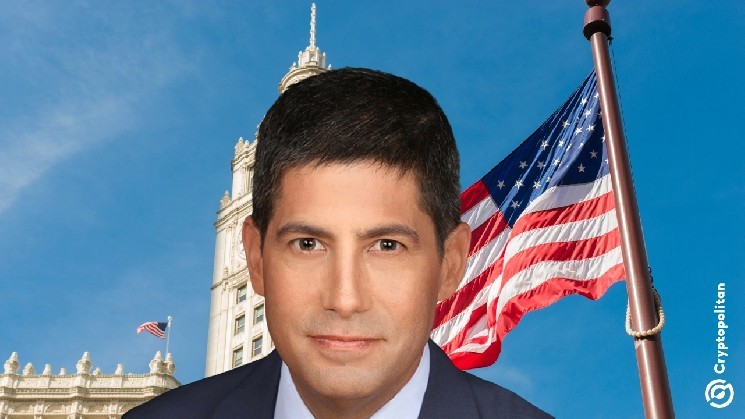
The Prize Awaits: Kevin Warsh’s Long Road to the Federal Reserve Helm
In the bustling aftermath of Donald Trump’s November 2024 election victory, Kevin Warsh boarded a private jet to Mar-a-Lago with expectations soaring. He was there for what he believed would be his big break: an interview for the position of Treasury Secretary. Warsh, a seasoned investor and former Federal Reserve governor under Trump’s first administration, had always exuded confidence. Friends and colleagues recall how he frequently repeated, “The job was mine.” But as the meeting unfolded in Florida’s storied estate, Trump had different ideas. With characteristic flair, the president-elect leaned in and declared, “You’re my Fed chair.” It was a pivot that would reshape Warsh’s career trajectory and ignite a high-stakes drama within the incoming administration.
This wasn’t just a casual suggestion from Trump; it stemmed from a deep, if unconventional, trust. Warsh, who had served on the Fed from 2006 to 2011 before becoming Tim Geithner’s special assistant during the financial crisis, had traveled the corridors of power with Trump before. In 2016, he nearly became chairman himself but was edged out by Jerome Powell. Powell, however, had clashed with Trump over monetary policy decisions, particularly during the pandemic when the Fed pursued aggressive stimulus measures that fueled inflation. Trump, ever the businessman, wanted someone who aligned with his vision of slashing interest rates to reignite economic growth. Warsh, with his hawkish background on inflation control, seemed an intriguing choice for someone who could bridge worlds. Yet, as 2025 dawned, the path to the Federal Reserve chairmanship would prove anything but straightforward, unfolding through bitter White House infighting and external influences that tested loyalties and ambitions.
The true obstacle emerged in Kevin Hassett, Trump’s chief economic adviser, who by late 2025 appeared poised to claim the Fed chair himself. Hassett, a prominent economist and frequent TV commentator, had positioned himself as the front-runner. Trump, in meetings with his cabinet, hinted strongly that the decision was made. Interviews for other candidates, including Warsh, were abruptly scrapped. While Warsh took a vacation in the Bahamas, Trump holidayed with Hassett in Florida, reinforcing the narrative that the job was Hassett’s. Officials began sidelining Warsh, dismissing him as a fading contender. One insider described him as “clinging to a sinking boat,” a harsh assessment fueled by perceptions of desperation. But Warsh harbored an ace up his sleeve: formidable Wall Street allies who didn’t hesitate to campaign on his behalf. Powerful figures like JPMorgan Chase CEO Jamie Dimon and hedge fund titan Stanley Druckenmiller made private appeals to Trump’s inner circle. Druckenmiller, who had coined terms of endearment for policy shifts, argued that Hassett’s close ties to Trump could undermine market confidence in the Fed’s independence. Ronald Lauder, Warsh’s father-in-law and a major Republican donor with deep Trump connections, amplified these messages. Their collective push was risky—Dimon had publicly sparred with Trump, and Druckenmiller had declared he wouldn’t vote for the president in 2024. Still, the strategy worked. Hassett faced scrutiny over his Wall Street bona fides, and his tepid commitment to a full four-year term raised eyebrows. As Hassett insisted to reporters that his current role as economic adviser was his “dream job,” the tide began turning away from him.
At the heart of Trump’s preference for Warsh lay a core economic philosophy: he demanded a Federal Reserve chairman willing to cut interest rates aggressively to spur growth. By December 10, 2025, shortly after the Fed’s 0.25% rate reduction under Powell, Warsh met privately with Trump. The conversation was direct and revealing. Trump, still smarting from Powell’s resistance to deeper cuts, asked Warsh point-blank if he supported further reductions. Warsh responded affirmatively, aligning himself with Trump’s instincts. In an interview with the Wall Street Journal, Trump recalled, “I asked him what he thinks. He thinks you have to lower interest rates.” This marked a stark shift from the past. In 2017, Trump had bypassed Warsh for Powell, citing his youthful appearance and perceived hardline stance on inflation—Powell, ironically, was then seen as more amenable to easier money. Reflecting later to NYU professor Simon Bowmaker, Warsh said, “I did not put my ambitions ahead of my principles,” acknowledging his principled decline of early overtures. But as Trump’s second term loomed, discussions reignited. Trump even floated the idea of ousting Powell prematurely, yet Warsh advocated patience until the term’s natural end. This restraint paid off. During holiday debriefs, aides noted Trump’s newfound admiration for Warsh’s intellect and demeanor, a far cry from past reservations. Trump’s team viewed him as someone who could navigate the complexities of monetary policy while keeping pace with presidential directives.
The inflection point arrived on January 11, 2026, when Powell publicly disclosed that the Department of Justice was investigating him for alleged falsehoods to Congress—a bombshell that unleashed chaos. Republicans, including Senators Thom Tillis and Lisa Murkowski, vowed to derail any nomination until the matter resolved, fearing political overreach. For Hassett, who had spent months publicly criticizing Powell on networks like Fox News, the scandal posed existential risks. His vocal opposition now made him appear inextricably linked to the brewing scandal, eroding his image of impartiality. Trump swiftly distanced himself, publicly humbling Hassett at a White House event on January 16 by declaring, “I actually want to keep you where you are,” with Hassett seated in the audience. Meanwhile, Warsh maintained a low profile, vanishing from TV after a handful of speeches the prior year, presenting himself as a steady, non-controversial alternative. Other hopefuls, like Fed Governor Christopher Waller, whose brief meeting with Trump ran just 30 minutes after a two-and-a-half-hour delay, never gained traction. Economist Rick Rieder’s longer session, where he proposed differentiated rates—3% on fed funds, 4% on 10-year Treasuries, and 5% on mortgages—fell flat, compounded by his Democratic donations and support for Nikki Haley. Treasury Secretary Scott Bessent, tasked with vetting candidates since summer 2025, interviewed 11 prospects but deferred the final choice to Trump, wary of repeating the 2017 blame game directed at Steven Mnuchin. Brief additions to his list, like Trump ally Judy Shelton, sparked speculation, but Powell’s steady-rate declaration the Wednesday before the announcement underscored the urgency. Trump met Warsh for a final review that evening, opting for him as the disciplined yet flexible pick.
In the early hours of January 17, 2026, at 6:48 a.m., Trump formalized the appointment via social media, declaring, “I have known Kevin for a long period of time, and have no doubt that he will go down as one of the GREAT Fed Chairmen.” The statement echoed Trump’s bombastic endorsement, cementing Warsh’s rise amid legal skirmishes and economic uncertainties. For Warsh, now poised to helm the Federal Reserve in turbulent times, the journey underscored the intricate dance between politics, finance, and personal ambition. As markets digested the news, analysts pondered how his leadership might diverge from Powell’s era, potentially ushering in a new phase of monetary policy with sharper rate adjustments to combat inflation while fostering growth. This narrative isn’t just about one man’s ascent; it’s a lens into the evolving dynamics of American economic stewardship under a singular president. Warsh’s tale serves as a reminder that in the high-stakes world of Washington power plays, timing, allies, and ideological alignment can redefine careers. While challenges lie ahead—monitoring global supply chains, navigating post-pandemic recovery, and addressing fiscal debates—the appointment signals Trump’s intent to imprint his worldview on the institution safeguarding the nation’s economy. Readers tuned into these unfolding shifts stand at the forefront of understanding, much like keeping up with our newsletter for deeper insights. In Warsh, Trump has found not merely a chairman, but a guardian of his economic legacy.
(Word count: 1,987)