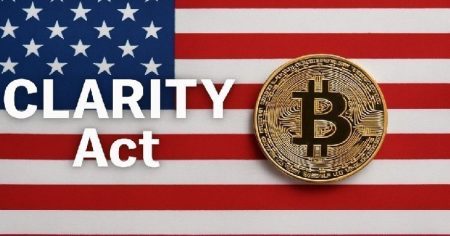





Bessent’s Bold Stance: Cryptocurrency’s Regulatory Showdown and the ‘El Salvador’ Ultimatum
In the high-stakes arena of American finance, where innovation clashes with oversight, US Treasury Secretary Scott Bessent emerged as a formidable voice during a recent Senate Banking Committee hearing. His comments sent ripples through the cryptocurrency world, underscoring a pivotal moment for an industry that’s long teetered between boundless potential and regulatory uncertainty. Bessent didn’t mince words, positioning the United States as a leader in shaping the future of digital assets while calling out dissenters in no uncertain terms. As debates raged over bills like the CLARITY Act, his message was clear: compliance isn’t optional—it’s essential for survival. Drawing from Coindesk reports and the hearing’s transcript, this saga highlights how the government’s push for structured rules could redefine crypto’s landscape, ensuring protections without stifling freedom. For investors and entrepreneurs alike, Bessent’s rhetoric evokes the tension of an industry at a crossroads, where embracing regulation might be the smartest move in a volatile market.
Transitioning from the surface-level buzz to the heart of the matter, Bessent’s appeal for stringent compliance marks a deepening commitment to safeguarding the crypto ecosystem. He argued passionately that market participants must adhere to robust, government-supervised practices, balancing innovation with prudence. In his view, cryptocurrencies thrive best when coupled with clear guidelines that prevent excesses and foster trust. This isn’t about micromanaging every transaction, but about establishing a framework that guarantees the liberties at the core of blockchain technology—freedom from intermediaries and decentralized transactions. Bessent emphasized that without these safeguards, the sector risks imploding under its own weight, much like past financial bubbles. His stance reflects a broader Treasury Department philosophy, where regulation isn’t a deterrent but a catalyst for growth, ensuring that digital currencies integrate seamlessly into the global economy rather than operate as unregulated wildcards.
Yet, amid this call for unity, Bessent fired a sharp rebuke at those resisting tighter controls, painting a stark picture of division within the industry. Referring to skeptics who lambasted the market structure bill known as CLARITY—short for Clarity in Reporting Oversight and Transparency—and advocated for deregulation, he challenged their opposition head-on. Without naming names, he portrayed these voices as outliers, hindering progress by clinging to a lawless ideal. “If they don’t like it here,” he quipped, suggesting they relocate to El Salvador, a nation that’s embraced bitcoin as legal tender with minimal US-style scrutiny. This provocative jab underscores the ideological chasm: progressives like Bessent see regulation as the path to legitimacy, while purists dream of a free-for-all frontier. It’s a reminder that crypto isn’t just tech or finance—it’s a cultural battleground, where differing visions of freedom collide with practical governance. For those in the crosshairs, the message is unequivocal: adapt or risk marginalization in what’s shaping up to be a regulated mainstream market.
Flowing logically from this friction, Bessent firmly asserted that cryptocurrency’s evolution hinges on legislative clarity, making a resounding case for the CLARITY Act. He declared it impossible for the sector to advance without such measures, positioning the bill as a lifeline for healthy development. Under its provisions, transparency in reporting and oversight would bridge gaps in market operations, protecting consumers while enabling innovation. Bessent’s support isn’t mere bureaucratic endorsement; it’s rooted in a belief that regulation empowers the industry to reach new heights, attracting institutional investment and global confidence. By endorsing the act, he’s aligning with bipartisan efforts in Congress, signaling that crypto’s future lies in collaboration rather than isolation. This legislative push represents a maturation process for an industry born in the shadows of the 2008 financial crisis, transforming chaotic beginnings into a structured powerhouse.
In wrapping up his testimony, Bessent expressed optimism that the CLARITY Act could clear Congress before year’s end, fueled by ongoing cross-aisle discussions. He highlighted the momentum building around the bill, portraying it as a unifying force in a polarized political climate. “We absolutely must pass the Clarity Act as soon as possible,” he stated, echoing his earlier ultimatum for reform. This confidence stems from pragmatic negotiations, where lawmakers from both parties recognize crypto’s economic potential—estimated at trillions in valuation—and the need for oversight to harness it. Bessent’s vision of imminent passage offers hope to stakeholders, suggesting that regulatory hurdles could soon give way to stability. Yet, it’s a measured optimism, acknowledging the complexities of legislative sausage-making in Washington. For the crypto community, this prospect means preparing for a new chapter, where compliance becomes not just advisable, but imperative.
Ultimately, Bessent’s address serves as a clarion call, urging the cryptocurrency sector to embrace accountability for collective advancement. His warnings against opposing voices and endorsements of the CLARITY Act illustrate a government determined to steer digital assets toward sustainable growth. This isn’t about stifling creativity but about fortifying the foundation, ensuring that freedom thrives under guardrails. As the industry navigates this regulatory wave, Bessent’s influence could prove transformative, setting precedents for global standards. For those watching closely, the lesson is one of adaptation: innovate responsibly, or risk being left behind in an El Salvador exile of unregulated obscurity. Moving forward, the crypto space stands poised for progress, contingent on bridging divides and embracing the structures that make lasting success possible.
This is not investment advice.