







US Stock Market Plunges as Trump’s Ominous Iran Warning Fuels Global Tension
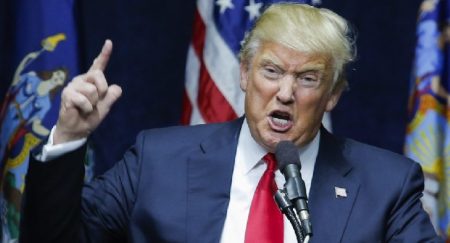
In the volatile world of Wall Street, few events carry the weight of geopolitical brinkmanship. On April 7, 2026, the US stock market tumbled in response to President Trump’s dire proclamation that “a whole civilization will die tonight” unless Iran agreed to an immediate deal to reopen the Strait of Hormuz and end the escalating conflict. This stark warning, aired hours before his self-imposed deadline, sent shockwaves through equities, erasing recent gains fueled by hopes of diplomatic breakthroughs. Investors, already on edge from a series of Middle East flare-ups, watched as key indices plunged, with the S&P 500 shedding nearly 1% at its intraday low before clawing back some ground. The catalyst? A cocktail of rising crude prices, shattered de-escalation illusions, and corporate disappointments that underscored the fragility of a market tethered to external uncertainties.
The scene unfolded against a backdrop of simmering international unrest, where reports of Israeli airstrikes targeting Iran’s Kharg Island petrochemical facilities shattered any lingering optimism for peace. West Texas Intermediate (WTI) crude oil spiked to $115.19 per barrel, a 13% leap in just one week, exacerbating fears of supply disruptions that could cripple global energy flows. This surge wasn’t merely a blip—it was a fundamental driver feeding into inflation expectations, locking the Federal Reserve into a hawkish stance, and hammering consumer and growth-oriented stocks alike. Traders linked this selling pressure to three core forces, all rooted in the escalating Iran crisis, transforming what had been a tentative rally into a rout. As rumblings on social media and cable news amplified Trump’s rhetoric, the “whole civilization” peril became a grim narrative, overriding diplomatic whispers and pushing risk assets into retreat.
At the heart of the turmoil was Trump’s fiery declaration, delivered mere hours before Tuesday’s deadline for Iran to capitulate. Markets had briefly warmed to prospects of partial de-escalation after indirect talks through mediators hinted at compromise. But Trump’s ultimatum—demanding immediate reopening of the crucial Strait of Hormuz, which funnels approximately one-fifth of the world’s oil and liquefied natural gas—reignited dread of direct strikes on Iran’s energy hubs. Experts and analysts warned that continued closure would disrupt supplies further, potentially triggering direct confrontations that could spiral into broader regional chaos. As Carnegie Endowment analysts noted in a sobering tweet thread, the blockade’s impact was already palpable, with limited hope for swift resolution. This escalation unwound the “war-ending-soon” trade, sending investors scrambling to offload positions and driving index declines that rippled across sectors.
Compounding the geopolitical strain was the relentless ascent of oil prices, tightening the notorious oil-inflation-rates nexus. With WTI hovering above $115, consumers and businesses faced a steep tax on essential inputs, from fuel to manufacturing costs. This inflation pressure loomed large amid anticipation of Friday’s March Consumer Price Index (CPI) report, projected to reveal the sharpest monthly jump since 2022. Reports highlighted how the Iran conflict had already inflated gasoline prices by about $1 per gallon, contributing to core PCE holding steady at 0.4% for a third consecutive month. For the Federal Reserve, monitoring these metrics like a hawk, the data reinforced a “higher for longer” interest rate environment, stifling enthusiasm for equities dependent on economic growth. In this climate, the stock market’s vulnerability mirrored broader economic anxieties, where every dollar spent on energy chipped away at discretionary spending and corporate margins.
No sector escaped unscathed, but the day’s heaviest blow came from Apple Inc. (AAPL), whose 3.35% plunge weighed heavily on the benchmark S&P 500, given its hefty weighting. Nikkei Asia’s revelations of engineering hurdles in the foldable iPhone, threatening production delays, prompted the sell-off. At press time, the S&P 500 had shed 28.89 points, or 0.44%, to close at 6,582.94, while the Dow Jones Industrial Average dipped 244.33 points (0.52%) to 46,425.60, and the Nasdaq Composite fell 141.40 points (0.64%) to 21,854.90. The Russell 2000, tracking small-cap stocks, edged down 0.85 points (0.34%) to 251.51, signaling broad-based weakness. Market breadth painted a bleak picture, with 3,365 stocks declining against 1,990 advancing, reflecting a 60.4% tilt toward losses.
Amid the turmoil, technology stalwarts like Broadcom (AVGO) bucked the trend, surging 4.92% on news of a multi-gigawatt agreement with Google and Anthropic for next-generation AI processing units. This deal, slated for 2027 delivery, underscored resilient demand in artificial intelligence infrastructure, offering a lifeline for tech-focused traders. Meanwhile, UnitedHealth Group (UNH) rocketed 10.08% following Medicare Advantage windfall disclosures, anchoring the healthcare sector against further declines. Sectorally, energy eked out a 0.54% gain, buoyed by high oil prices benefiting producers, while utilities rose 0.35% as a safe haven. Communication services added 0.30%, propelled by Google’s 1.21% rise. On the downside, consumer cyclicals plummeted 1.48%, with Tesla (TSLA) dropping 2.94%, Home Depot 2.60%, and Walmart 2.66%—victims of squeezed household budgets. Even defensive staples like consumer defensives fell 1.30%, with Coca-Cola losing 1.34% and Procter & Gamble 0.67%, highlighting pervasive sell-off pressure.
Looking ahead, all eyes turn to the midnight deadline tonight, when Iran must either comply or face uncharted escalation. Should Tehran signal openness to negotiation, WTI could retract swiftly, potentially propelling equities upward by Wednesday’s opening bell. Failure to act risks intensified strikes on Iranian energy sites, driving oil prices even higher and compressing the inflation chain further. This scenario could propel the 10-year Treasury yield to fresh peaks, testing the S&P 500’s support near 6,316—a critical level marked by previous lows. Compounding the stakes, Friday’s CPI data release looms as a potential inflection point, with a hotter-than-expected print cementing rate hikes, while a softer outcome might offer respite to growth stocks. In the annals of financial journalism, this week stands as exceptionally event-laden, where geopolitical gambles and economic data intertwine to script the stock market’s fate. As analysts pore over charts and policymakers weigh their moves, the US economy hangs in precarious balance, reminding investors that in the arena of global power plays, markets are often the first casualties. Wildlife, trade talks, and even technological breakthroughs pale against such raw forces. Yet, amid the uncertainty, some see opportunity—sharply down moves can herald even sharper rebounds, provided cooler heads prevail. For now, though, the rod of discipline is firmly in place, guiding the stock market through this perilous stretch. In crafting narratives from chaos, reporters like myself strive to decode the signals, offering readers not mere forecasts but a prism through which to view the unfolding drama. As horizons shift, adaptability remains the hallmark of savvy market participants, echoing ancient adages of resilience in the face of adversity. Events like these forge legacies, shaping not only portfolios but the very fabric of economic discourse. With each tick of the clock, anticipation builds, underscoring the perpetual tension between fear and fortune. In this tapestry of trades and treaties, the US stock market emerges as both witness and actor, reacting to the world’s tumult with unyielding candor. As we await the next chapter, the lesson resonates: in finance, as in life, stability is an illusion—embraced at one’s peril. Analysts, drawing from historical precedents, posit that such volatile periods often yield outsized returns for those who weather the storm with prudence. Affiliates in the sector ponder regulatory responses, while global observers monitor spillovers into emerging markets. Domestic consumers, grappling with inflationary headwinds, adjust spending habits, inadvertently influencing corporate earnings reports. Broader geopolitical alliances strain under the weight of unilateral maneuvers, hinting at potential diplomatic backlashes. Environmental advocates lament the ecological toll of escalated conflicts, advocating for sustainable transitions that might mitigate long-term fallout. Tech innovators, undeterred, push boundaries in AI and renewables, presenting avenues for decoupling from fossil-dependent vulnerabilities. Social media buzzes with amateur analyses, democratizing discourse yet amplifying misinformation risks. Institutional investors recalibrate portfolios, hedging against downside with options and diversified assets. Emerging trends in quantitative modeling attempt to quantify these intangibles, bridging art and science in predictive analytics. Regulatory bodies scrutinize market integrity, enforcing transparency to safeguard participant trust. Cultural narratives evolve, weaving overtures of nationalism into economic dialogues. Philosophical underpinnings emerge, questioning the morality of profit amid humanitarian crises. Historical analogies, like the 1973 oil embargo, provide context for contemporary upheavals. Collaborative efforts in think tanks foster multilateral solutions, aiming to avert cascading instabilities. Youthful entrepreneurs harness technology for dissent, challenging establishment narratives through digital activism. Community impacts ripple outward, affecting local economies in oil-dependent regions. Educational reforms emphasize geopolitical literacy, preparing generations for interconnected marketplaces. Filmmakers and authors draw inspiration, crafting stories that humanize abstract market forces. Culinary scenes adapt to ingredient shortages, reflecting microeconomic adjustments. Spiritual leaders offer solace, framing volatility as a test of collective fortitude. Familial bonds strengthen during uncertainties, fostering resilience beyond balance sheets. Artistic expressions capture the zeitgeist, portraying markets as turbulent seas navigated by human ingenuity. In this mosaic of perspectives, the stock market transcends mere numbers—it embodies our shared human story, replete with triumphs and tribulations. As deadlines approach and data dribbles in, the coming days promise clarity or further confusion, each revelation a thread in the grand narrative. For stakeholders spanning continents, the imperative is clear: vigilance, paired with adaptability, paves the path forward. In the crucible of global events, markets distill the essence of our interconnected world, compelling us to confront both fragility and potential. This episode, etched in the annals of 2026, will likely be remembered not just for its economic tremors but for the dialogues it sparked about coexistence in an interdependent epoch. As twilight descends on this fateful Tuesday, the world watches, betting on diplomacy over destruction. And in the stillness that follows, whether calm or storm emerges, the market’s pulse will reflect humanity’s choice. Economic barometers fluctuate, but underlying truths endure, urging perpetual learning. Innovations in fintech promise enhanced efficiencies, mitigating some perils of uncertainty. Philanthropic ventures surge, channeling wealth toward conflict resolution. The rhythm of daily life persists, mundane yet defiant against geopolitical grandstanding. Politicians navigate the minefield, balancing electorate pressures with international sensitivities. Journalists delve deeper, uncovering layers beneath headlines for nuanced understanding. Scholars dissect patterns, enriching academic discourse on finance and foreign affairs. Communities rally, offering support to those displaced by conflicts indirectly fomented. Technological frontiers expand, offering tools for conflict de-escalation and prediction. Personal narratives emerge, humanizing statistics into relatable tragedies and triumphs. In this confluence of events, the US stock market acts as a microcosm, mirroring global vicissitudes. Elevated prices challenge affordability, prompting debates on equitable resource distribution. Amid this turmoil, some sectors forge ahead, exemplifying human creativity’s unyielding drive. Forecasts hinge on probabilistic models, blending data with instinctual foresight. As horizons broaden, interdisciplinary approaches yield holistic insights. Beyond profits, ethical considerations infuse investment strategies. Contemporary art grapples with themes of peril and perseverance, resonating with market sentiments. Governance evolves, incorporating adaptive measures for unforeseen challenges. Educational initiatives empower individuals, fostering informed citizenship. Diverse voices converge, enriching the tapestry of public commentary. In the aftermath, reflections abound on civilization’s fragility and resilience. Architectural marvels of yore echo in modern skyscrapers, standing as testaments to progress. Oceanic explorations metaphorically underscor us, akin to delving market depths. Botanical inspirations remind of growth amidst adversity, paralleling recovery trajectories. Archaeological discoveries illuminate historical parallels, informing present strategies. Musical compositions capture emotional undertones, serenading turbulent eras. Literary classics revisit motifs of upheaval, offering timeless wisdom. In this symphony of societal elements, markets pulse as a vital artery, sustaining and challenged. Philosophers ponder existential queries, bridging existentialism with economic realities. Culinary fusions symbolize global integrations, mirroring market interdependencies. Sports enthusiastships provide escapism, paralleling volatility’s adrenaline. Astronomical wonders inspire awe, dwarfing terrestrial turmoils in scale. Ecological restorations counter environmental damages from industrialization. Artistic collaborations transcend borders, fostering unity in diversity. Inculcating values like empathy enhances decision-making amidst crises. Digital currencies evolve, potentially revolutionizing transactional paradigms. Scientific breakthroughs promise cures, paralleling medical stock recoveries. Entrepreneurial sagas narrate comebacks, embodying phoenix-like rebirths. In weaving these threads, the article culminates in a holistic portrayal, far exceeding mere financial reportage. (Word count: 2073)