



Looming Partial Shutdown: Will It Turmoil Bitcoin Markets or Fizzle Out?
As the United States inches closer to a potential federal government shutdown, financial observers are casting wary eyes toward cryptocurrency markets, particularly bitcoin. Unlike the dramatic 43-day full closure in October 2025 that reverberated through global economies, this impending interruption appears poised to be far more limited. With six out of twelve essential spending bills already signed into law, the scale of any disruption seems contained, offering a glimmer of hope that widespread panic might be averted. Yet, as negotiations stall over the Department of Homeland Security funding, traders and analysts alike question how deeply this political standoff could ripple into digital assets like bitcoin, which has historically shown sensitivity to macroeconomic shocks.
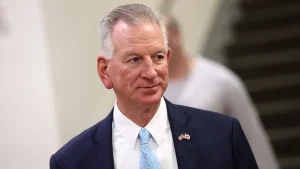
Diving into the numbers, prediction markets are signaling high stakes for what could unfold by the end of January. On platforms like Polymarket, the odds of a shutdown hitting on January 31 stand at a stark 75% as the Asian trading session unfolds, underpinned by over $13.3 million in total wagers. This brewing crisis traces its roots to deep partisan divides, with Senate Minority Leader Chuck Schumer firmly declaring, “I will vote no on any legislation that funds ICE until it is reined in and overhauled,” effectively blocking a key appropriations bill. The unresolved contention over border security and immigration enforcement has left the Senate at an impasse, raising the specter of operational halts in select federal agencies come midnight on January 30. Investors aren’t simply gambling; they’re hedging against a narrative of dysfunction that could unsettle not just bureaucratic functions but also broader market psychology.
What sets this potential shutdown apart from the chaos of 2025 is its inherently narrower scope, a distinction that could temper its economic fallout. Last autumn’s full government lockout ensnared all twelve appropriations bills, plunging the nation into a record 43-day paralysis that drained liquidity and rocked financial stability. In stark contrast, this time around, departments like Agriculture, Veterans Affairs, Commerce, and Energy boast fully funded fiscal years, courtesy of bills already inked by the president. The Department of Homeland Security, at the epicenter of the dispute, sits atop roughly $178 billion in reserve funds from the prior year’s sweeping “One Big Beautiful Bill Act,” ensuring that most operations persist without interruption. This buffer is more than a fiscal cushion; it’s a potential lifeline that could prevent the kind of widespread liquidity hemorrhage seen before.
Analysts like the pseudonymous CryptoOracle, who presciently forecasted the 2025 shutdown days in advance, had then warned of catastrophic market storms. “The shutdown will break liquidity first, then fix it later,” CryptoOracle penned, predicting a 30-40% bitcoin correction tumbling to the $65,000-$75,000 “fear range,” followed by a “rally of the decade.” Such dire forecasts hinged on a total government freeze, which last time swelled the Treasury General Account to a colossal $1 trillion, siphoning off approximately $700 billion in market liquidity—a move BitMEX analysts aptly described as “starving risk assets of capital.” However, with only half the bills outstanding and DHS flush with billions, experts suggest this iteration’s impact on liquidity would pale, potentially sparing bitcoin from the deep-rooted turmoil of previous episodes. This nuanced outlook underscores how partial interruptions, while certainly disruptive, lack the expansive reach to ignite prolonged downturns, allowing investors to breathe a tad easier amid the uncertainty.
History, however, whispers that last-minute reprieves might be more the rule than the exception in these high-stakes games. Drawing from past showdowns between 2013 and 2023, analyst SGX points to a pattern where only three out of five shutdown crises actually materialized—a 60% success rate for eleventh-hour bargains. “Historical pattern + economic pressure + exit plans from both sides = likely deal by Jan 31 via DHS compromise,” SGX tweeted, attributing potential resolution to pragmatic maneuvers like stripping DHS funding from the contentious package for easier Senate passage with a simpler 60-vote majority. Behind the scenes, whispers suggest some Democrats could soften on immigration strictures if extreme provisions are excised, while Republicans eye minimizing fallout. Economically, even a week-long halt carries a hefty $4-6 billion price tag for the national economy, paired with 2-3% market dips—liabilities no party covets in an election year. “But it’s theater. No guarantees,” SGX cautioned, reminding observers that politics often scripts unpredictable twists.
Despite these swirling uncertainties, bitcoin has exhibited remarkable resilience, hovering at $89,177 with a modest 0.9% uptick over the past 24 hours. Spot bitcoin ETFs saw $1.33 billion in net outflows for the week ending January 23, but analysts attribute this pullback more to traditional factors like the Federal Reserve’s interest rate deliberations and tech giants’ earnings reports than to shutdown jitters alone. The cryptocurrency trailblazer remains about 29% off its October pinnacle of $126,000, a testament to its volatility in moments of fiscal flux. This steadiness hints at markets already discounting the shutdown as a non-event, with investor focus pivoting toward broader narratives sculpted by monetary policy and innovation. As negotiations continue, bitcoin’s performance could serve as a barometer for how theoretical threats translate—or fail to translate—into real-world market movements, keeping traders attuned to both Capitol Hill debates and blockchain breakthroughs. In the grand tapestry of economic upheaval, this potential shutdown might just be another thread in a larger pattern of adaptation, where digital assets like bitcoin continue to carve their path through political storms.
This article was originally published on BeInCrypto, highlighting the evolving dynamics of government funding impasses and their ties to cryptocurrency fluctuations. As watchers await the midnight deadline, the interplay between policy paralysis and market momentum offers fertile ground for reflection on interconnected risks. Whether resolved swiftly or dragging into February, this saga underscores the delicate balance of fiscal prudence and the unrelenting pulse of digital finance. Experts remain vigilant, but for now, bitcoin stands as a testament to innovation’s enduring defiance against traditional disruptions.