





Dollar Heads for Steepest Weekly Decline Since June Amid Policy Uncertainty and Shifting Economic Landscape
Dollar Weakens as US-Europe Relations Fluctuate and Policy Direction Raises Questions
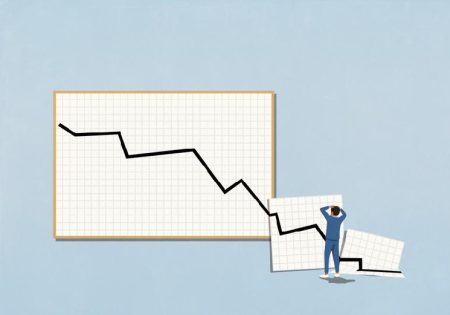
The U.S. dollar is experiencing its most significant weekly decline in seven months, reflecting growing concerns about volatile U.S.-Europe relations and escalating uncertainty surrounding domestic policy decisions. The greenback’s downward trajectory comes amid a complex interplay of geopolitical tensions, shifting interest rate expectations, and evolving trade dynamics that have collectively undermined investor confidence in the world’s primary reserve currency.
According to the latest market data, the dollar index—a critical benchmark that tracks the U.S. currency against a basket of six major peers including the euro, yen, and pound—has retreated to 97.8, marking a weekly decline exceeding 1%. This represents the most substantial weekly depreciation since June, signaling what financial analysts describe as a potentially significant shift in market sentiment. The current weakness builds upon the dollar’s challenging performance throughout 2025, when it recorded a steep 9.4% annual decline, its worst showing in eight years.
“We’re witnessing what appears to be a fundamental reassessment of the dollar’s position,” explains Maria Thornton, chief currency strategist at Global Market Insights. “This isn’t merely typical market fluctuation—it reflects deeper concerns about policy consistency and economic direction that have investors reconsidering their long-held assumptions about dollar supremacy.”
Policy Reversals and Trade Strategy Uncertainties Erode Confidence
The deterioration in dollar strength coincides with heightened uncertainty surrounding policy decisions emanating from Washington. Market observers point specifically to President Trump’s recent unexpected reversal on proposed tariffs targeting European nations—a move that, while potentially positive for international relations, has nevertheless injected an element of unpredictability into U.S. trade and economic strategy.
“The administration’s willingness to rapidly shift positions on significant economic policies creates a challenging environment for currency traders and international investors,” notes Jonathan Werner, senior economist at Capital Research Institute. “Markets crave predictability, and these sudden reversals make it difficult to price in future scenarios with any degree of confidence.”
This policy uncertainty extends beyond trade relations to encompass broader economic strategy questions. The lack of clarity regarding long-term fiscal approaches, infrastructure investment priorities, and regulatory frameworks has created what some analysts describe as an “uncertainty premium” that weighs heavily on the dollar. Corporate treasurers and institutional investors, traditionally strong supporters of dollar-denominated assets during times of global instability, have begun diversifying their holdings more aggressively, further accelerating the currency’s decline.
Interest Rate Convergence Narrows Yield Differentials and Reduces Dollar Appeal
Adding further pressure to the greenback is the increasingly apparent convergence of interest rate policies between the United States and other major economies. After several years during which the Federal Reserve maintained relatively higher rates compared to its international counterparts—creating attractive yield differentials that supported dollar strength—markets now anticipate this gap to narrow considerably over the coming year.
Current trading patterns reveal that investors are pricing in two interest rate cuts from the Federal Reserve in 2026, a more aggressive easing stance than the single cut projected by Fed policymakers themselves in their most recent forecasts. This expectation of accelerated monetary policy loosening stands in stark contrast to the tightening bias emerging in Europe and parts of Asia, where central banks continue to combat persistent inflation pressures.
“The interest rate differential that provided crucial support for dollar strength over the past several years is eroding more rapidly than many expected,” explains Dr. Elena Mikhailova, international economics professor at Northeast University. “When you combine narrowing yield advantages with growing questions about fiscal sustainability and political direction, you create perfect conditions for currency depreciation.”
Historical Patterns and Technical Models Point to Potential for Further Weakness
Currency analysts examining historical patterns and technical indicators suggest the dollar’s current weakness may represent the beginning of a more sustained downward trend rather than a temporary correction. Sophisticated modeling conducted by several leading investment banks indicates the potential for an additional decline of up to 8% through 2026 if current economic and policy trajectories remain unchanged.
This projection aligns with historical precedents from previous periods of dollar weakness, particularly those characterized by policy uncertainty and shifting interest rate differentials. During comparable episodes in the early 2000s and 2017-2018, the dollar experienced multi-quarter declines that significantly reshaped global trade flows and commodity pricing.
“Our technical analysis suggests we’ve broken through several key support levels that have historically contained dollar weakness,” reports Alexander Suzuki, head of currency research at International Market Securities. “The momentum indicators, positioning data, and flow analysis all point toward a market that’s increasingly comfortable with dollar depreciation as a medium-term theme rather than just a short-term trade.”
Implications Extend Beyond Currency Markets to Global Trade and Investment Flows
The implications of sustained dollar weakness extend far beyond currency markets, potentially reshaping global trade patterns, commodity prices, and international investment flows. A weaker dollar typically makes U.S. exports more competitive internationally while simultaneously reducing the purchasing power of American consumers and businesses for imported goods and services.
For emerging markets, particularly those with substantial dollar-denominated debt, the currency’s depreciation provides welcome relief by effectively reducing their debt burdens when measured in local currency terms. However, this benefit must be weighed against the potential for increased inflationary pressures as import costs rise in dollar-weakened economies.
“We’re closely monitoring how dollar weakness influences global capital flows,” states Rebecca Chang, chief investment officer at Pacific Rim Investments. “Historically, periods of dollar depreciation have corresponded with increased foreign direct investment into emerging markets and stronger performance of international equities relative to U.S. markets. The early evidence suggests we may be entering such a phase again.”
As market participants adjust to this evolving currency landscape, attention now focuses on upcoming economic data releases, Federal Reserve communications, and policy announcements from the administration. These indicators will prove crucial in determining whether the dollar’s current weakness represents a temporary adjustment or the beginning of a more fundamental realignment in global currency markets—one that could reshape investment strategies and economic relationships throughout 2026 and beyond.