




UN Security Council to Hold Emergency Meeting on US Military Operations in Venezuela
International Diplomacy Heats Up Following Maduro’s Capture and US Intervention
By International Affairs Desk
Global Powers Convene as Venezuela Crisis Escalates to UN Level
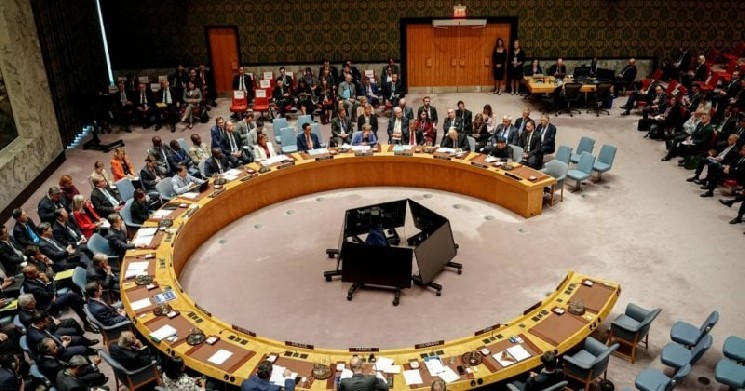
In a rapidly developing international crisis, the United Nations Security Council is set to convene an emergency session Monday morning to address the recent United States military operations in Venezuela. The high-stakes meeting, scheduled for 10 a.m., comes at the urgent request of Colombia, with significant backing from both China and Russia, according to AP reporter Farnoush Amiri who broke the news via social media platform X. The emergency session marks a critical escalation in what has become one of the most significant geopolitical confrontations in the Western Hemisphere in decades, thrusting Venezuela’s political turmoil into the global spotlight and testing the boundaries of international law and sovereignty.
The emergency meeting follows dramatic developments in Venezuela, where recent American military strikes resulted in the unprecedented capture of Venezuelan President Nicolás Maduro. In a move that has sent shockwaves through diplomatic circles worldwide, President Donald Trump announced that the United States would temporarily assume control of the South American nation in the wake of Maduro’s ouster. This declaration represents an extraordinary assertion of American power in a sovereign nation and has triggered immediate diplomatic backlash across the globe. The Venezuelan ambassador to the UN has already invoked his country’s “inherent right to self-defense” under international law, signaling that Venezuela views these actions not as a peacekeeping mission but as an act of aggression requiring a proportional response. The ambassador’s statement suggests Venezuela may be considering military or other retaliatory measures, further escalating tensions in an already volatile situation.
Venezuela Condemns US Actions as Violation of International Law
The Venezuelan government has responded forcefully to the American intervention, characterizing the military operations as a flagrant violation of established international norms and principles of sovereignty. In official statements, Venezuelan authorities have alleged that the true motivation behind the US military action extends beyond stated humanitarian or security concerns, suggesting instead that the operations represent a calculated attempt to seize control of Venezuela’s vast natural resources—particularly its oil reserves, which are among the largest in the world—and to forcibly implement regime change in accordance with American geopolitical interests. These accusations touch on sensitive historical precedents in Latin America, where US intervention has left a complex and often controversial legacy. The Venezuelan government has not limited its response to diplomatic protests alone; reports indicate that the country has begun mobilizing its national defense forces and has called for immediate international intervention to counter what it characterizes as an illegal occupation of its territory.
The escalation has drawn Colombia directly into the diplomatic fray, with the neighboring nation joining calls for the emergency Security Council session in an effort to promote de-escalation and prevent further military confrontation. Colombia’s involvement reflects growing regional concern about the potential for the conflict to spill across borders and destabilize the broader region. The Security Council had already demonstrated its concern about the deteriorating situation prior to these latest developments, having recently held an urgent open briefing specifically focused on the heightened tensions between the United States and Venezuela, particularly regarding the increased American military presence in the Caribbean. This existing framework of diplomatic engagement indicates that the international community has been monitoring the situation closely, though the capture of Maduro represents a dramatic escalation beyond what many observers had anticipated.
Historical Context and Regional Implications of the Crisis
The current crisis must be understood within the broader historical context of US-Venezuelan relations, which have been marked by increasing hostility since Maduro assumed power following the death of Hugo Chávez in 2013. Under Maduro’s leadership, Venezuela has experienced severe economic contraction, hyperinflation, widespread shortages of essential goods, and a humanitarian crisis that has driven millions of Venezuelans to flee the country. The United States has previously imposed harsh economic sanctions on Venezuela’s oil industry and government officials, describing Maduro’s rule as illegitimate, particularly following disputed elections. However, the direct military action to remove a sitting head of state represents a significant escalation beyond economic and diplomatic pressure, raising profound questions about sovereignty and the limits of international intervention.
For Latin America as a region, the crisis resurrects painful memories of past US interventions, from the CIA-backed coup in Guatemala in 1954 to the invasion of Panama in 1989. Many regional leaders, even those critical of Maduro’s governance, have expressed deep concern about the precedent set by unilateral military action to remove a government, however controversial. The situation has created complex diplomatic challenges for neighboring countries like Colombia, Brazil, and others who must balance their relationships with both the United States and Venezuela while managing the potential humanitarian impacts of further destabilization, including increased refugee flows and economic disruption. Regional organizations such as the Organization of American States (OAS) and the Community of Latin American and Caribbean States (CELAC) now face the difficult task of formulating a coherent response to an unprecedented situation.
Global Powers Position Themselves as UN Meeting Approaches
As the Security Council meeting approaches, global powers are already positioning themselves along familiar geopolitical lines. Russia and China, both permanent members of the Security Council with veto power, have historically maintained supportive relationships with the Maduro government, providing economic lifelines and diplomatic support in international forums. Their backing of the emergency session signals their intention to challenge the legitimacy of US actions and potentially propose resolutions condemning the intervention. The United States, meanwhile, will likely defend its operations as necessary to address what it characterizes as a failed state that threatens regional security and the wellbeing of the Venezuelan people. European nations, traditional allies of the US but often more cautious about military intervention, find themselves in a diplomatic balancing act, with many expressing concern about both Maduro’s governance record and the precedent set by unilateral military action to effect regime change.
The upcoming Security Council meeting represents more than a diplomatic formality; it could determine the international community’s response to what may become a defining crisis in international relations. At stake are fundamental questions about the limits of sovereignty in the 21st century, the circumstances under which external intervention in a nation’s affairs may be justified, and the proper role of global powers in addressing humanitarian and political crises. As world leaders prepare their positions ahead of Monday’s session, the people of Venezuela face an uncertain future, caught between competing visions of their country’s governance and development path. Whether the Security Council can forge a consensus that addresses both immediate security concerns and longer-term political reconciliation remains to be seen, but the consequences of this diplomatic confrontation will reverberate far beyond Venezuela’s borders, potentially reshaping international norms and alliances for years to come.