




Real Estate Tokenization Takes Off: UAE and USA Lead a Growing Market
In the evolving landscape of digital assets, where traditional investments meet blockchain innovation, a fresh wave of data sheds light on the burgeoning field of real estate tokenization. According to a recent analysis from RWA.XYZ, a prominent data platform specializing in tokenized real-world assets, the sector has gained significant traction. This leading hub for tokenized RWAs has expanded its scope by incorporating real estate as a new asset class, highlighting how this niche is transforming property ownership into liquid, accessible investments. The report reveals intriguing dynamics: the United Arab Emirates stands out as the global leader in the sheer number of tokenized real estate assets, while the United States dominates in terms of overall asset value. As investors and entrepreneurs seek ways to democratize real estate exposure, these insights underscore a market poised for disruption, blending old-world stability with cutting-edge technology. But beyond the headlines, the data paints a picture of opportunity, where barriers to entry are lowering and global participation is rising.
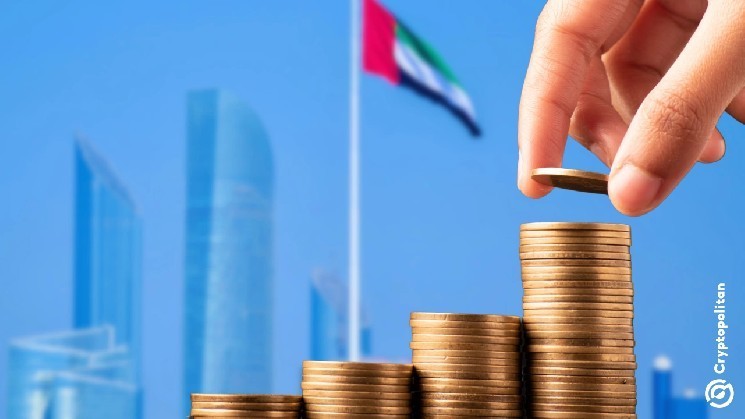
Diving deeper into the RWA.XYZ findings, the analysis zooms in on tokenized real estate, encompassing everything from direct ownership stakes to real estate investment trusts (REITs), funds, and debt instruments backed by property assets. Over the past 30 days, the total value of these tokenized holdings has reached an impressive $356.2 million, spread across 57 distinct assets held by more than 10,000 individual owners. This diversification spans 10 countries, showcasing a truly international appetite for fractionalized property investments. Notable players include Canada, Mexico, the United States, Romania, Italy, Spain, Greece, and the UAE, each contributing unique flavors to the tokenized tapestry. It’s a stark reminder of how blockchain is enabling investors to dip their toes into markets once reserved for the elite, fostering a more inclusive ecosystem. Yet, amidst this growth, the UAE and the USA emerge as titans, with the UAE claiming 23 assets worth $129 million and the United States boasting 10 assets valued at a commanding $145 million. This disparity—UAE’s edge in volume versus America’s prowess in value—hints at differing strategies and regulatory landscapes that could shape the industry’s future.
As the UAE cements its position as a frontrunner in tokenized real estate, examining the underlying infrastructure reveals why this Middle Eastern hub is stealing the spotlight. Regulated blockchain networks play a pivotal role, and among them, Mantra Chain, a UAE-based tokenization powerhouse, holds the lion’s share. The network has facilitated the tokenization of $117.7 million in real estate assets, underscoring its robust framework and trust-building measures. Close behind, Base networks boast $81.5 million, while Stellar contributes $71.7 million, illustrating the competitive yet collaborative nature of this space. Platforms, too, are key differentiators; the Ctrl Alt tokenization platform leads with $124 million in total tokenized real estate value, demonstrating how user-friendly interfaces and swift transactions are attracting global users. These metrics aren’t just numbers—they represent real strides in making property investments more efficient, transparent, and borderless. For instance, the UAE’s regulatory embrace of such technologies has created a fertile ground, attracting international interest and setting a benchmark for others to emulate.
Zooming in on specific properties and assets, the data from RWA.XYZ highlights iconic UAE landmarks that are setting benchmarks in this digital revolution. The World Islands, a man-made archipelago off Dubai, tops the list for the most tokenized properties, symbolizing the allure of premium real estate in a tokenized format. Other notable mentions include the DAMAC City tower and the Dubai Marina Hotel, the latter tokenized via the XRP Ledger through the Ctrl Alt platform. Expansive developments like Kensington Waters and Sobha Creeks further populate this vibrant roster, each appealing to investors seeking exposure to Dubai’s glistening skyline without the burdens of direct ownership. While the UAE shines brightly, these examples serve as a gateway to understanding the broader industry’s pulse. Tokenization doesn’t just list assets; it unlocks narratives of transformation, where a high-rise in Dubai or a waterfront hotel becomes a digital token traded seamlessly across the globe. This connectivity, powered by blockchain, not only broadens access but also mitigates risks traditionally associated with real estate, such as illiquidity and high entry costs.
Despite these gains, the real estate tokenization market remains in its nascent stages when viewed through the lens of global asset scales. To put it in perspective, stablecoins dominate with a staggering $293 billion in market cap, and U.S. Treasuries hover around $10 billion, illustrating the vast ocean in which tokenized real estate is just a rising tide. Stocks, for instance, clock in at $942 million in total value, a figure that tokenized real estate is rapidly approaching and, in some forecasts, poised to surpass. Yet, this small footprint belies immense potential, as industry experts from Deloitte project explosive growth. The tokenized real estate sector could balloon from less than $300 billion in 2024 to over $4 trillion by 2035, propelled by a compound annual growth rate of about 27%. Such projections aren’t mere optimism; they’re grounded in the accelerating adoption of digital securities, where tokenized debt securities might claim the largest slice at $2.39 trillion by 2035, followed by private real estate funds reaching $1 trillion. It’s a forward-looking narrative, one that acknowledges the market’s youth while celebrating its momentum, much like how emerging tech once seemed marginal before exploding into ubiquity.
Looking ahead, the Middle East and North Africa (MENA) region stands at the forefront of this tokenized revolution, with the UAE not just leading but inspiring neighboring expansions. Saudi Arabia, in particular, is flexing its muscles through recent initiatives from the Real Estate Registry Authority (part of REGA), which has launched a tokenized registry for properties powered by SettleMint. Nine PropTech companies are already developing applications in its sandbox, signaling a strategic push that could soon elevate the Kingdom as a major player in the sector. This regional dynamism echoes the UAE’s trailblazing efforts, promising a domino effect where regulatory clarity and technological innovation pave the way for more countries to join the fray. As we stand on the brink of this tokenized era, the fusion of real estate and blockchain isn’t just a trend—it’s a blueprint for the future of global investments, fostering resilience, accessibility, and unprecedented economic opportunities in an increasingly interconnected world.