






Trump Signals Openness to Pardon Review for Samourai Wallet Developer Amid Crypto Privacy Controversy
Presidential Consideration Highlights Growing Tension Between Digital Privacy and Regulatory Oversight
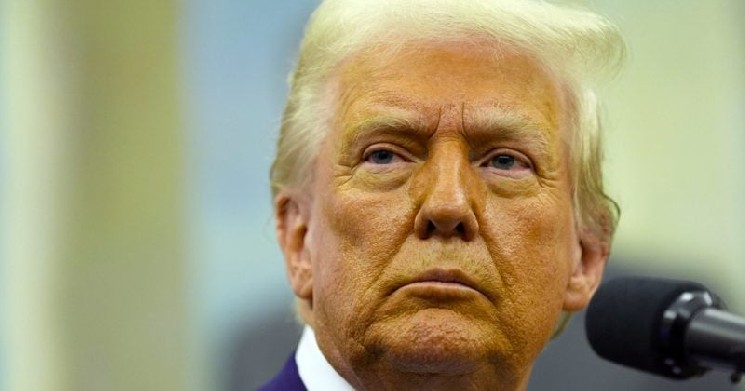
In an unexpected development that has captured the attention of both cryptocurrency advocates and legal observers, President Donald Trump indicated on Monday his willingness to review the case of Keonne Rodriguez, the co-founder of privacy-focused Samourai Bitcoin wallet who was recently sentenced to five years in federal prison. During an Oval Office event, Trump acknowledged awareness of Rodriguez’s situation when questioned by Decrypt about potential clemency, stating he would “look into it” – a response that has ignited hope among digital privacy proponents and renewed debate about the boundaries between financial privacy innovation and regulatory compliance.
Rodriguez, alongside fellow Samourai Wallet co-founder William Hill, was sentenced last month after pleading guilty to conspiracy to operate an unlicensed money transmitting business. The case has become emblematic of the increasingly contentious relationship between government regulatory authorities and cryptocurrency developers focused on privacy technologies. The conviction stemmed from the pair’s development and operation of Samourai Wallet, a Bitcoin wallet application specifically designed with enhanced privacy features that authorities claim facilitated over $2 billion in obscured cryptocurrency transactions, some allegedly connected to illicit darknet marketplace activities.
The Prosecution’s Case and the Developer’s Defense
The April 2023 arrest of Rodriguez and Hill marked a significant escalation in federal enforcement against cryptocurrency privacy tools. According to court documents, Rodriguez admitted to processing more than $2 billion in Bitcoin transactions through privacy-enhancing features that authorities characterized as deliberately designed to circumvent anti-money laundering regulations. Prosecutors emphasized transactions linked to darknet markets as particularly problematic, portraying the wallet’s privacy features not as legitimate tools for financial sovereignty but as mechanisms intentionally created to facilitate illicit activities.
However, defenders of Rodriguez have consistently argued that developing privacy technology itself should not be criminalized, drawing parallels to other privacy-preserving tools in both digital and traditional financial systems. They maintain that privacy is a fundamental right in financial transactions and that developers should not bear responsibility for how users ultimately deploy their software. This perspective has gained significant traction within the cryptocurrency community, where many view the prosecution of wallet developers as an existential threat to innovation in the digital asset space, potentially establishing a chilling precedent for future development of privacy-preserving technologies.
Broader Implications for Cryptocurrency Innovation and Regulation
The potential presidential review of Rodriguez’s case comes at a critical juncture for the cryptocurrency industry, which continues to navigate an increasingly complex regulatory landscape. While Rodriguez is scheduled to begin serving his five-year sentence this Friday, and Hill faces a four-year term, Trump’s comments have reignited discussion about the appropriate balance between law enforcement priorities and technological innovation. The case highlights fundamental questions about whether developing privacy-focused financial tools constitutes a criminal act in itself, or whether responsibility lies primarily with users who deploy such tools for illicit purposes.
Industry analysts note that the prosecution of Rodriguez and Hill represents part of a broader pattern of increased scrutiny of cryptocurrency privacy technologies by U.S. authorities. This enforcement approach has generated significant concern among developers who fear that creating privacy-enhancing tools—regardless of their legitimate applications—could expose them to criminal liability. Many legal experts have observed that this regulatory uncertainty creates an environment where innovation may increasingly relocate to more hospitable jurisdictions outside the United States, potentially diminishing American leadership in blockchain technology development.
Parallels to Other High-Profile Crypto Cases
The cryptocurrency community has drawn direct parallels between Rodriguez’s case and that of Roman Storm, co-founder of Tornado Cash, a cryptocurrency mixing service that was sanctioned by the U.S. Treasury Department in 2022. Storm was convicted in August on similar charges of operating an unlicensed money transmitting business. These cases collectively represent a significant testing ground for how courts and regulators will ultimately define the legal boundaries for privacy technology in the financial sector. A presidential pardon or clemency for Rodriguez could potentially signal a shift in the government’s approach to such cases and might influence the outcome for Storm and others facing similar charges.
The prosecutions have galvanized a diverse coalition of supporters, including civil liberties organizations, technology advocates, and cryptocurrency enthusiasts who argue that financial privacy represents a fundamental right in the digital age. They contend that criminalizing the development of privacy tools undermines both innovation and individual freedoms, while setting dangerous precedents for software developers across all technology sectors. This sentiment has manifested in various forms of support for Rodriguez, from social media campaigns to formal legal defense funds established by industry participants.
The Future of Privacy Technology Under Regulatory Scrutiny
As Rodriguez approaches the beginning of his prison sentence, the potential presidential review of his case represents more than just an individual legal matter—it embodies a pivotal moment in the ongoing negotiation between privacy technology and government oversight. The outcome could significantly influence the trajectory of cryptocurrency development, particularly in privacy-focused applications, and potentially reshape the relationship between innovators and regulators in this space. Cryptocurrency industry leaders argue that clear regulatory guidelines rather than prosecution would better serve both law enforcement objectives and technological advancement.
The tension between privacy-preserving financial technologies and regulatory requirements for transparency remains unresolved across global jurisdictions. While some countries have adopted more accommodating approaches to privacy coins and applications, the United States has generally taken a stricter stance, creating complex compliance challenges for developers and users alike. If Trump were to grant clemency to Rodriguez, it could potentially signal a reconsideration of this approach and encourage a more nuanced regulatory framework that balances legitimate privacy concerns with necessary oversight measures. As the digital asset ecosystem continues to evolve, the resolution of Rodriguez’s case may well establish an important precedent for how society balances the competing values of financial privacy and regulatory compliance in the cryptocurrency age.