



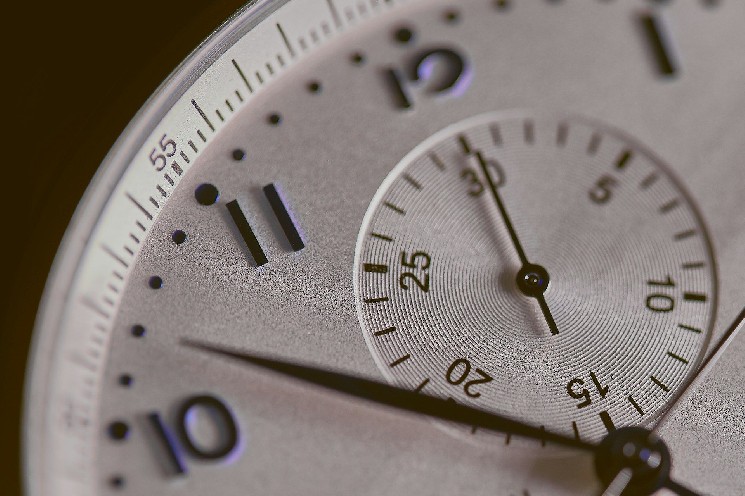
Luxury Watch Market Shows Resilience as Bitcoin Values Decline
Diverging Markets: How High-End Timepieces and Cryptocurrencies Are Moving in Opposite Directions
In an intriguing shift within the luxury assets landscape, the secondary market for premium timepieces has begun to chart its own course, independent of the volatile cryptocurrency sector. While Bitcoin has experienced a significant downturn over the past six months, high-end watches are experiencing a modest but noteworthy price recovery, revealing a fascinating decoupling of markets that were once considered parallel investment vehicles.
According to data from WatchCharts, the secondary market for luxury watches has seen approximately 4% growth in the past half-year, a period during which Bitcoin plummeted by roughly 25% and the broader CoinDesk 20 index tumbled more than 30%. This divergence marks a significant departure from previous market patterns that had linked these asset classes through the pandemic years, suggesting a fundamental shift in how investors perceive and value different forms of portable wealth.
Market Stabilization Rather Than Boom Signals New Reality for Luxury Timepieces
The upward movement in secondary watch prices represents market stabilization rather than a renewed boom, according to a recent joint report from Morgan Stanley and WatchCharts. After enduring two consecutive years of price declines, luxury watches appear to have found their footing as excess inventory has cleared from the market and forced selling has diminished substantially. Sellers, now more confident in the inherent value of their timepieces, have become increasingly resistant to further price reductions.
“What we’re witnessing isn’t a speculative surge but rather a normalization of the market,” explains industry analyst Patricia Rousseau, who specializes in luxury goods investments. “The panic selling has subsided, and there’s a growing recognition that quality timepieces from prestigious houses represent genuine scarcity that transcends short-term market fluctuations.”
Supporting this stabilization, luxury watchmakers implemented global retail price increases of approximately 7% since early 2023, effectively establishing a new price floor that has helped anchor resale values. This strategic pricing move, combined with reduced inventory pressure, has created more favorable conditions for secondary market prices despite transaction volumes remaining relatively subdued compared to the frenzied trading seen during the pandemic boom years.
Breaking the Correlation: The End of the Crypto-Watch Connection
The current divergence between luxury watches and cryptocurrency markets represents a significant break from what had been a surprisingly strong correlation during the pandemic era. Throughout 2021 and much of 2022, both markets moved in remarkable tandem, fueled by unprecedented monetary stimulus, low interest rates, and a surge in retail speculation. Many newly-minted crypto millionaires channeled their digital gains into physical luxury goods, creating a direct pipeline between crypto profits and watch purchases.
However, by 2024, this relationship began to fracture noticeably. As Bitcoin surged on anticipation and eventual approval of spot ETFs, luxury watch prices continued their downward trajectory, pressured by tightening financial conditions and waning speculative fever. This decoupling suggested that the two asset classes were responding to fundamentally different market forces rather than riding the same wave of speculative excess.
“The correlation between crypto and luxury watches was always somewhat circumstantial rather than fundamental,” notes financial historian Dr. Jonathan Chen. “It was primarily driven by a specific cohort of investors who had success in both markets simultaneously. As market conditions evolved and that investor profile changed, we’re seeing these assets return to their natural, distinct patterns of behavior.”
Concentrated Recovery Reflects Brand Power Dynamics
A closer examination of the watch market reveals that the recovery has been far from uniform across all brands and models. According to Morgan Stanley’s analysis, the price stabilization has been narrowly concentrated among brands with genuine pricing power and established market dominance—specifically Rolex, Patek Philippe, and Audemars Piguet. These heritage manufacturers, with their decades-long waiting lists and carefully managed production volumes, have maintained their value proposition even in challenging economic conditions.
Meanwhile, many other luxury watch brands continue to trade at significant discounts to their retail prices, highlighting the increasingly stratified nature of the market. This divergence underscores the growing importance of brand equity, production discipline, and market positioning in determining resale performance.
Industry observers also point to structural changes within the secondary market as contributing factors to price stabilization. Notably, Rolex’s introduction of a certified pre-owned program has emerged as a stabilizing force, reducing price volatility and supporting valuations at the premium end of the market. By creating an authorized channel for previously owned timepieces, Rolex has effectively extended its brand control into the secondary market, establishing price consistency and authenticity standards that benefit the entire ecosystem.
Precious Metals Surge as Physical Scarcity Assets Gain Favor
While luxury watches have staged a modest recovery and cryptocurrencies have faltered, precious metals have emerged as the clear winners in the current economic environment. Gold has appreciated by nearly 70% since early 2023, while silver has delivered even more impressive gains of approximately 150%. This remarkable performance reflects growing investor preference for tangible, physically scarce assets during periods of economic uncertainty and inflation concerns.
The strong performance of precious metals markets has been driven by a combination of tight physical supply, robust industrial demand, and heightened perception of policy risk. As central banks around the world continue to navigate challenging economic conditions with sometimes unpredictable policy responses, investors have increasingly sought refuge in assets with established track records as stores of value.
“What’s particularly interesting about the current market dynamics is how investors are becoming more sophisticated in distinguishing between different types of ‘alternative’ investments,” explains economist Maria Vasquez. “Rather than treating crypto, watches, and precious metals as interchangeable ‘alternative assets,’ market participants are increasingly appreciating the unique characteristics and risk profiles of each.”
Investment Landscape Evolves as Market Sophistication Increases
The diverging performance of cryptocurrencies, luxury watches, and precious metals signals a maturing investment landscape where assets are increasingly valued based on their intrinsic characteristics rather than broad category associations. This evolution suggests that investors are no longer treating digital assets, luxury collectibles, and physical commodities as interchangeable bets on alternative wealth preservation.
Instead, a more nuanced approach appears to be emerging, with investors differentiating between fast-moving financial assets like cryptocurrencies and slower, physical stores of value such as premium watches and precious metals. This distinction becomes particularly meaningful as macroeconomic pressures continue to build, with different types of assets responding uniquely to inflation, interest rates, and economic growth projections.
“The luxury watch market’s modest recovery amid crypto’s decline demonstrates that these markets have their own fundamentals,” notes luxury market consultant Elizabeth Warren-Smith. “Watches are responding more to supply dynamics, brand positioning, and controlled distribution, while cryptocurrencies remain heavily influenced by regulatory developments, technological adoption, and speculative sentiment.”
As these markets continue to evolve, investors and collectors alike will likely benefit from understanding the distinct drivers of each asset class rather than assuming correlated performance based on past patterns. The decoupling of luxury watches from cryptocurrencies may ultimately reflect a healthier, more mature market where value is determined by specific fundamentals rather than generalized speculative fever—a development that bodes well for the long-term stability of the luxury timepiece market.