





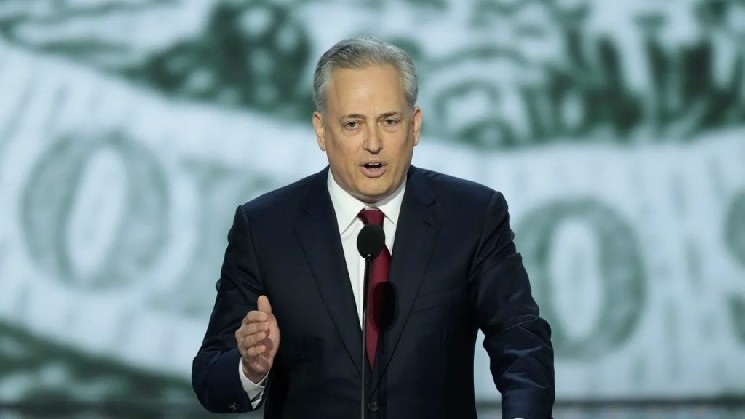
Trump’s Crypto Director David Sacks Signals Historic Moment for Cryptocurrency Regulation
Regulatory Breakthrough on the Horizon as Industry Support Reaches Peak Levels
In what could mark a watershed moment for the cryptocurrency industry, David Sacks, President Donald Trump’s newly appointed Director of Cryptocurrency and Artificial Intelligence, has announced that the probability of passing comprehensive market structure legislation for cryptocurrencies has reached unprecedented levels. This development signals a potential end to the regulatory uncertainty that has long plagued the digital asset ecosystem in the United States.
Speaking at a recent industry conference, Sacks emphasized the critical importance of this moment, urging cryptocurrency stakeholders to capitalize on what he described as a “buffer period” to resolve any remaining disagreements within the sector. “This represents perhaps the most opportune window we’ve ever had to secure the future of digital assets in America,” Sacks stated, highlighting the rare alignment of political will and industry consensus. The director’s comments reflect the administration’s commitment to establishing a clear regulatory framework that balances innovation with necessary protections for investors and consumers.
Bipartisan Efforts Accelerate as White House Prioritizes Crypto Legislation
The push for regulatory clarity has gained significant momentum under the current administration, with Sacks confirming ongoing collaboration between the White House, Senate Banking Committee Chairman Tim Scott, committee members from both parties, and key industry representatives. “We’re witnessing an unprecedented level of cooperation between government officials and private sector experts,” Sacks noted during his address. This collaborative approach aims to expedite the passage of bipartisan legislation that would establish clear guidelines for cryptocurrency market operations while preserving America’s competitive edge in financial innovation.
Industry analysts have long argued that regulatory uncertainty has hampered institutional adoption of digital assets and driven innovation offshore. The proposed market structure law would address these concerns by creating a comprehensive framework that defines how cryptocurrencies are classified, traded, and regulated within existing financial systems. According to regulatory experts, such legislation could potentially unlock billions in institutional investment while providing much-needed consumer protections. The administration’s focus on this issue represents a significant shift from previous approaches, which often resulted in fragmented oversight spread across multiple federal agencies.
Industry Divisions Emerge as Coinbase Opposes CLARITY Act Draft
Despite the growing momentum, the path to regulatory clarity has not been without obstacles. Coinbase, one of the largest cryptocurrency exchanges and a major advocate for comprehensive legislation, recently expressed opposition to the current draft of the CLARITY Act, highlighting persistent divisions within the industry over specific regulatory approaches. This development prompted the Senate Banking Committee to postpone its scheduled hearing on amendments to the act, with no new date currently announced for the discussion.
The disagreement centers around several key provisions in the draft legislation, including the classification of certain digital assets as securities versus commodities, the scope of regulatory authority granted to various agencies, and the compliance requirements for different categories of market participants. Industry experts suggest that these points of contention reflect the complex nature of the cryptocurrency ecosystem, which spans traditional financial services, innovative technological applications, and entirely new economic models. “The devil is in the details,” remarked one regulatory attorney familiar with the negotiations, “but the fact that we’re debating specific provisions rather than whether regulation is needed at all represents enormous progress.”
Strategic Timing Critical as Regulatory Window Opens
Sacks’s emphasis on using the current “buffer period” strategically underscores the time-sensitive nature of the opportunity. With bipartisan interest in cryptocurrency regulation at an all-time high and growing recognition of digital assets’ importance to America’s financial leadership, the director characterized this moment as potentially decisive for the industry’s future. “We have a narrow window where alignment exists across political divides,” Sacks explained. “The industry must speak with a coherent voice now if it wants to shape its regulatory destiny rather than having it imposed from above.”
The timing coincides with increasing global competition in the digital asset space, with several jurisdictions including Singapore, the European Union, and the United Arab Emirates establishing comprehensive regulatory frameworks to attract cryptocurrency businesses. This global context has added urgency to the U.S. efforts, with concerns that continued regulatory uncertainty could permanently disadvantage American companies in the rapidly evolving digital economy. Industry leaders have echoed these concerns, pointing to the flight of innovation and capital to more hospitable regulatory environments overseas. The administration’s prioritization of cryptocurrency regulation appears to acknowledge these competitive pressures.
Balancing Innovation and Protection Remains Central Challenge
Throughout his remarks, Sacks consistently returned to the dual imperatives of promoting innovation while ensuring adequate investor protection. “Clarifying industry regulations is not just about enabling growth—it’s about creating a sustainable ecosystem where consumers feel secure and businesses can operate with certainty,” he stated. This balanced approach reflects the administration’s broader philosophy toward emerging technologies, seeking to harness their economic potential while mitigating associated risks.
The regulatory framework under discussion would likely establish clear jurisdictional boundaries between various federal agencies, create new disclosure requirements for issuers of digital assets, establish consumer protection standards, and provide guidelines for custody of digital assets by financial institutions. Industry participants have generally welcomed this comprehensive approach, even as they debate specific provisions. “After years of regulation by enforcement, having clear rules of the road would be transformative,” noted a cryptocurrency compliance officer who requested anonymity due to ongoing participation in the policy discussions. As the legislative process continues, the administration appears committed to maintaining this balance between enabling innovation and ensuring market integrity—a position that most industry participants view as essential for long-term growth.
This article is intended for informational purposes only and does not constitute investment advice.