

Federal Reserve Rate Cut Expectations Surge Amid Kevin Warsh Nomination Turmoil
In the ever-shifting landscape of U.S. monetary policy, a notable ripple has emerged as traders adjust their outlooks on the Federal Reserve’s upcoming decisions. Just days after investors expressed guarded optimism about interest rate cuts, the candidacy of Kevin Warsh as the next Federal Reserve Chair has ignited a wave of speculation, pushing expectations for a rate reduction at the March Federal Open Market Committee (FOMC) meeting to 23%. This uptick follows a palpable unease in financial circles over Warsh’s perceived hawkish inclinations, which could steer the central bank toward a more restrained approach to interest rates. Traders are recalibrating their forecasts amid fears that the new chair might prioritize fighting inflation over stimulating economic growth, a pivot that echoes past shifts in Fed leadership.
Diving deeper into the data, the Chicago Mercantile Exchange (CME) Group revealed that the proportion of market participants betting on an interest rate cut jumped nearly 5% from the previous Friday, when only 18.4% were anticipating such a move. This surge reflects a heightened sensitivity to political appointees and their potential to reshape economic expectations. Most intriguingly, those favoriting a cut in March are eyeing a modest 25 basis point reduction, with no one projecting anything more aggressive like a 50 basis point slash. These probabilities, visualized in the CME’s interest rate target graphs, underscore the market’s cautious dance between hope and hesitation. As always, interpreting these figures requires a nuanced lens: they capture not just economic forecasts but also the psychological undertones of investor sentiment, particularly in volatile sectors like cryptocurrencies.
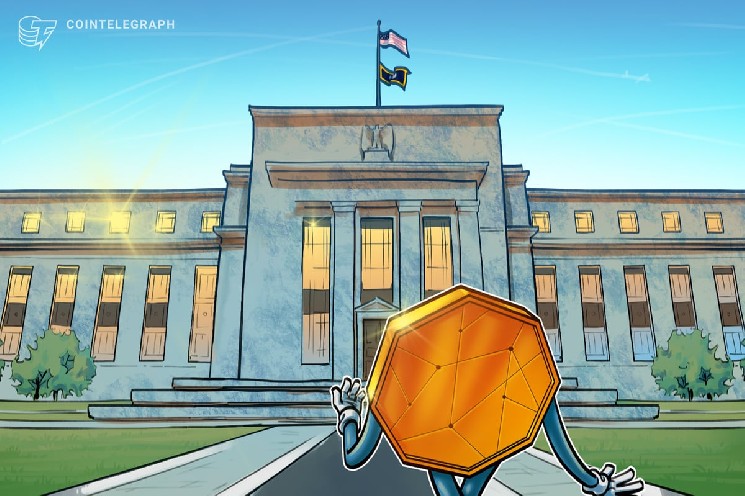
President Donald Trump’s decision to nominate Warsh in January stands as a pivotal moment, positioning him as the successor to Jerome Powell, whose four-year term as Federal Reserve Chair wraps up in May. Warsh, a seasoned banker with deep roots in Wall Street and a history of advising presidents, brings a reputation for fiscal prudence that contrasts sharply with the dovish tactics often associated with Powell. His nomination, announced when the world was still grappling with post-pandemic recovery, has prompted a reevaluation of Fed priorities—from inflation control to balance sheet management. This isn’t just a personnel change; it’s a potential reset of the Federal Reserve’s strategic compass, especially as global markets eye the U.S. for signals on liquidity and growth.
The implications for crypto assets couldn’t be more pronounced, as interest rate trajectories profoundly influence digital currencies. Easing liquidity conditions, typically spurred by rate cuts, act as a bullish catalyst, flooding markets with capital and boosting prices. Conversely, tighter policies that hike rates can squeeze financing options, leading to sell-offs and volatility in assets like Bitcoin and Ethereum. In this context, Warsh’s nomination injects uncertainty, potentially signaling a stabilization or even contraction of credit flows that crypto investors had been banking on. Analysts agree that the interplay between monetary policy and crypto valuations is intricate, with rate cuts often fueling speculative bubbles that can sustain rallies.
Markets have reacted with evident tremors following the Warsh announcement, encapsulating broader anxieties about shifting Fed dynamics. “The nomination of Kevin Warsh as the next Fed Chair has shaken markets to the core,” asserted crypto market analyst Nic Puckrin in an exclusive message to Cointelegraph. Attributing the recent downturn in precious metals—evident in late January and early February—to perceptions of Warsh’s hawkish stance, Puckrin highlighted how his views on shrinking the Federal Reserve’s balance sheet could usher in an era of diminished liquidity. If implemented, such measures would force markets to navigate a leaner financial environment, with ripple effects extending beyond traditional assets to cryptocurrencies prized for their sensitivity to borrowing costs.
Adding further layers of complexity, global economist Thomas Perfumo from Kraken exchange described Warsh’s candidacy as a “mixed” signal for the macroeconomic outlook. Rather than the expansive liquidity crypto enthusiasts might have hoped for, the nomination suggests a more stabilizing approach to U.S. credit markets, which could temper wild expectations in speculative investments. As investors digest these developments, the crypto space stands at a crossroads, where policy whispers from Washington could either ignite the next bull run or catalyze a sobering correction. With Bitcoin’s potential rally often tied to accommodative policies, the absence of aligned easing might redefine market narratives entirely.