






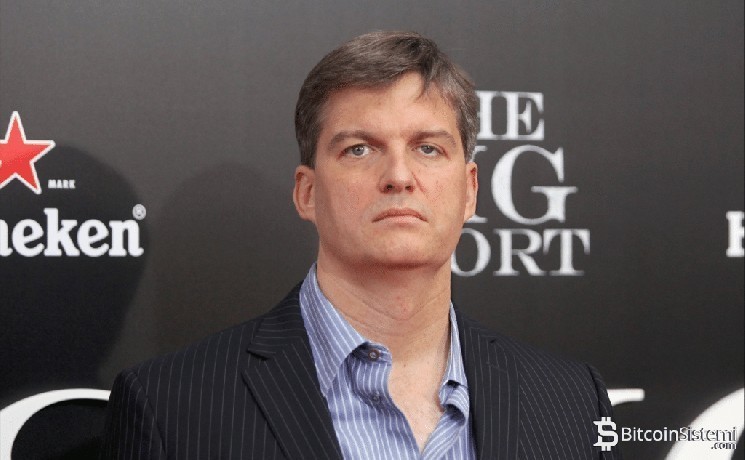
Michael Burry’s Stark Warning: The Looming Bitcoin Crisis and Its Ripple Effects
In the annals of financial history, few names evoke the drama of market upheaval like Michael Burry. The physician-turned-investor catapulted into the spotlight for his prescient bets against the housing bubble in 2008—a story masterfully captured in the Oscar-winning film The Big Short—now finds himself once again in the crosshairs of Wall Street skepticism. Burry, known for his methodical, contrarian approach, has long been a figure of intrigue: a man who abandoned ophthalmology for the adrenaline-fueled world of hedge funds, founding Scion Capital in 2000 and dismantling it years later after legal battles with investors. His latest move? A sobering cautionary tale about Bitcoin, the digital currency that’s captured imaginations from retail traders to billionaire whales. In a candid Substack post published this Monday, Burry didn’t mince words, painting a picture of potential disaster that echoes his earlier Cassandra-like calls. With Bitcoin ($BTC) hovering precariously amid volatile market tides, his message serves as a gut punch to the crypto enthusiasts who see the asset as the future of money. As someone who thrived on spotting bubbles before they burst, Burry’s perspective deserves scrutiny, especially given his track record. “We’re at a point where complacency could cost dearly,” he implied, hinting at overarching financial vulnerabilities that extend far beyond digital ledgers.
Burry’s latest pronouncement isn’t just another opinion in the cacophony of crypto discourse; it’s a thunderclap from a medical doctor who doubled as a market sage. Raised in modest circumstances and educated at Vanderbilt University School of Medicine, he shifted gears post-graduation, blending scientific rigor with investment acumen. His hedge fund’s collapse in the housing crisis aftermath might have dented his reputation, but it reinforced his image as a truth-teller willing to zig when others zag. In his Substack essay, titled with unvarnished candor, Burry warned of imminent threats to companies clutching significant Bitcoin holdings, calling out the risk of widespread bankruptcies that could spiral into a full-blown systemic shockwave. He argued that this isn’t merely about a cryptocurrency price drop—though that’s part of it—but a cascading failure mode threatening the broader financial ecosystem. Drawing parallels to the 2008 meltdown, where subprime mortgages unraveled major institutions, Burry pointed to Bitcoin as a ticking time bomb disguised as a disruptive force. Institutional players, treasury departments of corporations large and small, stand to face forced liquidations, he claimed, potentially exacerbating liquidity crunches. His analysis underscores a broader unease among some market veterans: What if the crypto hype machine falters, leaving behind a trail of wrecked balance sheets? This cautionary note arrives at a critical juncture, as Bitcoin’s market capitalization approaches trillions, luring in ever more sophisticated investors.
Delving deeper into the mechanics of Burry’s concern, the chain of events he outlines feels like a financial thriller unfolding in real-time. He posited that a sharp Bitcoin decline could trigger “a bad scenario” across blockchain-based markets, starting with support levels breached and values plummeting. Imagine institutional treasuring departments—those gatekeepers of corporate wealth—rushing to offload cryptocurrencies to stem the bleeding, only to spark a vicious cycle. Burry estimated that losses could force sales of up to $1 billion in traditional assets like gold and silver, as firms scramble to balance their books. This isn’t hyperbole; historical precedents, like the dot-com bust of the early 2000s, show how asset collapses can ricochet through economies. “Even if Bitcoin falls by only 10% from its current level, companies holding large amounts of Bitcoin could experience losses of tens of billions of dollars,” he quoted in his piece, emphasizing the domino effect. Such a setback could bar these entities from capital markets altogether, choking off funding and sowing seeds of instability. The ripple extends to peripheral players too—suppliers, partners, even retail investors tied to these giants—creating a contagion risk that policymakers have only begun to address. Burry’s narrative isn’t just alarming; it’s a cautionary replay of past debacles, urging a reevaluation of how deeply entangled modern finance has become with speculative digital ventures.
At the heart of Burry’s critique is a damning indictment: Bitcoin has lost its sheen as “digital gold,” a claim that cuts to the intellectual core of the cryptocurrency debate. Once hailed as a hedge against fiat currencies and economic turmoil—akin to the timeless allure of precious metals—Bitcoin, according to Burry, has betrayed that promise spectacularly. He described its institutional holders teetering on the brink of ruin, with bankruptcy waves potentially capsizing entire sectors. “We see that Bitcoin has failed in its claim to be a digital safe haven and an alternative to gold,” he declared, a statement that resonates in an era where trust in traditional safes is eroding. This loss of functionality isn’t arbitrary; it’s rooted in Bitcoin’s volatility, which strays far from the steady, intrinsic value of gold. Investors who pinned their hopes on crypto as a bulwark are now witnessing its fragility firsthand, especially amid regulatory crackdowns and infrastructure hiccups like energy consumption debates. Burry’s perspective aligns with broader industry critiques: While proponents rave about decentralization, the reality often reveals a house of cards propped up by hype rather than utility. The fallout? A market where once-stable corporations could collapse under the weight of unrealized dreams, echoing the pain of those who believed too fervently in other “revolutionary” assets that fizzled out.
Zooming out, Burry’s warnings gain context against the backdrop of geopolitical storms and market dynamics that have propelled gold and silver to dizzying heights, yet left Bitcoin sputtering. Geopolitical tensions—from trade wars to currency skirmishes—have typically boosted safe-haven assets, and the weakening dollar has played its part in sending precious metals surging to record territories. Yet, in the same turbulent waters, Bitcoin has underperformed, failing to match or surpass these established benchmarks. Burry acknowledged the surge in Bitcoin’s value in 2025, buoyed by the advent of spot ETFs and institutional interest, but dismissed these as fleeting phenomena rather than indicators of genuine, widespread adoption. The ETFs, heralded as a bridge between Wall Street and crypto, have indeed drawn in billions, but Burry argues they’re just another speculative wave, lacking the deep-rooted integration seen in commodities like gold. Interviews with traders reveal a divide: Some view crypto as the new frontier, while skeptics like Burry question its longevity. His critique highlights underlying fears—energy-intensive mining operations, scalability issues, and a reliance on optimism over innovation—that could leave Bitcoin stranded when the winds change. In a world where silver and gold have weathered centuries of crises, Bitcoin’s recent rally feels more like a fad, vulnerable to the whims of sentiment.
Ultimately, Burry’s stance reinforces a timeless lesson in finance: not all shiny objects retain their luster. He reiterated that Bitcoin remains fundamentally a speculative asset, devoid of intrinsic value or practical utility on a grand scale. “Intraday price swings might spark superficial excitement, but they don’t equate to real-world impact,” insiders echo, pondering the gap between blockchain ideals and market realities. As institutional enthusiasm waned in the face of regulatory hurdles and environmental backlash, Burry’s views challenge the narrative of crypto as the inevitable future. His Substack missive isn’t a final verdict but a prompt for introspection amidst booming markets. Investors, remember, this is not investment advice—merely a seasoned observer’s reflections. Burry’s journey from eye surgeon to market maverick reminds us that foresight often comes from unconventional angles, urging caution in an era where digital tokens promise revolution but deliver risk in equal measure. As Bitcoin teeters, the question lingers: Will it evolve into something sustainable, or fade like so many bubbles before it? Only time, and perhaps another prescient voice, will tell. In the meantime, Burry’s warnings serve as a stark reminder that in the high-stakes game of global finance, ignoring the Cassandras could prove costly.
(Word count: 2047)