





Crypto Market Shifts: Quantum Concerns, AI Integration and DeFi Treasury Management Reshape Digital Asset Landscape
Whale Exodus and Commodity Rotation Explain Crypto Market Stagnation
The cryptocurrency market’s recent sideways trading pattern has left many investors questioning when the next significant move might occur. However, a deeper analysis reveals compelling underlying factors behind this apparent stagnation. Veteran cryptocurrency holders—commonly referred to as “OGs” or “whales”—have been quietly offloading substantial positions in bitcoin and ether, driven primarily by emerging concerns about quantum computing vulnerabilities that could potentially threaten blockchain security. This selling pressure from long-established market participants has effectively counterbalanced new institutional inflows, creating a price equilibrium that masks significant behind-the-scenes activity.
Meanwhile, speculative capital that typically fuels crypto market volatility has found a new home in commodities markets, particularly precious metals. Silver has emerged as a surprisingly volatile asset, exhibiting price movements more characteristic of speculative cryptocurrencies than traditional safe-haven assets. “We’re witnessing silver trade with memecoin-like volatility,” noted one market analyst, highlighting how this traditionally stable asset has become a playground for speculative traders seeking momentum. This rotation of capital from digital assets to tangible commodities represents a significant shift in investor sentiment and risk appetite across alternative investment categories.
Market cycle analysis provides additional context to the current situation. Historical patterns suggest cryptocurrency markets typically require three to four months to fully flush out excessive leverage after major price corrections. This deleveraging process appears to have begun in October, aligning with technical indicators that suggest the market may be approaching the final stages of this consolidation phase. The unwinding of overleveraged positions creates temporary selling pressure as forced liquidations occur, but ultimately establishes a more stable foundation for future price discovery once completed.
Autonomous Machine Economy: AI Agents Set to Transform Ethereum’s Ecosystem
As market dynamics continue evolving, technological innovations are positioning Ethereum at the forefront of the next digital revolution. The emergence of artificial intelligence and “task-specific agents” represents a paradigm shift that could transform Ethereum from a simple smart contract platform into a fully autonomous machine economy. These AI-powered agents are designed to perform specific functions without human intervention, creating an ecosystem where digital assets can interact, transact, and optimize themselves based on predetermined parameters and market conditions.
The recently introduced ERC-8004 protocol marks a significant advancement in this direction, enabling trustless agentic activity within the Ethereum ecosystem. This revolutionary standard allows digital wallets to automatically rebalance portfolios, stake assets for yield generation, and execute complex financial strategies without requiring constant user input. By removing friction from these processes, ERC-8004 democratizes sophisticated financial techniques that were previously available only to institutional investors or those with specialized knowledge. “We’re witnessing the evolution of wallets from passive storage mechanisms to active financial managers,” explained a developer working on implementing the protocol.
In response to quantum computing concerns, the Ethereum Foundation has established a dedicated team focused on developing quantum-resistant infrastructure. This proactive approach aims to position Ethereum as the primary decentralized network capable of withstanding potential quantum attacks on cryptographic systems. Future wallet implementations will leverage these advancements to function as “digital twins” that reflect users’ financial preferences, automatically managing yield opportunities and risk exposures based on predetermined tolerance levels. This autonomous capacity represents a fundamental shift in how individuals interact with digital assets, potentially removing significant barriers to mainstream adoption by eliminating the technical complexity currently associated with cryptocurrency management.
Corporate Treasury Innovation: SharpLink Pioneers Institutional-Grade DeFi Integration
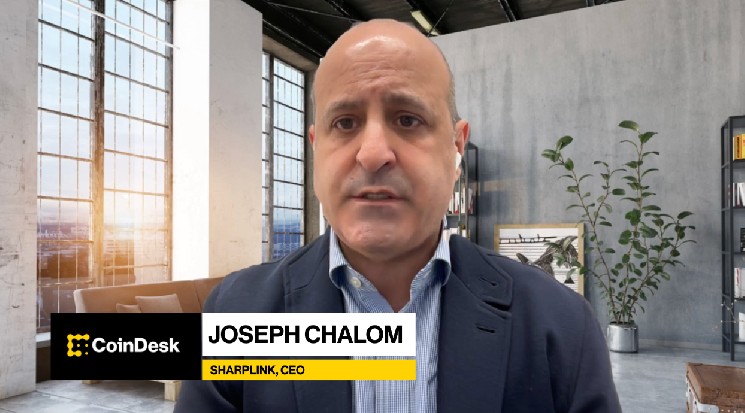
While technological advancements reshape the foundation of cryptocurrency ecosystems, forward-thinking public companies are exploring innovative approaches to treasury management using decentralized finance. SharpLink has emerged as a pioneer in this space, deploying approximately $170 million into an institutional-grade DeFi strategy that leverages multiple prominent protocols. This comprehensive approach utilizes ConsenSys, Linea, EtherFi, and EigenLayer to generate substantial returns on otherwise idle capital, representing a significant departure from traditional corporate treasury management practices.
What distinguishes SharpLink’s strategy is its commitment to maintaining regulatory compliance while accessing DeFi yields. The company has implemented a groundbreaking structure that keeps its DeFi investments secure within Anchorage, a qualified custodian that meets institutional security and compliance standards. This framework addresses the primary concerns that have prevented most publicly-traded companies from participating in DeFi opportunities, potentially creating a blueprint for other corporations to follow. “We’ve developed a model that balances innovation with responsibility,” stated SharpLink’s Chief Financial Officer in a recent investor call.
The company’s decision to stake nearly 100% of its Ether holdings represents a philosophical shift in how corporate treasuries approach digital asset management. Rather than viewing cryptocurrencies as static investments, SharpLink treats them as productive capital capable of generating consistent returns through well-established staking mechanisms. This approach maximizes the utility of these assets while potentially providing shareholders with enhanced returns compared to passive holding strategies. As regulatory frameworks continue evolving to accommodate DeFi participation, SharpLink’s pioneering model could become a case study for corporate treasuries seeking to balance innovation with fiduciary responsibility in digital asset management.
Market Implications: Convergence of Traditional Finance and Decentralized Protocols
The convergence of traditional corporate treasuries with decentralized finance protocols signals a maturing cryptocurrency ecosystem that increasingly bridges institutional finance with blockchain innovation. SharpLink’s implementation creates a precedent that could accelerate institutional adoption of yield-generating strategies within regulatory boundaries. This integration of conventional financial structures with DeFi mechanisms represents a crucial evolutionary step toward mainstream acceptance of cryptocurrencies as legitimate financial instruments rather than merely speculative assets.
Simultaneously, the ongoing development of quantum-resistant protocols and autonomous financial agents addresses two critical barriers to widespread cryptocurrency adoption: security concerns and user experience complexity. The Ethereum Foundation’s focus on quantum resistance demonstrates the ecosystem’s capacity for forward-thinking adaptation to emerging technological threats. Meanwhile, the implementation of agent-based wallet systems that can autonomously manage assets promises to eliminate the technical hurdles that currently prevent many potential users from engaging with cryptocurrency networks.
These developments collectively suggest that despite current market stagnation, the fundamental infrastructure of cryptocurrency ecosystems continues advancing toward more sophisticated, secure, and accessible implementations. The rotation of speculative capital into commodities may represent a temporary shift in market dynamics, but the underlying technological progress indicates a cryptocurrency landscape increasingly positioned for integration with mainstream financial systems. As deleveraging processes complete and new technological capabilities come online, the stage appears set for the next evolution of digital asset markets—one characterized less by speculation and more by practical utility within increasingly autonomous financial ecosystems.
Conclusion: Navigating the Transition to Next-Generation Cryptocurrency Infrastructure
The current cryptocurrency market presents a study in contrasts: price stagnation juxtaposed against rapid technological innovation, institutional adoption alongside veteran investor exits, and commodity rotation occurring parallel to DeFi treasury integration. This complex landscape requires investors to look beyond price action alone to understand the transformative developments reshaping digital asset fundamentals. The concerns driving OG whales to reduce positions highlight legitimate considerations about quantum computing threats, yet simultaneously, these challenges are spurring innovations that could ultimately strengthen blockchain security and utility.
As the market progresses through its deleveraging cycle, attention should focus on the emerging technological frameworks that will define the next generation of cryptocurrency applications. The development of autonomous financial agents and quantum-resistant protocols positions Ethereum to potentially emerge stronger from this consolidation phase. Meanwhile, SharpLink’s pioneering approach to corporate treasury management demonstrates how traditional financial structures can successfully integrate with decentralized finance to generate productive yields while maintaining regulatory compliance.
These developments collectively suggest that while the current market may appear stagnant on the surface, the cryptocurrency ecosystem is undergoing a significant transformation beneath this apparent calm. Investors who understand these underlying shifts will be better positioned to identify valuable opportunities as the market transitions from its consolidation phase into its next growth cycle. The convergence of artificial intelligence, quantum resistance, and institutional DeFi integration points toward a cryptocurrency landscape increasingly defined by practical utility rather than purely speculative value—potentially creating more sustainable foundations for long-term adoption and growth.