







Crypto Crunch: Senate Unveils Revised Stablecoin Rules, Sparking Industry Buzz
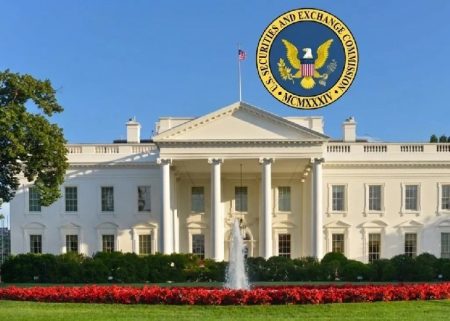
In the heart of Washington, D.C., whispers of change echoed through the corridors of power last Monday as crypto industry leaders got an exclusive, behind-closed-doors preview of the revised Digital Asset Market Clarity Act amendments. According to sources close to the draft, the bill’s new language on stablecoin yields has left many in the sector scratching their heads—deemed overly restrictive and vague. “It’s like trying to thread a needle in the dark,” one insider, who wished to remain anonymous, told our reporter during the Capitol Hill briefing. The stakes are high: this legislative tweak aims to delineate the murky waters between cryptocurrency rewards and traditional banking practices, but insiders fear it might stifle innovation in a field racing ahead.
The core of the controversy lies inSenator Angela Alsobrooks’ and Thom Tillis’ Friday announcement, which explicitly bans yield payments for merely holding stablecoins. Picture this: stablecoins, those digital currencies pegged to assets like the U.S. dollar, have been a backbone of the crypto ecosystem, providing stability amidst market volatility. Yet, the amendment clamps down on any mechanism that mirrors interest-bearing bank deposits, effectively shutting the door on passive income from static holdings. “It’s not just about rewards; it’s about how we interpret ‘equivalence’,” the same source explained, highlighting the uncertainty in defining activities-based incentives. For everyday users, this could mean earning rewards only through active engagement—trading, lending, or spending—rather than letting coins sit untouched. Industry veterans warn that such ambiguities could deter newcomers, complicating compliance and potentially slowing adoption.
This closed-door session marked a pivotal step toward resolving a major impasse, paving the way for a potential Senate Banking Committee hearing. The compromise emerged from intense negotiations between the crypto camp and traditional bankers, who argued that stablecoin yields could undermine lending by drawing funds away from traditional deposits. “Bankers saw it as a threat to their business model, and they weren’t shy about voicing it,” noted a financial analyst briefed on the talks. By allowing rewards tied to user activities but nixing balance-based payouts, lawmakers hope to strike a balance. It’s a win for clarity, ensuring that crypto isn’t cannibalizing regulated finance, but experts in the field are cautious. They point to the bill’s original incarnation, which sailed through the House last year, followed by a markup in the Senate Agriculture Committee. Now, with Banking’s involvement, the path forward looks clearer— a unified version could soon face a Senate-wide vote, bridging the gap between progressive and conservative visions.
Yet, beneath this surface-level victory simmers an undercurrent of tension, born from the protracted lobbying war that nearly derailed the legislation. For months, the crypto industry clashed with banking giants over yield programs, each side wielding data and anecdotes to bolster their case. Stablecoin advocates touted user incentives as vital for competitiveness in DeFi platforms, where liquidity is king. On the flip side, banks fretted over market distortions, citing fears of “deposit runs” in the digital age. This spat wasn’t isolated; it mirrored broader debates in financial regulation, where tech disruption meets legacy systems. Beyond yields, unresolved issues linger, particularly around overseeing decentralized finance. Democrats, prioritizing anti-money laundering safeguards, have pushed for stricter DeFi regs to curb illicit activities like terrorist financing or drug trafficking. Meanwhile, a controversial provision targets potential conflicts of interest, prohibiting senior officials from personally profiting off crypto—a direct nod to high-profile figures like former President Donald Trump. These elements could still unravel the bill, demanding compromise from a divided Congress.
Reflecting on the journey, the Clarity Act builds on the landmark Guiding and Establishing National Innovation for U.S. Stablecoins Act from last year, a bipartisan triumph that minted America’s first crypto-specific federal law. That cornerstone addressed fraud and valuation in stablecoins but was always envisioned as the appetizer in a two-course meal. The Clarity Act aims to be the main course, offering comprehensive oversight for the entire crypto market and dissolving the regulatory fog that’s kept hedge funds and individual investors on the sidelines. “For years, we’ve operated in a Wild West environment,” said Sarah Chen, a blockchain economist at a leading think tank. “Laws like this signal to the world that the U.S. is serious about integrating digital assets into the financial fabric.” By standardizing rules on trading, custody, and transparency, it promises to boost confidence among developers and entrepreneurs, fostering innovation without inviting chaos.
Looking ahead, the approval of the Digital Asset Market Clarity Act could unleash a torrent of investment into the crypto space, transforming it from a fringe experiment into a cornerstone of modern finance. Institutional players, once wary of the regulatory gray areas, might now plunge in, funding projects that blend blockchain with artificial intelligence, supply chain management, and beyond. Developers envision a surge in U.S.-based DeFi protocols, drawing global talent and capital. However, success hinges on implementation—will the SEC and Treasury collaborate effectively, or will bureaucratic hurdles resurface? “This isn’t just about crypto; it’s about America’s competitiveness in the global economy,” opined tech investor Raj Patel in a panel discussion. As the bill edges closer to passage, the crypto community holds its breath, hopeful that clarity breeds prosperity, not conformity. In this rapidly evolving landscape, one thing is certain: the rules of engagement are changing, and with them, the future of money itself.
The Stablecoin Yield Conundrum: Narrow Definitions Spark Concern
Diving deeper, the revised bill’s language on stablecoin rewards demands scrutiny, particularly its emphasis on “activity-based” incentives versus outright bans on holding-related yields. Sources describe the prohibitions as laser-focused yet imprecise, creating a framework where users earn rewards through dynamic interactions—such as participating in liquidity pools or staking assets—but never from passive ownership. This distinction aims to prevent stablecoins from morphing into de facto savings accounts, which bankers claim would erode their market share. But industry observers argue the vagueness could lead to over-cautious interpretations, where companies err on the side of compliance, inadvertently dampening user engagement. Take UST, for instance, a stablecoin that collapsed spectacularly due to yield mechanics; policymakers are wary of history repeating itself. By mandating that rewards must correlate to verifiable actions, the bill seeks to foster sustainable growth, but experts like regulatory consultant Mia Thompson caution that “the devil is in the details—how do you quantify ‘activity’ in a blockchain world?” This could spark a wave of legal battles, as platforms scramble to redesign programs compliant with the new rules, potentially delaying product launches and frustrating innovators.
Furthermore, the amendment extends its reach to any mechanism deemed equivalent to bank deposits, a catch-all phrase that opens the door to broad enforcement. In practice, this might prohibit automated payouts or accrual features that mimic interest compounding, even if labeled differently. Stablecoin issuers, from giants like Circle behind USDC to smaller players in emerging markets, have relied on such features to attract users across borders. The Clarity Act’s push for differentiation underscores a philosophical divide: is crypto an extension of finance or a radical alternative? Lobbyists from the industry point to real-world success stories, like Aave’s token rewards that boosted adoption without destabilizing banks. Yet, detractors highlight data from the Federal Reserve showing deposit flows dwindling in high-yield crypto scenarios, prompting calls for balance. As Senator Tillis noted in a public statement, “We’re not here to pick winners, but to ensure a level playing field.” This sentiment resonates with a public increasingly skeptical of financial disruption, as evidenced by polls from Pew Research showing 62% of Americans worry about crypto’s risks. Ultimately, the amendment’s success will depend on its adaptability, ensuring it evolves with technology rather than stifling it.
To fully appreciate the implications, consider the economic backdrop: stablecoins now represent over $160 billion in market capitalization, per Coinbase data, serving as bridges in global transactions, particularly in regions with weak banking infrastructure. Banning simple holding yields could disproportionately affect retail investors, who comprise the bulk of the sector, shifting incentives toward institutional or advanced users. This shift might accelerate the professionalization of crypto, attracting enterprises seeking compliant tools for cross-border payments or treasury management. However, it also risks alienating smaller players, exacerbating wealth disparities in a space marketed as democratizing finance. Environmental groups, too, raise concerns, linking yield incentives to energy-intensive mining operations—though stablecoins themselves are often less energy-hungry. As the bill progresses, stakeholders from venture capitalists to consumer advocates will weigh in, potentially shaping amendments that marry innovation with prudence.
A Path to Congress: Compromises and Closed-Door Previews
The closed-door Capitol Hill review wasn’t just a formality; it was a strategic maneuver to surmount the Banking Committee’s notorious hurdles. Attendees included representatives from major crypto firms, eager to influence the final draft before it hits markup. This session builds on prior victories: the House’s 2023 passage of a similar bill underscored bipartisan momentum, while the Agriculture Committee’s approval added rural and agricultural perspectives crucial for blockchain applications in supply chains. By involving Banking now, lawmakers aim to harmonize these versions into a conference report, a tedious process requiring concessions on asset definitions and enforcement mechanisms. “It’s like assembling a jigsaw puzzle with moving pieces,” quipped lobbyist Alex Rivera, who attended the brief. Delays have been costly; the Senate’s initial push stalled amid election-year politics, costing the industry millions in legal fees and lost opportunities. With this breakthrough, the goalposts have shifted— a full Senate vote looms, potentially by mid-year, signaling a maturation of U.S. crypto policy.
Yet, the compromise on yields emerged as the linchpin, satisfying bankers’ demands without alienating crypto enthusiasts. Industry giants like Coinbase and Binance have publicly supported the shift, recognizing it as a necessary evil to gain regulatory legitimacy. In return, activity-based rewards allow creative monetization: imagine earning tokens for helping validate transactions or participating in governance votes. This framework could revitalize DeFi, where user-generated liquidity funds the ecosystem, fueling projects like Uniswap that thrive on participation. Critics, however, fear it might disadvantage U.S. firms competing with looser jurisdictions like Singapore or the Cayman Islands. Historical parallels abound—from the dot-com era’s IPO frenzy to fintech’s regulatory dances with ridesharing apps—highlighting how innovation often outpaces lawmaking. As economist David Hays pointed out in a recent Brookings paper, “Regulations that react to crises create certainty, but they can also entrench incumbents.” The Clarity Act aims to do better, proactively defining crypto’s role in finance.
Beyond the Banking Committee, broader implications ripple outward: international bodies like the Financial Stability Board are watching, using the U.S. as a blueprint for global standards. Domestically, state-level experiments in crypto regulation could be rendered moot, streamlining compliance for businesses. Voters, influenced by media narratives on crypto crashes, demand protections, yet the bill’s balanced approach might sway public opinion. As one attendee remarked off the record, “This could be the moment crypto comes of age in America—provided we get the wording right.” The coming weeks will test alliances, with hearings potentially featuring testimony from Elon Musk or Jamie Dimon, amplifying the debate. Ultimately, this legislative ballet underscores democracy’s messiness, where progress demands compromise.
Lobbying Battles and Unfinished Business in Crypto Regulation
At the heart of the delay was a bruising lobbying duel pitting the nimble crypto sector against established banks, a David-and-Goliath tale with real-world repercussions. For over a year, fintech advocates flooded Capitol Hill with arguments, data, and even prototypes demonstrating stablecoin yields’ benefits for financial inclusion. Banks countered with testimonials from CEOs like JPMorgan’s Jamie Dimon, warning of systemic risks to lending institutions already grappling with rising rates. The result? A stalemate that threatened to bury the broader Clarity Act, a bill they argued would clarify custody, trading, and anti-fraud measures. “Yields were the hill they died on,” recalled a Congressional aide, likening it to a contractual standoff. The eventual compromise—activity over balance—mirrored similar debates in the EU’s MiCA framework, blending appeasement with ambition. Yet, it exposed fracture lines: while Republicans championed deregulation, Democrats insisted on consumer safeguards, shaping the bill’s human-centric lens.
But yields were merely the tip of the iceberg; deeper issues threaten to stall momentum. Decentralized finance, or DeFi, remains an oversight wildcard, with its peer-to-peer architecture defying traditional policing. Democrats have demanded robust measures against illicit flows, citing cases like the Silk Road prosecutions or recent malware attacks funneled through crypto. Incorporating identity verification or transaction reporting could bridge gaps, but purists in the space decry it as antithetical to decentralization. Similarly, the provision barring officials from personal crypto profiteering directly targets figures like Donald Trump, whose NFT ventures drew scrutiny during his presidency. Backed by ethics watchdogs like CREW, this clause aims to prevent conflicts, ensuring regulatory integrity. These sticking points highlight the bill’s balancing act: honoring innovation while guarding against exploitation.
Moreover, the lobbying fight illuminated broader cultural shifts. Polls from Gallup show crypto’s popularity soaring among millennials, yet trust issues persist post-FTX. Advocacy groups like the Crypto Council for Innovation lobbied relentlessly, their campaigns evoking tech pioneers from Edison to Zuckerberg. Opposing voices, marshaled by the American Bankers Association, invoked the 2008 crisis, warning of repeat calamities. This narrative clash expanded to social media, with viral threads debating regulation’s role in progress. As one insider noted, “It’s not just policy; it’s ideology—freedom versus security.” Looking forward, these battles foreshadowed contests in AI and biotech, where innovation intersects with ethics. The industry’s pivot to compromise suggests maturity, but unresolved feuds could ignite future amendments.
From GENIUS to Clarity: Building on Crypto’s First Big Win
Last year’s passage of the GENIUS Act—the Guiding and Establishing National Innovation for U.S. Stablecoins Act—marked a watershed, America’s inaugural foray into crypto legislation. Crafted amid post-COVID economic turbulence, it targeted stablecoin reserves and disclosures, addressing vulnerabilities exposed by Terra’s implosion. Yet, it was always a prologue, a teaser for the Clarity Act’s comprehensive framework. “GENIUS was the opening act,” analyst Karen Lee remarked in a Forrester report. “Clarity is the symphony, orchestrating the entire performance.” By standardizing definitions of assets, intermediaries, and markets, GENIUS laid crucial groundwork, reducing lawsuits and attracting hedge funds. Now, paired with Clarity, it promises a cohesive U.S. strategy, mirroring the EU’s digital finance evolution. This synergy could position America as a crypto hub, rivaling hubs like Hong Kong, and mitigating flight to offshore entities.
The personal stories behind this evolution add human texture: entrepreneurs like those at Paxos weathered regulatory storms, their innovations now poised for mainstream adoption. Investors once sheepish about volatility might now dive in, buoyed by definitions of digital custodianship and fraud reporting. Economically, PwC estimates this clarity could add $500 billion to the U.S. economy by 2030, through jobs in development and integration. Socially, it empowers marginalized communities, using crypto for remittances or lending in underserved areas. Critics, however, point to unintended consequences—rising entry barriers for small firms, stifling diversity. Recalling Dodd-Frank’s aftermath, which burdened startups post-2008, supporters argue Clarity’s design incorporates feedback loops, allowing adjustments via federal reviews. This iterative approach underscores the bill’s ambition: not just regulation, but cultivation of a robust ecosystem.
Ultimately, GENIUS bridged the gap between crypto’s wild roots and financial legitimacy, setting the stage for institutionality. As Senator Alsobrooks alluded, “Innovation thrives in clarity, not chaos.” Testimonials from early adopters—say, a farmer using blockchain for crop tracking—illustrate real-world impact. The Clarity Act extends this, ensuring scalability without sacrificing trust. In this narrative arc, from reactive GENIUS to proactive clarity, lies the promise of progress.
Digital Dawn: Implications for America’s Financial Future
As the Senate deliberates, the Clarity Act portends a paradigm shift for digital assets, heralding an era where crypto seamlessly integrates with banking, payments, and investment. Institutional adoption, once hesitant due to uncertainty, could surge: pension funds allocating to Bitcoin ETFs, or corporations like Tesla leveraging stablecoins for treasuries. Developers foresee a boom in innovative applications, from programmable money enabling smart contracts to NFT marketplaces enhancing art transactions. “We’re talking about unlocking trillions in efficiency,” venture capitalist Mark Epstein predicted in a TEDx talk. This influx might democratize finance further, bridging gaps in global access— africans remittances could drop fees via crypto rails.
Yet, challenges loom: educating regulators on blockchain’s nuances, or mitigating volatility’s societal costs. Environmentalists worry about embedded energy uses, advocating for green metrics in oversight. Geopolitically, America’s lead could influence allies like the UK or chal lange adversaries embracing lax rules. For individuals, it means clearer paths to wealth-building, but with caveats—volatility remains, as recent market dips attest. advocates like Chainalysis stress empowerment through knowledge, promoting education alongside regulation. In essence, the Act doesn’t tame the wild; it channels it, fostering responsible growth.
Cultural ripple effects are profound too; crypto’s ethos of decentralization might infiltrate banking, spurring innovation. Public perception, shaped by media like Wolf of Wall Street versus The Big Short, could evolve toward neutrallity. As one economist quipped, “Finance is reinventing itself; crypto is the engine.” With passage, investors and innovators stand to gain, but vigilance is key—monitoring for loopholes or inequities. The road ahead, while promising, demands collective stewardship, ensuring digital finance serves the public good. In Washington’s halls, this bill represents more than legislation; it’s a vote of confidence in technology’s potential to reshape our world.