






Kalshi’s Ethical Stance: Voiding Bets in the Shadow of Iran’s Supreme Leader’s Death
The world of prediction markets, where savvy traders bet on real-world outcomes from politics to sports, has always walked a thin line between financial speculation and moral boundaries. But nothing epitomizes this tension quite like the recent saga involving Kalshi, a U.S.-based prediction platform, and the untimely passing of Iran’s Supreme Leader, Ayatollah Ali Khamenei. In a bold move, Kalshi decided to void certain positions tied to his death, drawing praise from some and ire from freedom-of-choice advocates. This incident not only highlights the platform’s strict policies against profiting from tragedies but also underscores the volatile intersection of geopolitics and digital wagering. As tensions in the Middle East escalated with Israeli and U.S. actions, Kalshi’s decision has sparked broader debates about ethics, insider trading, and the role of AI-empowered markets in an increasingly unpredictable world.
Tarek Mansour, Kalshi’s co-founder, took to X (formerly Twitter) to clarify the platform’s reasoning, emphasizing a commitment to humane practices in an industry often criticized for its detachment from human suffering. “We don’t list markets directly tied to death,” Mansour stated plainly, his post cutting through the noise of digital outrage. “When there are markets where potential outcomes involve death, we design the rules to prevent people from profiting from death. That is what we did here.” His words resonated with those concerned about the commodification of mortality, yet they also raised eyebrows among traders who view prediction markets as a pure exercise in probabilistic forecasting. Mansour’s explanation wasn’t just a policy recitation; it was a reminder that, in a sector powered by algorithms and big data, human judgment still plays a pivotal role. Kalshi’s approach stands apart from competitors by integrating ethical guardrails, ensuring that while users can speculate on events like leadership changes, they can’t gleefully capitalize on loss of life. This philosophy has roots in Kalshi’s founding ethos, which seeks to blend financial innovation with social responsibility, avoiding the pitfalls that have tarnished other platforms.
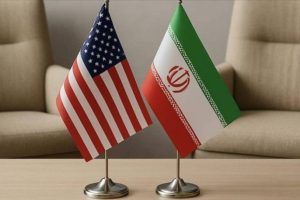
The geopolitical backdrop added layers of complexity to Kalshi’s decision. Iranian state media broke the news of Khamenei’s death early on a Sunday morning, following an intensive air assault the previous day launched jointly by Israel and the United States. The attack, shrouded in details about targets and motivations, sent ripples through global markets and social media, turning mundane predictions into high-stakes gambles overnight. Khamenei, a towering figure in Iran’s clerical establishment for decades, had been a linchpin in the nation’s resistance to Western influence. His passing marked not just a national mourning but a potential shift in regional power dynamics, from proxy wars in Syria and Yemen to nuclear negotiations. For Kalshi traders, this meant positions in the “Ali Khamenei out as Supreme Leader” market suddenly held real weight. The platform acted swiftly to reimburse all associated transaction fees, and for those who had positions open before the confirmation of death, payouts were calculated based on the last-traded price prior to the announcement. Users who jumped in after the fact, potentially rubbernecking at the tragedy, saw their entry prices adjusted downwards, effectively clawing back any ill-gotten gains. This corrective measure underscored Kalshi’s data-driven vigilance, using timestamps and market logs to enforce fairness.
Yet, the platform’s policy wasn’t born of this event alone; it’s a long-standing hallmark of Kalshi’s operations. A spokesperson for the company, speaking to Cointelegraph, reiterated that the ban on “death markets” has been crystal clear since the outset, designed to temper the speculative frenzy that can accompany global crises. “Our rules are transparent,” the spokesperson explained, “and we include specific carveouts to prevent exploitation.” That said, the implementation in this case prompted online backlash, with traders accusing Kalshi of paternalism and profit sniping. Comments flooded forums, labeling the move as arbitrary interference in user autonomy, reminiscent of how stock exchanges sometimes halt trading during shock events. Mansion insisted that the death-related stipulations were explicitly laid out in the market’s terms, but discontent lingered, fueling discussions about platform governance. In an era where decentralized betting sites offer fewer restraints, Kalshi’s Ethereum-based model—with its tighter U.S.-regulated oversight—positions it as a responsible outlier, though not without controversy. This incident serves as a litmus test for how prediction markets navigate the ethical minefield of tragedy, balancing trader rights with societal norms.
As grievances over Kalshi simmered, a parallel narrative emerged from rival platforms, amplifying suspicions of insider trading amid rising geopolitical tensions. Recent onchain investigations have unearthed patterns that suggest some traders might be benefiting from non-public information, blurring the lines between fortune and foul play. For instance, in mid-February, six anonymous wallets on Polymarket—a decentralized prediction exchange—reportedly pocketed over $1 million by wagering on a U.S.-initiated strike against Iran within the month. These accounts, freshly minted in the throes of heightened Middle East uncertainty, concentrated bets on Iranian military actions and U.S. responses, with some positions locked in mere hours before the first blasts echoed over Tehran. Bloomberg’s reporting shed light on this eerie prescience, prompting analysts to question whether the traders had access to classified intelligence or merely rode waves of rumor and analysis. Polymarket, operating with less stringent controls than its competitors, operates on blockchain transparency, yet its lack of identity verification makes it ripe for speculation—and skepticism.
These suspicions extend beyond casual coincidences, touching on larger concerns about security and fairness in digital markets. Earlier in January, during a White House appearance, U.S. President Donald Trump announced the arrest of an individual suspected of leaking details about the raid that led to Venezuelan President Nicolás Maduro’s capture. This revelation ignited fresh scrutiny, with onchain analysis firm Lookonchain connecting the dots to Polymarket bets placed just before the Caracas operation. Traders who won big on predictions tied to the raid’s success raised questions about whether the “leaker” had monetized forbidden knowledge directly on the platform. Such incidents highlight the dual-edged sword of prediction markets: they democratize betting on global events but also invite abuse in an age of leaks, hacks, and geopolitical maneuvering. Professionals in the space argue that while insider trading remains hard to prove definitively, these patterns demand robust regulatory frameworks—from enhanced AML checks to AI-driven anomaly detection. As nations like Iran and Venezuela dominate headlines with their volatile politics, these cases serve as cautionary tales, illustrating how collateral damage from state actions can spill into online arenas, eroding trust and inviting calls for industry-wide reforms. In the end, Kalshi’s ethical pivot amidst Khamenei’s passing might just be the tip of the iceberg, heralding a future where prediction platforms prioritize prudence over profit in uncertain times.