

Ripple Emerges as Crypto’s Dark Horse: Inversion CEO Backs XRP Over Ethereum
Industry Leader Challenges Crypto Community’s Perception of Ripple’s Strategic Growth
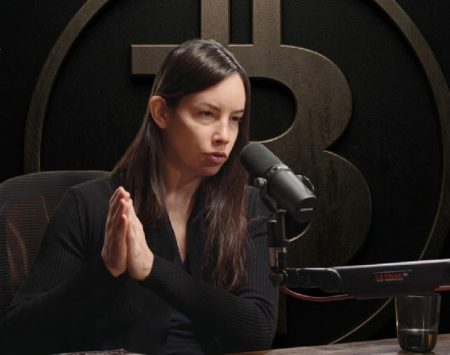
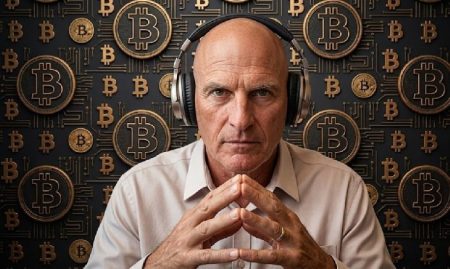
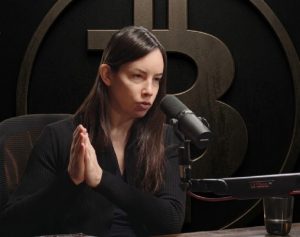
In a significant shift within cryptocurrency market sentiment, Santiago Roel Santos, founder and CEO of Inversion, has publicly declared greater confidence in Ripple’s business potential than Ethereum’s, challenging long-standing assumptions within the digital asset space. During an in-depth conversation on the Empire podcast, Santos surprised listeners with his unequivocal support for Ripple’s business development capabilities, describing the company as “a force not to be reckoned with” in the evolving blockchain ecosystem. This remarkable endorsement from a respected industry figure signals a potential recalibration in how major players view Ripple’s strategic positioning heading into 2026.
Santos’ endorsement didn’t emerge from casual observation but rather from critical analysis of how crypto projects with substantial treasuries have deployed their resources to justify their market valuations. “I entered the year believing crypto projects with substantial treasuries needed to use those resources deliberately to grow into their valuations,” Santos explained during the podcast hosted by Jason Yanowitz. While many projects discussed this approach, Santos emphasized that Ripple stood alone in meaningful execution, implementing an aggressive acquisition strategy throughout the year that has transformed the company’s market position. This combination of storytelling prowess and decisive execution has positioned Ripple uniquely among its competitors, according to Santos, who admitted he initially underestimated the continued importance of market narratives.
The Inversion CEO’s statement that he feels “more optimistic about Ripple and their BD muscle than any other project in the space” represents a profound shift in industry perception. When pressed by Yanowitz to confirm whether he truly ranked Ripple’s business development capabilities above all others in the space, Santos responded with unwavering certainty: “100%.” This vote of confidence carries particular weight coming from a figure who leads his own successful blockchain venture and possesses an intimate understanding of the operational challenges within the cryptocurrency ecosystem. While Santos acknowledged he doesn’t personally hold XRP tokens due to his investment focus and time constraints, his professional assessment suggests a growing recognition of Ripple’s execution excellence that transcends personal investment choices.
Crypto Insiders Consistently Misjudged Ripple’s Strategic Direction
Santos leveled significant criticism at crypto-native investors for repeatedly underestimating Ripple, suggesting they’ve fallen into a pattern of resistance against momentum, narratives, and market psychology that has left them at a disadvantage year after year. “They often resist momentum, narratives, and market psychology, only to fall behind year after year,” Santos remarked, highlighting how this resistance has created blind spots in market analysis. He positioned Ripple as an exceptional case study where a cryptocurrency company might actually grow into its valuation through strategic acquisitions rather than merely speculative value. The company’s recent acquisition spree, including deals for G-Treasury and Rail, coupled with a substantial funding round, demonstrates a clear growth strategy that Santos finds compelling amid broader market uncertainty.
This reassessment gains additional context when considering Santos’ opening perspective for the year. He began 2025 harboring significant concerns about whether crypto projects could justify their valuations through actual performance, expressing unease about valuations across both cryptocurrency and traditional equity markets. In retrospect, Santos observed that Ripple executed its strategy more effectively than any other major project in the space. He drew a direct comparison with Ethereum, arguing that despite its collection of high-profile figures, Ethereum has not demonstrated the same level of effective business development. Santos specifically called out what he described as inconsistency between public and private messaging from prominent Ethereum supporters like Fundstrat’s Tom Lee, suggesting such behavior undermines credibility in the ecosystem. This critique frames Ripple as not merely a competitor but a serious industry force that many observers have persistently undervalued.
When considering longer-term prospects, Santos offered a particularly bullish perspective on XRP’s potential relative to other top cryptocurrencies. In response to Rob Hadick’s question about whether XRP tokens or Ripple’s equity would hold greater long-term value over a ten-year horizon, Santos highlighted Ripple’s control of billions worth of XRP as a strategic asset. While acknowledging his prediction that 2026 will likely present challenges for both cryptocurrency and equity markets broadly, Santos expressed that XRP holds a stronger chance than most top-10 crypto networks to revisit all-time highs if markets decline. This assessment becomes more striking when contrasted with his explicitly stated skepticism about Ethereum’s ability to achieve a similar recovery, suggesting a fundamental reassessment of the relative strengths of these major blockchain projects heading into potentially turbulent market conditions.
XRP Community Vindicated as Ripple’s Infrastructure Strategy Proves Effective
The podcast discussion has resonated strongly with long-time XRP supporters who view Santos’ analysis as validation of their investment thesis. Digital Asset Investor (DAI), a prominent figure within the XRP community, responded to the conversation by highlighting how it confirms what XRP advocates have maintained throughout years of skepticism from the broader crypto market. “The XRP Army got right what everyone else in crypto got wrong. They saw XRP as a strategic weapon to make acquisitions for the building of infrastructure with XRP at the center of it all,” DAI noted in a widely-shared social media post. This perspective frames XRP not simply as a speculative asset but as an integral component of a broader infrastructure strategy—a distinction that appears increasingly significant as Ripple continues its expansion through strategic acquisitions.
DAI further emphasized that XRP holders correctly perceived the token as a building block for infrastructure development rather than a mechanism for quick executive profits, suggesting that XRP deployment is now approaching a critical phase. Perhaps most notably, DAI concluded that neither Bitcoin nor Ethereum fits this infrastructure-centric role in the way that XRP does—a perspective that aligns with Santos’ comparative analysis of the major cryptocurrencies. This viewpoint represents a fundamental challenge to the established hierarchy within cryptocurrency markets, where Bitcoin and Ethereum have traditionally dominated both market capitalization and narrative focus. As Ripple continues to expand its operational footprint through acquisitions and partnerships, the company appears positioned to potentially reshape this hierarchy in ways that even skeptics may find difficult to dismiss.
The evolving sentiment around Ripple and XRP reflects broader shifts within the cryptocurrency industry as it matures beyond purely speculative activity toward operational utility and business development. Santos’ bullish stance on Ripple relative to Ethereum suggests that established market positions may be more vulnerable than commonly assumed, particularly as companies deploy different strategies to navigate challenging market conditions. With Ripple demonstrating what Santos considers superior execution capabilities while controlling significant XRP reserves, the company appears uniquely positioned to weather potential market turbulence in 2026. For investors and industry observers alike, this reassessment serves as a reminder that execution capabilities and strategic resource deployment may ultimately prove more valuable than network effects or first-mover advantages as the cryptocurrency ecosystem continues to evolve.
The Strategic Vision Behind Ripple’s Rising Influence in Cryptocurrency Markets
Acquisition Strategy Positions XRP at Center of Growing Financial Infrastructure
As cryptocurrency markets approach 2026, Santiago Roel Santos’ uncharacteristically strong endorsement of Ripple over Ethereum signals a potential paradigm shift in how industry insiders evaluate blockchain projects. During the Empire podcast hosted by Jason Yanowitz, the Inversion CEO presented a compelling case for Ripple’s strategic vision, describing their execution as unmatched among major blockchain projects. This remarkable vote of confidence from a respected industry leader suggests that Ripple’s years-long strategy of building financial infrastructure with XRP at its core may be gaining unprecedented legitimacy among previously skeptical professional investors and analysts.
The conversation, which included Dragonfly General Partner Rob Hadick alongside Santos, revealed how Ripple’s approach to market development stands in stark contrast to other major blockchain projects. Santos explained that while many cryptocurrency ventures began 2025 with substantial treasuries, Ripple distinguished itself through decisive deployment of those resources. “I publicly pushed this view early and emphasized that Ripple stood out as the only major project that acted on it,” Santos noted, describing how the company executed several strategic acquisitions throughout the year. This transaction-based growth strategy has apparently shifted Santos’ perspective on the project, leading him to conclude that Ripple’s business development capabilities exceed those of virtually every other cryptocurrency project, with his own company being the only exception he acknowledged.
What makes Santos’ assessment particularly noteworthy is its divergence from conventional wisdom within crypto-native investment circles. Without holding XRP tokens himself, Santos nevertheless criticized the persistent tendency among crypto investors to underestimate Ripple’s potential impact. “They often resist momentum, narratives, and market psychology, only to fall behind year after year,” he observed, suggesting that this collective blind spot has caused many to miss Ripple’s emergence as a legitimate force within the blockchain ecosystem. The acquisitions of companies like G-Treasury and Rail, alongside a substantial funding round, represent tangible evidence of Ripple’s expansion strategy—one that Santos believes positions the company to potentially grow into its valuation rather than merely benefiting from speculative interest.
XRP Positioned for Potential Market Resilience Amid Challenging Forecasts
Looking ahead to 2026, Santos offered a notably contrarian perspective on XRP’s market prospects relative to other top cryptocurrencies. While forecasting difficult conditions for both crypto and equity markets broadly, he expressed greater confidence in XRP’s ability to revisit previous all-time highs compared to other top-10 cryptocurrencies—including Ethereum. This assessment gains additional weight considering Ripple’s control of billions worth of XRP tokens, which Santos views as a strategic asset rather than merely a balance sheet item. The explicit contrast with Ethereum suggests a fundamental reassessment of relative strengths between these major blockchain networks, with Santos indicating greater skepticism about Ethereum’s capacity to recover from potential market downturns.
Santos’ critique extended beyond simple investment analysis to question the structural advantages often attributed to Ethereum’s ecosystem. He suggested that despite boasting numerous high-profile figures, Ethereum has not demonstrated the same effective business development capabilities as Ripple. Santos specifically criticized what he described as inconsistent messaging from prominent Ethereum supporters, arguing this undermines credibility in ways that contrast with Ripple’s more coherent execution strategy. “What I’m saying is that Ripple, I think, is a force not to be reckoned with,” Santos emphasized, framing Ripple not merely as a competitor but as a serious industry player that many had previously dismissed too readily.
The podcast discussion has resonated strongly with long-time XRP supporters, who view it as validation of their investment thesis through years of market skepticism. Digital Asset Investor, a prominent voice within the XRP community, interpreted Santos’ analysis as confirmation that XRP holders correctly understood the token’s strategic role in building financial infrastructure. “The XRP Army got right what everyone else in crypto got wrong. They saw XRP as a strategic weapon to make acquisitions for the building of infrastructure with XRP at the center of it all,” DAI noted in a widely-shared social media post. This perspective positions XRP not merely as a speculative asset but as an integral component of a broader infrastructure strategy—a distinction that appears increasingly significant as Ripple continues its expansion through strategic acquisitions.
As cryptocurrency markets continue evolving beyond purely speculative activity toward operational utility, Ripple’s approach to building infrastructure with XRP at its center represents a differentiated strategy that may prove increasingly valuable. While Bitcoin pioneered digital scarcity and Ethereum introduced programmable blockchain functionality, Ripple’s focus on practical financial infrastructure development offers a distinct value proposition that Santos suggests has been consistently underappreciated by crypto-native investors. With challenging market conditions forecast for 2026, this infrastructure-centric approach could potentially position XRP differently from other major cryptocurrencies if market turbulence materializes as Santos anticipates. For investors and industry observers alike, this reassessment serves as a reminder that execution capabilities and strategic resource deployment may ultimately prove more valuable than perceived technological advantages as the cryptocurrency ecosystem continues to mature.