







Bitcoin’s Rally Stumbles: Is $85,000 the Key to Recovery?
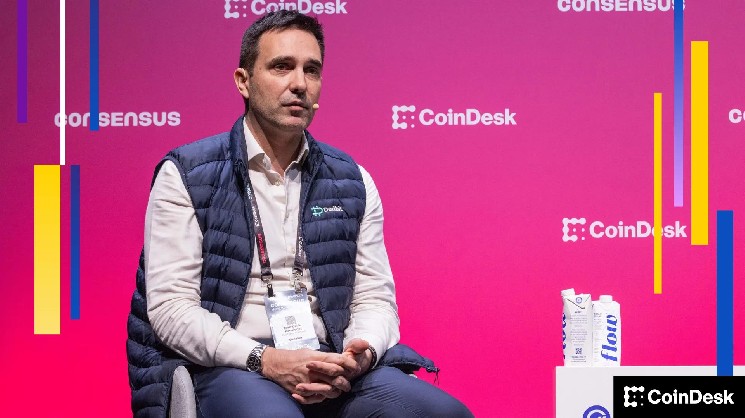
In the volatile world of cryptocurrency, where fortunes can evaporate overnight, Bitcoin has long been hailed as the digital gold standard. But lately, its luster has dimmed considerably. According to Jean-David Péquignot, the chief commercial officer of the derivatives exchange Deribit, Bitcoin’s long-term rally has hit a critical snag. Speaking at the Consensus Hong Kong conference, Péquignot didn’t mince words: until the price surges past $85,000, the upward momentum remains “broken,” leaving traders to navigate choppy waters with a downward bias. This assessment comes as Bitcoin languishes in the mid-$60,000 range, a far cry from its October record high of around $69,000. It’s a sobering reality check for investors who have watched the cryptocurrency soar from its humble beginnings two decades ago, only to stumble amid broader market uncertainties. Péquignot’s warning underscores a deeper narrative in crypto markets, where technical indicators often dictate sentiment, and reclaiming lost ground requires more than just optimism—it demands buyer dominance that absorbs excess supply and restores confidence.
The journey of Bitcoin over the past decade has been nothing short of a rollercoaster, marked by euphoric peaks and gut-wrenching plunges. October’s all-time high of nearly $69,000 symbolized a triumph, fueled by institutional adoption and retail frenzy in a post-pandemic landscape where digital assets promised refuge from inflation. Yet, as we entered 2024 with cautious optimism, the tide turned. Bitcoin has been trading in the $60,000 to $70,000 bracket for the better part of the last week, a drop of about 45% from that pinnacle, and it’s poised for its fourth consecutive weekly decline. This slide isn’t isolated; it mirrors broader economic pressures, including concerns over interest rates and tech sector woes. Back in late January, the price dipped below $85,000, a level Péquignot now deems pivotal for any sustainable resurgence. Observers like Péquignot point to a confluence of factors: regulatory scrutiny in major economies, geopolitical tensions, and the fading halo of speculative hype that once propelled Bitcoin to unprecedented heights. For context, Bitcoin’s value was hovering near $66,600 as of recent trade sessions, deeply entrenched in bear-territory, where each dip feels like a dagger to the hopes of long-term holders. It’s a reminder that in the crypto space, patience isn’t just a virtue—it’s a necessity, especially when external forces like the stock market’s performance exert invisible gravitational pulls.
Delving deeper into Péquignot’s analysis, the $85,000 threshold emerges as a make-or-break psychological and technical barrier. He argued that surpassing this mark would signal a decisive shift, confirming that buyers have mopped up the oversupply that derailed the long-term outlook. “Until the market reclaims $85k, the longer-term chart remains broken, and the path of least resistance technically remains lower,” he noted during the interview, his voice steady amidst the buzz of the conference. This perspective draws from classic chart-pattern recognition, where breaking above resistance levels often triggers a cascade of bullish activity. Historically, Bitcoin has exhibited similar patterns—post-2016 halving bounces or the 2020 recovery from the COVID dip—all of which hinged on overcoming key resistances. Right now, though, with the price well below $85,000 and amid bearish signals, the road ahead looks fraught. Traders and analysts are poring over these charts, seeking clues in moving averages and volume spikes. Péquignot’s insight resonates because it ties into the fundamental mechanics of supply and demand: until sellers retreat and buyers assert control, the bearish undertow persists. This isn’t mere speculation; it’s a nod to the market’s self-correcting mechanisms, where past corrections—like the 2018 and 2022 downtrends—eventually gave way to bull phases, but only after key levels were conquered.
As Bitcoin flirts with further declines, the next critical support levels are drawing intense scrutiny, particularly the $60,000 mark nestled between the current range and the ominous 200-week simple moving average around $58,000. Péquignot describes $60,000 as a major psychological stronghold, a price point where “large buy walls”—clusters of buy orders from institutions and savvy investors—have historically amassed. This level nearly came under siege earlier this month when Bitcoin wobbled in tandem with tech stocks, whose volatility spilled over into digital assets. It’s a stark illustration of how interconnected global markets have become; what happens in Silicon Valley doesn’t stay in Silicon Valley, rippling through to the decentralized ledger of Bitcoin. Traders often reminisce about $60,000 as a beacon during bear markets, a line in the sand where capitulation turns to accumulation. If this support crumbles on a closing basis, Péquignot warns, it could pave the way for more turbulence, testing the resolve of even the most dedicated hodlers. This psychological aspect can’t be overstated—numbers aren’t just data points; they’re battlegrounds where fear and greed collide, shaping narratives that influence millions of decisions worldwide.
The ultimate bulwark, as Péquignot emphasizes, lies in the revered 200-week simple moving average, currently perched at approximately $58,000. Dubbed the “holy grail” by traders scouring for bargains in downturns, this long-term indicator has a storied history in Bitcoin’s evolution. Since 2015’s early bear markets, lows near this average have served as inflection points, where despair morphs into opportunity. “Traders would be looking at the $58k–$60k range as the ultimate support,” Péquignot remarked, highlighting its role in timing bullish entries amid despair. For instance, in the 2018 crypto winter that followed the peak of the ICO boom, Bitcoin bottomed near its 200-week MA before embarking on a four-year ascent. Similarly, the 2022 slump, exacerbated by macroeconomic headwinds like rising inflation, found solace around this level. Tracking it closely, analysts argue, protects against short-sighted panic, offering a counterbalance to the whims of daily trading. It’s not infallible—markets are unpredictable—but it provides a grounded framework for understanding Bitcoin’s cyclical nature. In an era where algorithmic trading dominates, this average reminds us of the human element: patience, historical wisdom, and the art of waiting for the storm to pass. Investors eyeing this range aren’t just gambling; they’re aligning with patterns that have withstood the test of time, even as newer cryptocurrencies vie for attention.
Looking ahead, the implications of Péquignot’s outlook extend beyond mere price charts, touching on the broader ecosystem of finance and technology. If Bitcoin indeed tests these lower supports, it could catalyze a buying frenzy among value investors, potentially setting the stage for another parabolic rise reminiscent of past recoveries. Yet, challenges abound—regulatory clampdowns in regions like the U.S. and EU, alongside energy concerns for proof-of-work mining, add layers of complexity. Deribit’s role, as a premier platform for crypto derivatives, underscores the shift toward sophisticated trading tools that mitigate risks in such volatile terrain. For retail traders, this means honing strategies that blend technical prowess with psychological fortitude. Ultimately, Bitcoin’s story is one of resilience, where downturns like this one might just be the forging ground for stronger foundations. As Péquignot’s insights ripple through the industry, they serve as a clarion call: the rally isn’t over until buyers roar back. In the ever-evolving saga of digital currencies, $85,000 isn’t just a number—it’s a testament to the enduring tug-of-war between optimism and reality. Whether Bitcoin rises to reclaim its throne or descends further remains to be seen, but one thing is clear: in cryptocurrency, every dip hides the potential for a monumental leap. Traders and investors alike are holding their breath, aware that the next chapter in Bitcoin’s odyssey could redefine the financial landscape once more.