







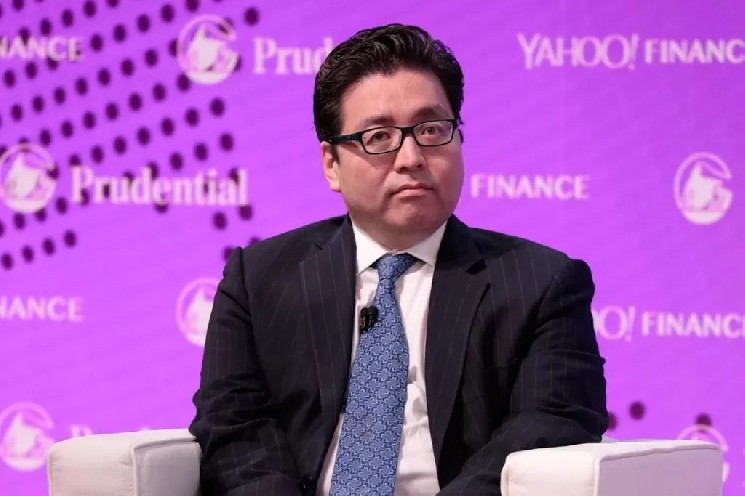
Blockchain Revolution in Banking: Tom Lee Predicts Financial Sector Transformation by 2026
Renowned Market Strategist Envisions Tech-Driven Banking Renaissance
In a bold forecast that could reshape our understanding of global finance, Tom Lee, the visionary founder of Fundstrat Global Advisors and a highly respected market strategist, has outlined how blockchain technology will fundamentally transform the traditional banking sector by 2026. Lee’s analysis suggests we’re witnessing the early stages of a financial revolution where blockchain—once viewed merely as the backbone of cryptocurrency—emerges as the catalyst for unprecedented efficiency across the global banking landscape.
Lee’s perspective represents a significant shift in how financial experts view blockchain technology. “Blockchain has evolved far beyond its initial role as an investment vehicle,” Lee explained in his comprehensive analysis. “It’s becoming the driving force behind operational efficiency in global banking systems.” This evolution marks a critical inflection point where distributed ledger technology transitions from an experimental concept to an essential component of mainstream financial infrastructure. The transformation Lee describes isn’t simply technological—it represents a fundamental reimagining of how financial value moves through the global economy, with implications for everything from cross-border payments to complex financial products.
Banking Giants Poised for Technology-Driven Metamorphosis
According to Lee’s detailed projections, financial powerhouses like JPMorgan and Goldman Sachs stand at the precipice of a transformative era, driven by the strategic integration of blockchain and artificial intelligence technologies. These twin innovations are expected to dramatically streamline operational workflows, significantly reduce overhead costs, and decrease employee density across these massive institutions. “The efficiency gains from blockchain implementation will be unlike anything we’ve seen in banking’s recent history,” Lee noted in his analysis. This technological revolution represents perhaps the most substantial operational shift in banking since the computerization of financial records decades ago.
The market implications of this shift could be extraordinary. Lee predicts this technology-driven efficiency will trigger a remarkable “margin expansion” for these institutions, potentially reshaping how investors value traditional banking stocks. In perhaps his most striking prediction, Lee suggested that technology-forward banks might soon command valuation multiples more commonly associated with premier technology companies like Nvidia or Apple rather than traditional financial institutions. “We could see these transformed banks joining the ranks of the next ‘Magnificent Seven,'” Lee observed, referencing the elite group of technology stocks that have dominated market returns in recent years. This valuation shift would represent a fundamental reconceptualization of the banking sector in the minds of investors, blurring the traditional boundaries between financial services and technology industries.
Seasonal Patterns and Market Momentum in Crypto Markets
The conversation shifted to another topic of perennial interest among cryptocurrency investors—the much-discussed “Christmas Rally.” Lee approached this phenomenon not through speculation but with analytical precision, arguing that this seasonal pattern is firmly rooted in statistical evidence rather than market folklore. “The data consistently shows increased capital flows into various asset classes during the final week of December and the initial days of January,” Lee explained, providing context for this recurring market pattern. This cyclical influx of capital creates predictable opportunities for investors who understand the timing of these flows.
Looking toward the broader economic landscape of 2026, Lee painted what he described as a “more dovish picture” for Federal Reserve monetary policy. This projected shift toward accommodation could significantly impact both traditional and blockchain-based investments. With interest rates potentially trending lower, investors’ appetite for higher-yielding assets typically increases, creating favorable conditions for growth-oriented investments. Lee specifically highlighted that this macroeconomic environment could push business confidence indicators, particularly ISM data, above the critical threshold of 50—a technical indicator that has historically provided substantial support for risk assets across multiple market segments. This confluence of monetary policy and economic sentiment could create particularly favorable conditions for blockchain-based projects that benefit from increased institutional and retail investment flows.
Technological Integration Reshaping Financial Services
The implications of Lee’s forecast extend far beyond simple investment considerations. The widespread adoption of blockchain technology throughout the banking system signals a fundamental restructuring of how financial services are delivered globally. Traditional banking operations—from trade settlement to compliance verification—stand to be revolutionized through the implementation of distributed ledger technology. The efficiency gains Lee describes wouldn’t merely boost profit margins; they could fundamentally alter the competitive landscape, potentially enabling banks to offer services at significantly lower costs while simultaneously improving security and transaction verification.
This technological transformation coincides with changing consumer expectations regarding financial services. Modern banking customers increasingly demand seamless digital experiences, instantaneous transactions, and enhanced transparency—precisely the attributes that blockchain technology excels at delivering. Financial institutions that successfully navigate this technological transition may find themselves uniquely positioned to capture market share from both traditional competitors and emerging fintech challengers. As Lee’s analysis suggests, the banking sector of 2026 may bear little resemblance to today’s model, with technology becoming not just an operational tool but the defining characteristic separating industry leaders from laggards. For investors, policymakers, and banking executives alike, understanding this blockchain-driven transformation will be essential for navigating the rapidly evolving financial landscape.
This article is intended for informational purposes only and does not constitute investment advice.