



Judiciary Committee Leaders Oppose Blockchain Regulatory Certainty Act in Crypto Bill, Citing National Security Concerns
Senate Judiciary Heads Warn Banking Committee About Weakening Federal Money Transmitter Regulations
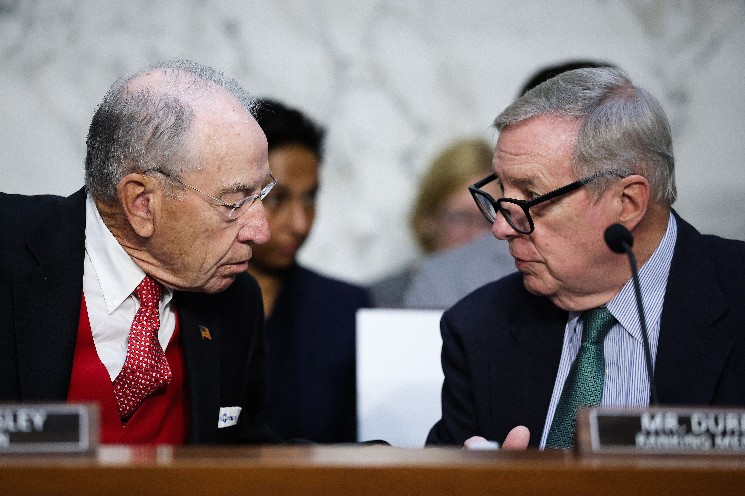
In a significant development that highlights the growing tensions in cryptocurrency regulation, the leadership of the U.S. Senate Judiciary Committee has formally opposed the inclusion of the Blockchain Regulatory Certainty Act in pending crypto market structure legislation. In a strongly worded letter dated January 14, Senators Chuck Grassley (R-Iowa) and Dick Durbin (D-Ill.), the committee’s Republican chairman and ranking Democrat respectively, cautioned that the provision would substantially weaken federal oversight of money transmission activities—a critical tool in combating financial crimes.
The controversial Section 604 of the Banking Committee’s market structure bill aims to shield software developers from criminal liability when third parties misuse their products. However, the Judiciary leaders argue this protection goes too far, potentially undermining essential federal safeguards against unlicensed money transmitter operations. “The Senate Judiciary Committee—which has jurisdiction over Title 18—was not consulted or given the opportunity to meaningfully review the proposed changes in advance,” the senators wrote in their letter, which was first brought to public attention by Politico. This procedural complaint underscores not just substantive disagreements about regulatory approaches, but also highlights tensions between congressional committees over jurisdictional boundaries in the rapidly evolving crypto regulatory landscape.
The timing of this intervention is particularly notable as it comes amid already mounting challenges for the market structure bill. The Senate Banking Committee had scheduled a debate and vote on the legislation for Thursday but abruptly canceled these plans Wednesday evening in the face of growing opposition from various quarters. Sources close to the negotiations revealed to CoinDesk that the Blockchain Regulatory Certainty Act had been a particularly contentious element throughout discussions on the comprehensive market structure bill, with some Democratic lawmakers expressing strong reservations about its inclusion in the latest draft.
Department of Justice Case Against Tornado Cash Developer Cited as Evidence of Existing Statute’s Importance
To bolster their argument against weakening current regulations, Grassley and Durbin specifically referenced the Department of Justice’s ongoing case against Roman Storm, a developer of Tornado Cash. This case, they contend, demonstrates the crucial importance of maintaining robust statutes against parties associated with unlicensed money transmitting businesses. The Tornado Cash case has become something of a flashpoint in crypto regulatory debates, with privacy advocates and many in the industry viewing it as government overreach, while law enforcement and national security officials consider it a necessary action against a platform allegedly used to launder billions in illicit funds, including by North Korean state-backed hackers.
“Accordingly, we urge the Committee to reject any proposed language, including Section 604, which would weaken the government’s ability to hold culpable actors accountable for operating unlicensed money transmitting businesses,” the letter stated in its conclusion. This strong stance from the Judiciary Committee leadership represents yet another obstacle for comprehensive crypto regulation, which has been repeatedly stymied by disagreements over fundamental questions about how strictly the emerging industry should be regulated, and which government bodies should have primary oversight responsibility.
The path forward for the legislation has grown increasingly complicated by these developments. Senators Cynthia Lummis (R-Wyo.) and Ron Wyden (D-Ore.) had already introduced the Blockchain Regulatory Certainty Act as a standalone bill earlier in the week, which many industry observers interpreted as a signal that this provision might be removed from the comprehensive market structure legislation. However, should the provision remain in the larger bill, the Judiciary Committee’s objections suggest that it would need to become the third committee to approve the overall package—adding another layer of complexity to an already challenging legislative process.
Decentralized Finance Advocates Warn That Removing Developer Protections Could Cost Their Support
The controversy highlights the delicate balancing act lawmakers face in crafting regulations for the rapidly evolving cryptocurrency ecosystem. Advocates for decentralized finance (DeFi) have consistently maintained that omitting these specific protections for software developers would cost their support for any comprehensive legislation. They argue that holding developers criminally liable for how others use their open-source code would stifle innovation and drive technological development offshore to more favorable regulatory environments.
Industry proponents contend that software code itself deserves First Amendment protections as a form of speech, and that criminalizing the creation of tools that could be used for both legitimate and illegitimate purposes sets a dangerous precedent. They point to numerous technologies, from the internet itself to encryption tools, that can be used for both beneficial purposes and criminal activities. The core philosophical question at stake is whether the creator of a neutral tool bears responsibility for its misuse by others.
Conversely, law enforcement and national security officials maintain that certain crypto tools, particularly privacy-enhancing technologies like mixers, primarily serve to obfuscate financial trails and facilitate criminal activity. They argue that developers who create such tools with the knowledge or intent that they will be used for illicit purposes should not be shielded from prosecution. The Justice Department’s case against Roman Storm represents this perspective in action, alleging that the developer knew Tornado Cash was being used for money laundering yet continued to improve and promote the service.
Regulatory Uncertainty Continues to Cloud Cryptocurrency Industry’s Future
The ongoing legislative battle underscores the profound uncertainty that continues to hang over the cryptocurrency industry in the United States. While other jurisdictions like the European Union have moved forward with comprehensive regulatory frameworks such as MiCA (Markets in Crypto-Assets Regulation), U.S. regulation remains largely a patchwork of enforcement actions, agency guidance, and state-level requirements without a cohesive federal approach.
This regulatory limbo has significant consequences for American competitiveness in the rapidly growing blockchain sector. Industry leaders have repeatedly warned that continued uncertainty will drive innovation, investment, and talent to more welcoming jurisdictions overseas. They point to countries like Singapore, Switzerland, and the United Arab Emirates, which have developed clear regulatory frameworks that provide certainty while still protecting consumers and addressing legitimate concerns about financial crimes.
The market structure bill represented one of the most significant bipartisan attempts to create clarity for the industry, but its path forward now appears increasingly fraught with political obstacles. The disagreement between the Banking and Judiciary Committees reflects broader divisions about cryptocurrency regulation that cut across traditional party lines. Some progressive Democrats align with libertarian-leaning Republicans in favoring innovation and privacy protections, while national security-focused lawmakers from both parties prioritize stronger oversight and enforcement tools.
As this legislative drama unfolds, cryptocurrency businesses and users remain caught in the crossfire, unsure which activities will be permitted and which might trigger enforcement actions. This uncertainty affects everything from business planning to investment decisions, with ripple effects throughout the broader economy as digital assets and blockchain technology increasingly integrate with traditional finance and commerce. Without clear legislative guidance, courts and regulatory agencies will continue to shape the rules on a case-by-case basis, potentially leading to inconsistent outcomes and further regulatory confusion.
The letter from Senators Grassley and Durbin represents not just another setback for comprehensive crypto legislation, but a reminder of the fundamental tensions that must be resolved before the United States can develop a coherent approach to regulating this transformative technology. As the debate continues, the cryptocurrency industry, lawmakers, and regulators will need to find common ground that both nurtures innovation and addresses legitimate concerns about financial crime, market manipulation, and consumer protection.