







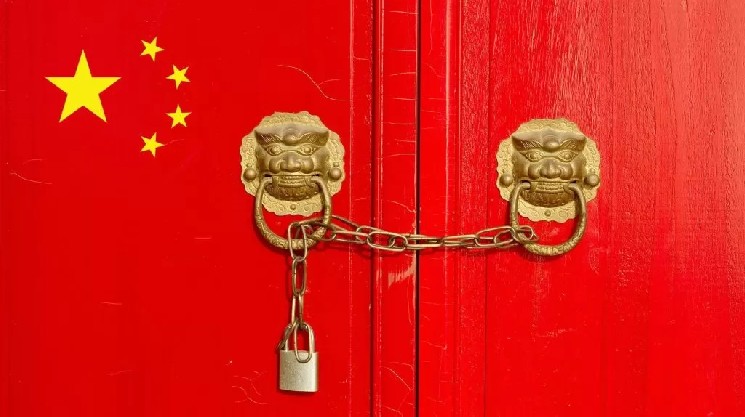
China’s Latest Crackdown: Tightening the Noose on Crypto Exports
In a move that underscores Beijing’s unwavering hostility toward cryptocurrencies, China has unveiled yet another sweeping restriction aimed at curbing the flow of digital assets across its borders. Just as the world grapples with the volatile allure of blockchain technology, the People’s Bank of China (PBOC) and a coalition of seven financial institutions slammed the door shut on unauthorized exports of yuan-backed stablecoins. This latest ban, detailed in a joint statement released on Friday, prohibits mainland Chinese firms and their overseas affiliates from issuing cryptocurrencies abroad without explicit government approval. It’s a stark reminder of China’s long-standing strategy to maintain absolute control over its financial ecosystem, where stability trumps innovation every time.
The announcement comes amid a global backdrop where digital currencies like Bitcoin have surged in prominence, drawing both fervent enthusiasts and cautious regulators. Yet, for China, this isn’t just about policing emerging tech—it’s a calculated effort to safeguard monetary sovereignty. The statement explicitly forbids any entity, be it a corporate giant or an individual innovator, from exporting yuan-linked stablecoins overseas without the green light from authorities. Such assets, pegged to the Chinese yuan, have gained traction for their perceived stability in a market prone to wild swings, but Beijing views them as potential vectors for illicit activities like money laundering and currency manipulation. By blocking these exports, regulators are sending a clear signal: national integrity takes precedence over the speculative frenzy of crypto markets.
Digging deeper, this prohibition extends beyond stablecoins to encompass a broader clampdown on tokenized real-world assets and digital tokens in general. Chinese entities are now barred from issuing crypto related to tangible assets abroad without approval, effectively stifling cross-border experimentation. The PBOC, in its role as China’s central banking behemoth, has long been vocal about the risks posed by decentralized finance. In fact, this isn’t the first time Beijing has flexed its regulatory muscles; remember the 2017 bans that shuttered domestic crypto exchanges and scared off miners to places like Kazakhstan? Now, with the internet giants under orders to halt crypto-related services, the net is cast even wider. Companies like Alibaba and Tencent, once rumored to dabble in blockchain explorations, are instructed to divest entirely from offering platforms that facilitate cryptocurrency transactions. This comprehensive approach reflects a government that sees cryptocurrencies not as currency, but as speculative assets akin to high-stakes gambling—utterly unfit for circulation in mainstream commerce.
Peering into the rationale, officials cite concerns over financial stability and the preservation of the yuan’s global standing. Money laundering schemes often exploit the borderless nature of crypto, allowing funds to slip through regulatory cracks with ease. By preventing the export of yuan-backed stablecoins, China aims to erect barriers against such exploitations, ensuring that only vetted, approved assets can represent the nation’s currency on foreign soil. Economic analysts point out that this move could also help counteract the “hot money” flows that have historically destabilized emerging markets, including China itself during past speculative booms. For instance, the 2021 crypto fervor saw billions in capital chase fashionable assets, only for the bubble to burst, eroding investor confidence. Beijing’s latest salvo isn’t isolated; it’s part of a mosaic of measures, including the 2021 outright ban on mining and trading that drove Bitcoin’s hash rate down by nearly 50% overnight. This continuity in policy highlights a strategic pivot away from embracing crypto toward outright dominance over its manifestations.
The ripples of this ban are already being felt internationally, sparking debates among crypto advocates about the future of a truly global digital economy. Experts from institutions like the International Monetary Fund have warned that such unilateral actions could fragment the nascent decentralized finance space, pushing innovation underground or to friendlier jurisdictions like Singapore or the Cayman Islands. Market watchers note that while China’s stringent rules have historically suppressed domestic crypto adoption—reducing it to a fraction of global activity—their policies inadvertently influence global trends. For example, Ethereum co-founder Vitalik Buterin has publicly lamented the stifling effects, arguing that regulatory overreach could hinder the technology’s potential to empower unbanked populations. On the flip side, supporters of Beijing’s stance argue that this is a necessary bulwark against the chaos seen in events like the Terra Luna collapse, where stablecoin failures wiped out billions. As stablecoins like Tether (USDT) continue to dominate trading volumes, China’s export ban forces a reckoning: without access to yuan-anchored options, global markets might see a rise in alternatives, or conversely, a slowdown in cross-border transactions involving Chinese entities.
Reflecting on the broader narrative, China’s crypto journey has been a rollercoaster of ambition turned restriction. From early excitement in the mid-2010s, when Bitcoin was seen as a hedge against the US dollar, to the draconian bans that followed, the story is one of evolving priorities. The PBOC’s reiterated warning that assets like Bitcoin and Ethereum aren’t legal tender reinforces a narrative of caution, where digital currencies are relegated to the sidelines lest they challenge the state’s monopoly on money issuance. Yet, this stance hasn’t deterred underground markets from flourishing in China, nor has it stopped the nation from researching blockchain applications in areas like trade finance and central bank digital currencies (CBDCs). As the world inches toward more digitized economies, China’s approach serves as a cautionary tale for policymakers elsewhere, balancing innovation with the imperative of control. Ultimately, while this latest ban tightens the screws on crypto exports, it also underscores the tension between technological progress and regulatory vigilance—in a landscape where one wrong move could reverberate across international finance. Please note, this analysis is for informational purposes only and not intended as investment advice.
The Evolving Landscape of China’s Crypto Policies
China’s crackdown on cryptocurrencies didn’t spring from nowhere; it’s the culmination of a decade-long tug-of-war between technological promise and regulatory caution. In the early days, before the bans, China was a hotbed of crypto activity, hosting some of the world’s largest Bitcoin exchanges and spawning a mining industry that once accounted for over 70% of global supply. But as euphoria gave way to scandals—like the 2013 LEA scam that cheated investors out of millions—the government began viewing digital assets as threats to financial order. Fast-forward to today, and policies like the prohibition on yuan-backed stablecoin exports fit into a pattern of escalating restrictions, each layer designed to ring-fence the nation’s economy from external volatilities.
What makes this ban particularly noteworthy is its focus on exports, signaling a proactive defense of China’s influence on the global stage. Internationally linked firms, often subsidiaries of Chinese tech titans, are now hamstrung, preventing them from leveraging stablecoins—those currency-pegged tokens that mimic traditional money’s steadiness—for international commerce. This echoes broader themes in Beijing’s foreign policy, where technological sovereignty is paramount. Analysts suggest that by controlling the outflow of such assets, China is mitigating risks to its monetary hegemony, especially in a world where digital currencies could bypass traditional banking systems entirely.
Moreover, the involvement of seven institutions alongside the PBOC highlights a coordinated front, drawing on expertise from entities like the China Securities Regulatory Commission and the State Administration of Foreign Exchange. This unity underscores the seriousness with which China approaches these matters, treating crypto not as mere finance but as a potential national security concern. For global investors, this means reevaluating associations with Chinese-backed assets, as any undisclosed linkages could now invite regulatory scrutiny abroad.
The ban also intersects with China’s push toward supervised blockchain development. While crypto is outlawed, state-backed initiatives in digital yuan and tokenized trade systems flourish under official auspices. This duality creates a paradox: innovation is encouraged, but only on terms decided by Beijing. For instance, pilot programs testing central bank digital currencies have garnered praise for their efficiency in payments, yet they strictly exclude private cryptocurrencies like Bitcoin from the equation.
As markets digest this news, the long-term outlook remains mixed. Some predict a flight of capital from China, bolstering rival hubs like Hong Kong, which adheres to looser crypto rules despite recent crackdowns. Others foresee a normalization, where global crypto evolves to navigate around such barriers, perhaps through decentralized networks that resist centralized bans. Regardless, China’s strategy illustrates the complexities of governing frontier technologies in an interconnected world.
Risks Highlighted: Money Laundering and Beyond
At the heart of China’s latest crypto export ban lies a litany of risks tied to monetary sovereignty and illicit finance. By prohibiting the issuance of yuan-backed stablecoins overseas without approval, regulators are targeting vulnerabilities that have long plagued digital assets. Money laundering, in particular, looms large—crypto’s pseudonymous nature makes it a favorite tool for criminals to obscure funds across borders. The PBOC, in its joint statement, explicitly drew this connection, warning that unchecked exports could undermine the integrity of China’s financial system and enable fraudulent schemes that skirt international sanctions.
Beyond laundering, the ban addresses broader concerns like currency fraud and speculative excesses. Yuan-tied stablecoins, if exported freely, might facilitate abrupt capital movements that destabilize exchange rates or fuel inflationary pressures in emerging markets. Experts recall how cryptocurrencies exacerbated the 2022 global crypto winter, where instabilities spread like contagion, wiping out trillions in market value. China’s preemptive strike aims to insulate its economy from such vicissitudes, ensuring that only authorized pegs represent the yuan abroad.
This vigilance extends to tokenized assets—digital representations of physical valuables like real estate or commodities—which could, without oversight, be exploited for evasion tactics. The prohibition on issuing these tokens overseas underscores a strategic forecasting of risks, particularly in a geopolitical climate where economic warfare via sanctions is on the rise. For instance, entities facing US-imposed restrictions might turn to crypto workarounds, prompting China’s defensive posture.
While critics argue that such restrictions stifle legitimate innovation, proponents counter that the stakes—protecting national interests—are too high to ignore. International bodies like the Financial Action Task Force (FATF) have echoed these sentiments, urging stricter global standards on crypto to combat financial crimes. China’s move thus aligns with a growing consensus that permissive environments breed exploitation.
Ultimately, this ban is a clarion call for the industry to mature under regulation, rather than operate in regulatory voids that attract nefarious actors.
Implications for International Crypto Markets
The reverberations of China’s yuan-backed stablecoin export ban are poised to reshape international crypto dynamics, challenging the notion of a borderless digital economy. By barring Chinese entities from issuing these assets abroad, Beijing is effectively unplugging a potential lifeline for global liquidity, forcing markets to pivot toward alternatives from less regulated jurisdictions. Stablecoins, which underpin much of trading volume, could see shifts in dominance—assets like Tether, born in the Cayman Islands, stand to gain traction as Chinese options evaporate.
For traders and investors, the ban introduces uncertainty around Asian-Pacific flows, where Chinese-backed capital has historically flowed freely. Analysts predict short-term volatility as algorithms and hedge funds recalibrate models excluding yuan-pegged tokens. Moreover, the expansion to internet companies halting crypto services amplifies the chill, potentially curtailing apps and platforms that once bridged the gap between China’s tech prowess and the wider world.
Globally, this could accelerate decentralization efforts, as projects move away from centralized oversight to networks resilient to national bans. Ethereum’s ecosystem, for example, has long thrived on open-source ideals, potentially benefiting from displaced talent and capital. Yet, it might also provoke retaliatory measures, like heightened scrutiny on Chinese assets in other markets, exacerbating trade tensions.
Exporters and importers reliant on swift, crypto-facilitated transactions face hurdles, prompting a return to traditional remittance services—albeit slower and costlier. In the end, China’s playbook highlights the fragility of global finance in the crypto age, where one nation’s policies can send shockwaves across continents.
Expert Reactions and the Road Ahead
Industry insiders and policymakers are weighing in on China’s crypto export ban, with opinions split between admiration for foresight and criticism for overreach. Bitcoin evangelist John McAfee, in past commentaries, might have decried such moves as authoritarian meddling, but current voices echo similar frustrations. Lawyers specializing in crypto compliance warn that the ban complicates international frameworks, potentially sparking legal battles over jurisdiction and sovereignty.
Supporters, including some in Beijing’s circles, praise the strategy as essential for curbing excesses that could lead to another crypto crisis. Former Treasury officials in conversations with reporters highlight parallels to the 2008 financial meltdown, where unchecked derivatives fueled ruin. As for the crypto community, forums buzz with adaptation talks—from shifting to privacy-coins like Monero to lobbying for harmonized global regulations.
Looking forward, China’s approach might inspire others: the EU’s MiCA framework could tighten, mirroring these prohibitions. However, true resilience may come from technological leaps, like zero-knowledge proofs that anonymize transactions without government sanction. For now, the ban serves as a pivot point, urging the industry toward sustainable, regulated growth. As Vitalik Buterin mused in a recent interview, “Innovation survives when it adapts,” suggesting that crypto’s future hinges on flexibility rather than defiance.
Conclusion: A New Chapter in Crypto Regulation
As China solidifies its stance against unauthorized crypto exports, the global landscape enters a new era of caution and adaptation. The ban on yuan-backed stablecoins and broader restrictions signal a relentless pursuit of financial security, prioritizing stability over speculative freedom. While histories of such policies—from mining bans to exchange shutdowns—reveal a pattern of suppression, they also underscore inevitable evolutions in monetary policy.
For stakeholders, this mandates vigilance: investors must navigate a patchwork of rules, while innovators seek compliant pathways. Yet, underlying optimism persists—blockchain’s potential for efficiency and inclusion can’t be extinguished by borders. China’s latest edict, though stringent, might catalyze a more secure paradigm, where digital assets thrive under watchful eyes.
In the grand tapestry of financial history, these developments remind us that progress often demands compromise. As markets absorb the shock, one thing is clear: the cryptocurrency saga is far from over, evolving with each regulatory twist. Just remember, this discussion serves as insight into complex issues and isn’t advice for investments—always consult professionals for personalized guidance.