





U.S. Regulators Crack Down on Surging Prediction Markets
In a rapidly evolving financial landscape where bets on future events are becoming as commonplace as stock trades, U.S. regulators have stepped in to set boundaries. The Commodity Futures Trading Commission (CFTC), sensing the explosive growth of prediction markets, has issued stern warnings to exchanges. These event-based derivatives—essentially contracts wagering on real-world outcomes like elections or economic shifts—are gaining unprecedented traction among everyday investors and sophisticated traders alike. On March 12, the CFTC’s Division of Market Oversight unveiled an advisory that aims to foster innovation while clamping down on risks. It’s a balancing act: encouraging the creativity that has made prediction markets a $10 billion-plus industry globally, yet insisting that exchanges bolster surveillance, thwart market manipulation, and ensure these speculative tools adhere to federal trading laws under the Commodity Exchange Act.
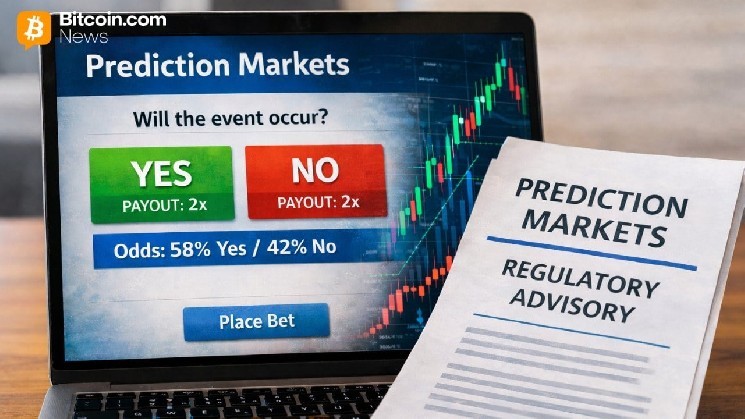
The move comes amid a surge in platforms like Polymarket and Kalshi, which have democratized betting on everything from political primaries to weather patterns. But with this popularity has risen concerns about integrity. The advisory targets “designated contract markets,” the regulated hubs where such contracts are listed. It reminds operators that event-based derivatives, often structured as swaps with binary payouts—paying out fully if an event happens or nothing if it doesn’t—must comply if their settlement hinges on financial or economic consequences. CFTC staff emphasized that while these markets are “exciting innovations,” exchanges can’t ignore their duties to maintain transparent, fair trading environments. This guidance signals a major expansion in oversight, transforming what has largely been an ad-hoc space into one tethered to rigorous standards. For investors, it means more certainty in a sector that’s seen wild swings, but for market makers, it’s a call to invest in cutting-edge monitoring tech to stay ahead of potential pitfalls.
Diving deeper, prediction markets operate like giant prediction pools, where traders buy and sell shares in outcomes tied to upcoming events. Imagine wagering on whether a company will meet quarterly earnings or if a celebrity will win an award; the contract pays based on verifiable results, turning speculation into a form of crowd-sourced forecasting. Unlike traditional futures on commodities like oil or gold, these are “event contracts” that blend elements of gambling with financial derivatives. The advisory clarifies they could fall under the Commodity Exchange Act’s swap definition, given their objective ties to real-life developments. This classification opens a Pandora’s box of regulatory scrutiny, ensuring that what was once fringe—years ago, prediction markets were niche tools for economists—now attracts the same eye as Wall Street’s heavyweight instruments. Journalists and analysts have noted how platforms have tapped into the zeitgeist, with events like the 2023 Oscars or the 2024 U.S. presidential race drawing massive volume. Yet, as interest spikes from cryptocurrencies to viral news cycles, regulators fear these markets could amplify misinformation or unfair advantages if left unchecked.
At the heart of the CFTC’s directive are stringent regulatory obligations that exchanges must embrace. Core principles from the Commodity Exchange Act demand active prevention of manipulation, with real-time surveillance systems to flag suspicious activity. Exchanges are urged to employ sophisticated algorithms and human oversight to monitor trades, prohibit fraud, and crack down on insider trading—much like policing a high-stakes casino for cheaters. If anomalies emerge, such as unusual spikes in trading from undisclosed sources, operators might need to procure granular trader-level data for audits or even impose disciplinary measures. This isn’t just bureaucratic jargon; it’s a roadmap for safeguarding investors from volatility that could mirror past market scandals, like the 2008 financial crisis sparked by opaque derivatives. Experts argue that stronger rules could enhance the predictive accuracy of these markets, which have famously outperformed polls in elections, turning them into valuable hedges for businesses from hedge funds to insurance firms.
CFTC Chairman Mike Selig underscored the significance of this pivot in a social media post on X, calling prediction markets “one of the most exciting innovations in financial markets.” He lamented the agency’s prior silence in a space now used by millions of Americans, stating, “This ends today.” Selig’s words echo a growing consensus that these tools democratize finance, allowing everyday people to hedge against uncertainties like job layoffs or election upheavals. Yet, the advisory’s release hints at broader implications: while welcoming growth, it could clarify how prediction markets intersect with adjacent sectors like sports betting or even blockchain-based platforms. Economists predict this might spur more institutional adoption, balancing risk for retail traders who flood sites during major events. For policymakers, it’s a win-win—fostering job creation in fintech without letting greed erode trust. As Selig implied, ignoring these markets was no longer feasible; now, with clear guidance, they stand poised to evolve into a cornerstone of modern investing, provided exchanges rise to the challenge.
However, not all prediction markets are created equal, and the advisory flags nuanced challenges, particularly with sports-related contracts. When outcomes hinge on individual actions—like a referee’s call in a game—manipulation risks skyrocket, turning matches into potential hotbeds for insider deals or coordinated betting schemes. To mitigate this, CFTC suggests extra safeguards, such as enhanced reporting or even partnering with leagues for transparency. This focus on sports, a $150 billion industry in the U.S., reflects real-world pressures, as seen in scandals involving fixed games. Looking ahead, the future of prediction markets appears bright yet fraught: with AI and data analytics refining predictions, they could predict pandemics or climate events with eerie accuracy. But regulatory hurdles might stifle smaller platforms, favoring giants like CME Group to dominate. As exchanges adapt, stakeholders from traders to lawmakers will watch closely. Ultimately, this CFTC advisory isn’t just policy—it’s a blueprint for harnessing innovation while curbing chaos, ensuring prediction markets contribute to a more informed society without descending into a speculative free-for-all.