





Federal Reserve Holds Steady: Powell’s Press Conference Unpacks Economic Uncertainty in a Volatile World
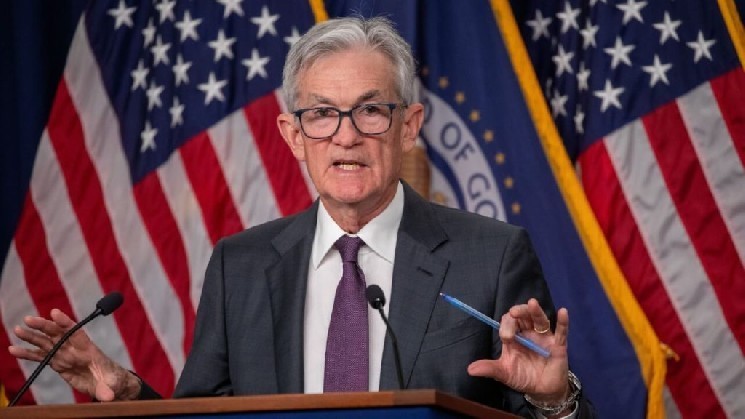
In the hushed halls of the Federal Reserve’s headquarters in Washington, D.C., the air was thick with anticipation as the Federal Open Market Committee (FOMC) convened for its March meeting. Economists, traders, and policymakers alike had been bracing for any shifts in the nation’s monetary policy, but the outcome was as expected: the Fed kept its policy interest rate firmly anchored at 3.5% to 3.75%. This decision marked a moment of pause in a year already rife with geopolitical tensions and economic headwinds, reflecting a careful balancing act amid mixed signals from the labor market and inflationary pressures. As Federal Reserve Chairman Jerome Powell stepped up to the podium for his post-meeting press conference—a tradition that has become a cornerstone of transparency in modern policy-making—the spotlight turned to his words. Live updates poured in from sources like Bitcoinsistemi.com, capturing the essence of a leader grappling with an unpredictable global landscape. Powell’s opening remarks framed the decision not as stagnation, but as a deliberate choice in response to the economy’s resilient growth and persistent inflationary challenges. The U.S. economy, he noted, is indeed expanding, supported by robust consumer spending that has shown remarkable fortitude even as the housing sector languished in weakness. Yet, inflation remains “somewhat high,” a stubborn foe that continues to test the Fed’s commitment to its dual mandates of stable prices and maximum employment. This backdrop sets the stage for Powell’s deeper dive into the complexities of monetary policy, where clarity often intersects with ambiguity.
Powell’s statements during the press conference painted a nuanced picture of the current economic environment, weaving together threads of progress and peril. He emphasized that the Fed’s monetary policy stance remains appropriate, providing crucial support toward achieving the central bank’s primary goals of price stability and full employment. “We will closely monitor all risks,” Powell declared, underscoring the institution’s vigilance in an era of escalating uncertainties. Consumer spending, he highlighted, has stayed resilient, acting as a bulwark against broader downturns, while activity in the housing sector has been notably weak—a contrast that highlights the uneven recovery across different sectors. Unemployment rates have hovered steady since last summer, adding another layer of stability amid fluctuating job markets. Looking ahead, Powell outlined projections for key inflation metrics: the PCE inflation for February is anticipated at 2.8%, with core PCE inflation slightly higher at 3.0%. High inflation, he explained, largely stems from soaring commodity prices, a trend that has fueled recent upward revisions in inflation expectations. Yet, Powell tempered optimism by noting it’s premature to fully gauge the extent and duration of economic impacts from developments abroad, particularly in the Middle East. This uncertainty looms large, potentially amplifying risks to the Fed’s objectives.
Delving deeper into policy implications, Powell articulated the Fed’s position as one of strategic flexibility rather than rigid planning. “Our current monetary policy stance is helping us achieve our objectives,” he asserted, reinforcing the belief that the institution sits in a favorable spot to navigate future interest rate adjustments. The impact of rising energy prices—exacerbated by global tensions—looms as a significant factor poised to elevate overall inflation further. However, Powell cautioned that it’s too early to assess the full scope of this influence, much like the broader economic ramifications of the Middle East conflict, which “remain unclear” at this juncture. He underscored that past interest rate cuts have played a pivotal role in stabilizing the labor market, yet future cuts will hinge on tangible progress in curbing inflation. The policy, Powell reiterated, is not predetermined; decisions on rate adjustments will be evaluated meeting by meeting, guided by incoming data rather than a fixed trajectory. This adaptive approach reflects the Fed’s wariness of complacency, especially regarding inflationary shocks that have historically hampered progress. Powell urged making headway in reducing commodity inflation this year as vital, stating that an improvement in these inflationary drivers would be a key indicator of success. Whether energy inflation can be overlooked depends on the broader containment of commodity price volatility, a challenge compounded by fluctuating oil prices and the macroeconomic scars from five years of inflation surpassing targets.
Economic forecasts unveiled during the conference added another dimension to Powell’s narrative, revealing shifts in how officials view the path ahead. While the median forecast for interest rates remained unchanged, there was a notable surge in the number of policymakers favoring fewer rate cuts—a shift that Powell attributed to evolving expectations. Inflation improvement is anticipated, though not at the rapid pace once hoped for, and Powell stressed that rate cuts would only materialize upon clear evidence of such progress. By mid-year, he suggested, tangible strides on tariffs and inflation should be evident, marking a critical checkpoint in the policy calendar. The dot plot—a visual summary of individual officials’ rate projections—now shows that four out of five favor scaling back the number of envisioned cuts, signaling a cautious pivot amid lingering uncertainties. Powell pointed to the upward revision in inflation forecasts as partly tied to oil shocks and unmet expectations, with portions of these shocks expected to bleed into core inflation metrics. Progress on tariff-driven inflation is believed achievable, but it may require more time, inadvertently influencing longer-term outlooks. Oil companies’ responses to rising prices—by ramping up production based on anticipated trends—further complicate the narrative, as prolonged high oil prices could dampen consumption without guarantees of sustained upward movement. The net effect, Powell warned, is downward pressure on spending and employment alongside upward inflation pushes, though strong U.S. energy production might mitigate some downside. In a candid aside, he even mused that skipping the Summary of Economic Projections (SEP) at this juncture would be timely, highlighting the robustness of current growth even as commodity prices and tariffs drive inflationary forces. The job creation threshold, he observed, appears unusually low, a puzzle that adds intrigue to labor dynamics.
The FOMC’s decision to maintain interest rates unaltered was solidified by an 11-1 vote, a near-unanimous stance that underscored consensus within the committee. Only Stephen Miran dissented, advocating for a quarter-point rate cut reflective of differing risk assessments. This marks the Fed’s second consecutive meeting without a rate change, a deliberate pause contrasting with earlier cycles of aggressive adjustments. Compared to the prior gathering, the economic outlook has grown more intricate, blending signals of labor market stability from January with discouraging February employment data that clouded initial optimism. This volatility underscores the delicate tightrope the Fed walks. Meanwhile, geopolitical events have injected fresh turbulence, particularly rising oil prices following the U.S.-Israeli attacks on Iran that erupted on February 28th. These developments pose a renewed inflationary threat, potentially reigniting pressures that the central bank has worked tirelessly to contain. Powell’s presser framed these events not as isolated incidents but as integral to a broader tapestry of risks that demand ongoing scrutiny.
As Powell concluded his remarks, the press conference left attendees and observers with a blend of reassurance and reservation about the road ahead. The Fed’s toolkit remains poised to address evolving threats, yet the complexity of global crises—from Middle Eastern conflicts to oil price volatility—serves as a sobering reminder of uncertainties that defy easy prediction. Powell’s emphasis on data-driven decisions echoes the institution’s commitment to evidence-based policy, prioritizing progress on inflation over hasty moves. Economic growth’s robustness stands in counterpoint to inflationary headwinds driven by commodities and tariffs, creating a narrative of cautious optimism. Prolonged oil shocks could strain consumption and employment, but the upside of domestic energy production offers a potential offset. In this fluid landscape, the Fed’s role as a stabilizing force grows ever more critical, navigating waters where insights from one meeting inform strategies for the next. For investors and citizens alike, Powell’s words resonate as a call to vigilance, urging awareness of the interplay between monetary levers and real-world tumult. As markets digest this latest chapter, the unfolding story of economic stewardship continues, shaped by leaders who must balance prudence with proactive adaptation.
*This is not investment advice.