




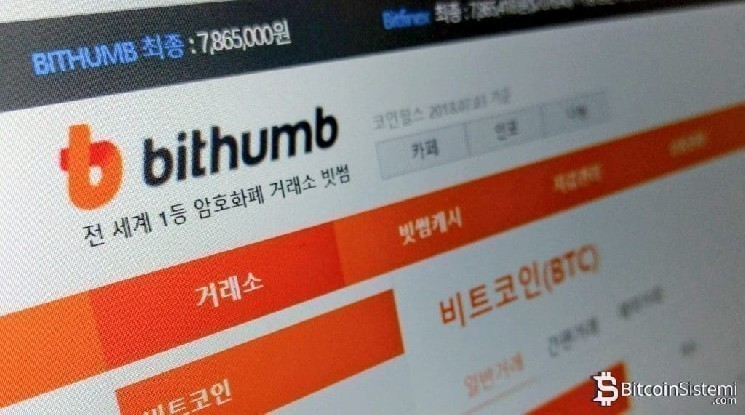
Bithumb Paves the Way for ETHGas Token Listing on KRW Market
In a move that underscores South Korea’s burgeoning role in the global cryptocurrency landscape, the prominent exchange Bithumb has unveiled plans to list the ETHGas token, symbolized as $GWEI, on its Korean won (KRW) trading platform. This announcement, released to the public, signals another step forward for innovative digital assets vying for a foothold in one of Asia’s most regulated yet dynamic markets. As a cryptocurrency exchange headquartered in Seoul, Bithumb has long positioned itself as a gateway for traders seeking exposure to emerging tokens, and the introduction of $GWEI is no exception. With deposits and withdrawals slated to commence just one hour after the official notice went live, the platform is prioritizing swift adoption to capitalize on investor enthusiasm. This decision aligns with Bithumb’s reputation for facilitating access to Ethereum-based projects, blending regulatory compliance with market accessibility in a country where crypto trading volumes often rival those of traditional financial hubs.
The rollout is meticulously scheduled, reflecting Bithumb’s commitment to precision and security in operations. Trading for the $GWEI token is set to kick off on February 26, 2026, at precisely 2:00 PMKorean standard time, ensuring that the market opens under controlled conditions. At launch, the reference price has been established at 41.48 won, a benchmark that positions the token within reach of retail traders while accounting for its nascent stage in the ecosystem. To facilitate secure transfers, the exchange requires 33 network confirmations for deposits, a standard protocol in blockchain systems designed to mitigate risks such as double-spending or erroneous transactions. By anchoring the listing to rigorous technical foundations, Bithumb aims to build trust among its user base, particularly in a region known for heightened scrutiny on financial innovations. This approach not only streamlines the initial setup but also sets the stage for smoother integration into the broader KRW market dynamics, where volatility can amplify overnight due to global sentiment swings.
Acknowledging the inherent risks of new listings, Bithumb has instituted a series of temporary safeguards to protect investors during the early hours. Exclusively supporting transfers via the Ethereum network, the exchange will reject any deposits or withdrawals attempted through alternative blockchain protocols, emphasizing reliability in an era of interoperable yet fragmented systems. In a nod to prudent market practices, buy orders will be temporarily halted for the first five minutes of trading, allowing for initial stabilization and preventing flash orders that could skew prices. Sell orders deviating significantly—either 10% below or 100% above the reference price—will also be disallowed during this brief period, curtailing potential panic-driven volatility. For the ensuing two hours, only limit orders will be permitted, encouraging strategic trading over impulsive market maneuvers. These measures, while conservative, resonate with historical precedents from other exchanges, where similar protocols have safeguarded fledgling assets from speculative chaos and ensured a fair playing field for all participants.
At its core, the ETHGas project represents a bold attempt to tackle one of Ethereum’s longstanding challenges: the unpredictability of gas fees. In the decentralized world of blockchain, where transactions power innovations from decentralized finance to non-fungible tokens, rising gas costs have often acted as a bottleneck, deterring widespread adoption. ETHGas addresses this by introducing a mechanism for liquidating block space on the Ethereum network, effectively converting volatile resources into more stable commodities. Users can leverage this platform to craft hedging strategies, shielding themselves from sudden fee spikes that have plagued the ecosystem during network congestion, such as during high-profile NFT drops or decentralized application launches. Moreover, the initiative seeks to optimize block values for validators, those critical nodes that process and verify transactions, encouraging a more efficient distribution of computational power. By fostering predictability in what was once a wildcard element of Ethereum, ETHGas not only enhances user experience but also promotes a healthier network ecosystem, potentially reducing energy waste associated with inefficient block submissions. This innovation draws parallels to broader trends in DeFi, where tools like futures contracts on gas prices have emerged to democratize fee management, empowering smaller actors in a landscape dominated by whales.
The $GWEI token itself plays a pivotal role within the ETHGas framework, serving as the lifeblood of its operational and governance functions. Beyond mere tradability on Bithumb, the token enables staking, allowing holders to lock in assets for network security and earn rewards, much like complementary offerings in other Ethereum-based protocols. Governance features empower token owners to vote on key decisions, from protocol upgrades to resource allocation, democratizing control in a field historically prone to centralized influences. This dual utility—blending financial incentives with participatory democracy—positions $GWEI as more than a speculative asset; it’s a cornerstone for long-term engagement in the Ethereum ethos. Investors eyeing this listing are encouraged to delve into comprehensive project documentation and risk disclosures, understanding that while $GWEI offers novel opportunities, it carries the typical perils of cryptographic ventures, including market fluctuations and regulatory uncertainties. Bithumb’s advisory underscores a responsible ethos, reminding traders that thorough due diligence is paramount in navigating this evolving space.
Reflecting on this listing, it’s worth noting the broader implications for South Korea’s crypto market, where exchanges like Bithumb have become bellwethers for regional trends. Cracking down on crypto-related crimes has been a hallmark of Korea’s approach, yet the country has simultaneously fostered innovation, with Seoul emerging as a hub for blockchain startups. The introduction of $GWEI could spur local investments, particularly as global attention turns to Ethereum’s upgrades, such as Ethereum 2.0’s shift toward proof-of-stake. Analysts observing similar integrations predict that tokens addressing infrastructure pain points, like gas fee volatility, may gain traction amid rising environmental concerns over blockchain energy consumption. However, this optimism is tempered by reminders of past market corrections, where overhyped assets led to significant losses. As Bithumb integrates $GWEI into its suite—joining stablecoins, meme tokens, and other altcoins—the exchange reinforces its stance as a bridge between traditional finance and the decentralized frontier. Investors are advised to approach with caution, recognizing that while advancements like ETHGas herald progress, the crypto world remains fraught with inherent risks. This development not only highlights Bithumb’s agility but also the relentless evolution of digital currencies, where solutions to yesterday’s problems pave the way for tomorrow’s breakthroughs. Importantly, this is not investment advice, and potential traders should consult financial professionals tailored to their circumstances. As the market adapts, events like this reaffirm crypto’s resilience and its potential to reshape financial paradigms, one token at a time. In sharing this story, we aim to illuminate the intersection of technology, regulation, and opportunity, inviting readers to stay informed as these narratives unfold. The crypto journey continues, with listings like $GWEI serving as milestones in an industry defined by rapid change and unyielding innovation. For those following closely, the coming weeks promise intriguing shifts, as Ethereum’s ecosystem expands and global players adapt to its rhythms. Whether $GWEI soars or stumbles, its debut on Bithumb offers a microcosm of the larger digital transformation underway, blending aspiration with the prudence of seasoned traders. Amidst regulatory headwinds and market euphoria, this listing embodies the delicate balance of progress and protection in the cryptocurrency arena, urging a mix of excitement and vigilance from all stakeholders involved. Looking ahead, projections for Ethereum’s gas fee stabilization—through initiatives like ETHGas—suggest a more accessible landscape for developers and users alike, potentially democratizing access to blockchain utilities that were once gated by exorbitant costs. Experts in the field, drawing from historical data on token adoptions, anticipate that such projects could alleviate bottlenecks in dApp operations, fostering a surge in decentralized applications that prioritize user-centric efficiency. Yet, skeptics point to the challenges of scalability, warning that without comprehensive network upgrades, even innovative solutions like block space liquidation may face limitations in peak periods. This juxtaposition of optimism and caution mirrors the crypto community’s ethos, where breakthroughs often coexist with hurdles. As Bithumb positions itself at the forefront, the exchange’s history of successful listings—culminating in millions in daily volume—underscores its role in legitimizing emerging assets. From a broader perspective, South Korea’s crypto narrative has evolved dramatically since its early days of wild speculation, now emphasizing sustainable growth amid international scrutiny. Regulatory bodies here have imposed stricter KYC requirements and trading caps, creating a more mature environment that rewards strategic investments over chaotic gambling. In this context, $GWEI’s integration could catalyze local participation, attracting funds from retirement accounts or institutional portfolios increasingly embracing digital assets. However, the global crypto market remains intertwined, with events like U.S. SEC rulings or European ETF approvals exerting ripple effects that could influence KRW pair movements. Traders accustomed to fiat conversions might find the 41.48 won reference price a gateway to diverse strategies, from arbitrage to long-term holdings, provided they navigate the initial restrictions wisely. Storytelling from past listings reveals patterns of initial hype followed by stabilization, a cycle that $GWEI might replicate as awareness spreads. Journalists covering these events often highlight the human element—the developers and investors betting on Ethereum’s future—transforming technical news into relatable tales of innovation. For instance, the genesis of ETHGas stems from real-world frustrations with unpredictable fees, much like how early internet users balked at dial-up speeds before broadband’s arrival. This parallels underscore cryptocurrencies’ trajectory toward mainstream utility, where projects like this bridge gaps between theoretical promise and practical application. As February 26 approaches, anticipation builds, with forums buzzing about potential price trajectories modulated by those temporary trading caps. Beyond Korea, international observers note Bithumb’s move as a signal for global exchanges, potentially inspiring similar listings on platforms like Binance or Coinbase, amplifying $GWEI’s visibility. Such interconnectedness illustrates the borderless nature of crypto, where a KRW debut could echo in New York or London trading rooms. Still, the emphasis on ETHEREUM network exclusivity serves as a prudent gatekeeper, ensuring compatibility and reducing fraud risks from cross-chain ambiguities. In journalistic terms, this story thrives on its layers: a specific announcement layered with ecosystem insights, regulatory nuances, and future projections. It invites reflection on how technologies like blockchain confront inefficiencies in traditional systems, offering scalable solutions in a world of finite resources. As word spreads, communities form around such launches, sharing analyses that blend data-driven forecasts with anecdotal experiences. For many, tokens like $GWEI represent not just financial instruments but milestones in a decentralized revolution, challenging oligopolistic fintech giants. The discourse evolves, with influencers dissecting staking mechanics and their impact on network democracy. Economically, the potential for optimized blocks could lower costs for smart contracts deploying complex algorithms, benefiting sectors like supply chain management or AI integration on blockchain. This ripple effect extends to environmental angles, where efficient gas usage mitigates the carbon footprint of proof-of-work legacies, aligning with modern sustainability mandates. Despite advances, challenges persist, including phishing schemes targeting new listings or liquidity imbalances during volatile phases. Bithumb’s countermeasures address these proactively, fostering a culture of informed engagement. In the tapestry of crypto journalism, pieces like this illuminate pathways, balancing excitement with sobriety. Readers glean not just facts but a deeper appreciation for the industry’s pulse, where innovations like ETHGas redefine possibilities. As markets open on that fateful February afternoon, the world watches, poised to witness history in the making. For stakeholders, it’s a juncture of opportunity and reflection, echoing themes of adaptation that define our digital age. This development, while centered on a single token, encapsulates larger shifts toward resilient, user-empowered networks. In closing, as with all ventures in this space, patience and education yield the richest experiences, ensuring that the crypto saga unfolds responsibly for generations to come. The landscape beckons, with listings like this as signposts guiding the way.