






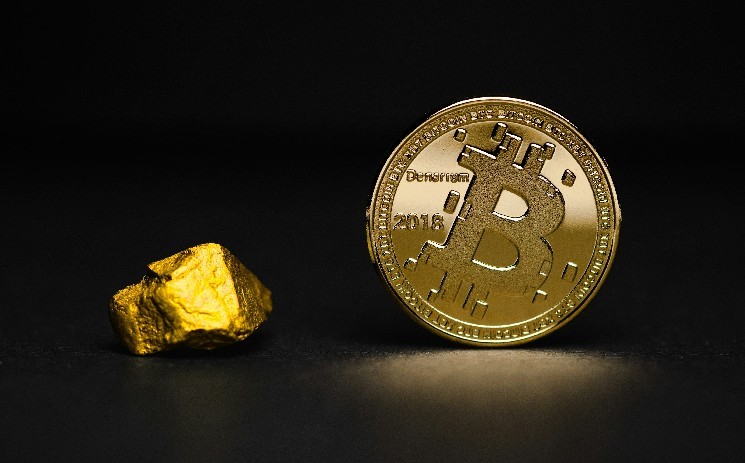
Bitcoin Holds Firm Near $89,000 as Dollar Rebound and Commodities Dominate Spotlight
In the ever-fluctuating world of cryptocurrency, Bitcoin has shown remarkable resilience lately, clinging close to the $89,000 mark amid a turbulent backdrop. On Thursday, this digital stalwart steadied itself around those lofty heights, largely insulated from the broader market churn despite a fresh surge in the U.S. dollar and unrelenting momentum in commodities. Just a day prior, the Federal Reserve’s decision to maintain interest rates unchanged injected a note of caution into global financial arenas, pushing crypto transactions somewhat to the periphery. Yet, Bitcoin’s ability to hover near record levels underscores its growing maturation as an asset class, even as macroeconomic forces continue to pull the strings.
Zooming in on the crypto landscape, trading data from CoinGecko reveals a subdued mood across the board during Asian hours. Bitcoin languished just shy of $89,100, marking only a nominal shift from the previous 24 hours. This stability emerged after an earlier dip below $88,000 earlier in the week that attracted bargain hunters, effectively injecting a breath of life into the market. Ethereum, the second-largest crypto by market cap, edged higher toward the $3,000 threshold, while altcoins like Solana, BNB, and even the meme-inspired Dogecoin registered slight upticks. These modest gains highlight a sector in recovery mode, where investors are cautiously holding positions rather than chasing aggressive plays. The lack of dramatic swings in Bitcoin and its peers stands in stark contrast to the volatility seen in equities and commodities, suggesting that crypto remains a niche pursuit for those willing to weather short-term gypsy dips. Analysts note that this patience is rewarded with long-term potential, as institutional adoption creeps higher, turning digital currencies into viable hedges against traditional uncertainties. Nevertheless, the tepid activity underscores a market still grappling with external pressures, from regulatory headaches in major nations to scalability issues that plague wider adoption.
The crypto world’s relative calm unfolded against a macro panorama marked by pronounced directional shifts, particularly in the dollar and commodities. The greenback recorded its sharpest single-day climb since November, fueled by remarks from U.S. Treasury Secretary Scott Bessent, who reaffirmed the administration’s commitment to a robust dollar policy. This stance directly countered whispers that policymakers might tolerate an extended decline, prompting a reevaluation of global currency balances. In tandem, precious metals like gold hovered near all-time highs after breaching $5,500 per ounce midweek, with silver and copper sustaining their elevated trajectories. These rallies drew impetus from prior dollar softness, escalating geopolitical frictions, and heightened demand for tangible assets amid fiscal apprehension. For instance, investors increasingly flock to gold as a time-honored store of value when government debt looms large, reflecting anxieties over budget deficits and political gridlock. This commodities boom has eclipsed crypto in the headlines, illustrating how traditional markets retain a magnetic pull amid uncertainty—think of it as the seasoned pro wrestler versus the up-and-coming innovator in the ring of finance. Commodities’ steadfast performance has nudged them toward spotlight dominance, leaving cryptocurrencies to play catch-up in an environment where every percentage point in dollar movement ripples outward.
Further dissecting the dollar’s ascent, it’s inextricably linked to the Federal Reserve’s recent maneuver, which left interest rates untouched after a trio of reductions toward year’s end. The central bank’s choice, while anticipated by many economists, carried a deliberate message: policymakers are resolute in waiting for irrefutable proof of inflationary cooling before contemplating further adjustments. This conservative approach placated currency traders after a spell of unrest exacerbated by fiscal debates and pressures on the Fed from various political quarters. By signaling patience in the face of equivocal economic signals, Jerome Powell and his colleagues managed to quell some of the volatility that had roiled markets in preceding days. Intriguingly, this decision echoes broader trends in monetary policy, where central banks worldwide are calibrating responses to persistent inflation echoes and emerging data points from employment reports to consumer spending. Investors, for their part, interpreted the steady handshake as an invitation to recalibrate expectations, steering focus toward underlying economic fundamentals rather than knee-jerk reactions. The outcome not only stabilized treasuries but also indirectly bolstered the dollar, setting a stage where risk assets like crypto must navigate narrower windows of opportunity.
Delving deeper into Bitcoin’s position, it’s increasingly evident that the cryptocurrency lags other assets touted as inflation shields. Often positioned as a defense against currency dilution, Bitcoin has underperformed relative to gold’s meteoric rise, trading about 30 percent beneath its October zenith while metals and equities flirt with fresh records. Analysts liken this to Bitcoin’s continued role as a high-risk, high-reward play—a high-beta asset sensitive to dollar fluctuations and liquidity ebbs rather than forging its own macroeconomic storyline. FxPro’s chief market analyst, Alex Kuptsikevich, underscored this in an email exchange, drawing parallels to historical correlations: “Along with an 8% weakening of the dollar from April to June last year, Bitcoin surged over 50%. Without delving into ancient history, it’s clear that a 4% dollar index decline in mere weeks sparked a 30% leap in silver and 15% in gold.” Kuptsikevich elaborated on Bitcoin’s technical stance, noting attempts to consolidate above $89,000 amid resistance reinforced by the 50-day moving average, signaling a bearish tilt despite defending support near $85,000. He added that oscillations well below recent peaks breed skepticism, reinforcing Bitcoin’s vulnerability to external vibes over intrinsic vigor. This trend played out vividly in the past week, as crypto failed to capitalize on dollar dips, underscoring its subordinate status in a market hierarchy dominated by commodities’ allure.
Looking ahead, with the Fed’s policy crossroads in the rearview mirror, market gazes pivot to megacap tech earnings season, where corporate reports could stir fresh volatility across equities, bonds, and currencies. This anticipation might fuel cross-asset contagion, potentially derailing Bitcoin’s consolidation at key junctures. Until then, Bitcoin seems poised in a holding pattern, maintaining vital thresholds but devoid of the thrust to reengage with the powerhouse trades reshaping global finance. In an era of interconnected markets, where a single Federal dictate or geopolitical murmur echoes globally, crypto’s fate hinges on adapting to these currents rather than defying them. Investors attuned to this dynamic may find solace in diversified portfolios, balancing Bitcoin’s high-octane potential with the solidity of commodities and stocks. As the weeks unfold, watching how these threads intertwine will reveal whether Bitcoin can transcend its reactive phase, carving out a spot as a true macroeconomic force. In journalism’s grand tradition, observing these shifts reminds us that finance, much like life, thrives on adaptation and foresight—qualities that could very well define crypto’s next chapter.