





Bitcoin Miners Navigate Rough Waters: Pivoting to AI and Yield Strategies Amid Profit Pressures
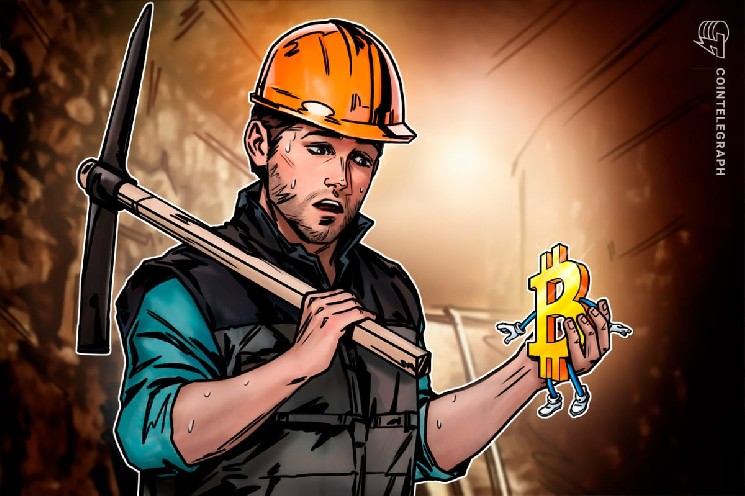
In the ever-evolving landscape of cryptocurrency, where boom and bust cycles often dictate fortunes, Bitcoin miners are facing unprecedented challenges. This market downturn has left many scrambling to find viable paths to profitability, as diminishing returns threaten the sustainability of their operations. Market maker Wintermute, a key player in digital asset trading, has thrown a spotlight on these issues in a recent blog post, suggesting that miners might need to rethink their business models dramatically—perhaps by leveraging their infrastructure for artificial intelligence hosting or activating their Bitcoin holdings for yield generation. It’s a narrative of adaptation in an industry where HODL (hold on for dear life) dogma once reigned supreme, but rigid operations now demand ingenuity to survive the next halving.
Wintermute’s analysis paints a vivid picture of miners who, over the years, have poured resources into sprawling power infrastructures nestled in low-cost energy hubs, perfectly tailored for the energy-intensive demands of mining cryptocurrency. Yet, as Bitcoin’s ($BTC) profitability wanes, this same setup positions them uniquely to capitalize on the surging demand for AI-related services. The company’s experts argue that miners are essentially “sitting on exactly what the AI industry needs most urgently and cannot easily replicate.” Imagine data centers humming with servers not crunching hashes for blocks, but training neural networks for machine learning models. This pivot isn’t just opportunistic; it’s a strategic realignment that could transform underused assets into revenue streams. Transitioning from the speculative highs of crypto mining to the practical applications of AI hosting represents a bridge to stability, but it’s one that requires upfront investment and a shift in skill sets.
That said, Wintermute doesn’t gloss over the hurdles inherent in this transition. They describe Bitcoin mining as a “structurally rigid business model,” one that’s ill-equipped for rapid pivots without significant capital outlay. While compelling on paper, reorienting operations toward AI hosting demands drastic changes—procuring specialized hardware, forming new partnerships, and navigating regulatory landscapes unfamiliar to miners. Real-world evidence underscores this complexity. Take MARA Holdings, a mining giant that recently filed with the SEC on March 3, signaling its intent to offload portions of its Bitcoin reserves to fund a dive into AI technology. Meanwhile, other publicly traded miners have liquidated over 15,000 Bitcoins since October, a testament to the growing pressure. This isn’t isolated; it’s part of a broader trend where traditional mining operations are clashing with innovation, forcing companies to choose between clinging to outdated methods and embracing the technological wave.
Beyond AI, Wintermute highlights another avenue that miners are yet to fully explore: their substantial Bitcoin holdings, which collectively represent nearly 1% of the total $BTC supply. Dubbed a “legacy of the HODL era,” these reserves have long been seen as merely passive assets—held in the hope of future appreciation. But the firm urges miners to awaken this dormant capital through proactive treasury management, a toolkit that remains largely untapped in the space. By treating Bitcoin not just as a store of value but as a “working asset,” miners can unlock efficiencies and edge out competitors. This approach echoes the strategies of established financial institutions, where asset allocation drives growth, and it’s a paradigm shift that could buffer against volatility.
Delving deeper into yield generation, Wintermute points out that traditional avenues in crypto—such as staking yields or decentralized finance (DeFi) protocols—have their limits, especially for non-proof-of-stake entities like Bitcoin miners. Instead, they advocate for sophisticated management techniques, including monetizing market exposures through derivatives like covered calls and cash-secured puts. These options allow miners to generate income from their holdings without abandoning them outright, hedging risks while capitalizing on price fluctuations. On the passive side, deploying Bitcoin into lending protocols to earn interest offers a straightforward route to steady returns. “We believe active balance sheet management is the most underutilized lever available to miners and one that deserves far greater strategic attention,” Wintermute emphasizes in their post. “The miners who treat their $BTC holdings as a working asset rather than a passive reserve will carry a structural edge into the next halving.” It’s a call to action that resonates in an industry where complacency could mean extinction.
Looking ahead, the market dynamics underscore why such adaptations are crucial. For the first time in a four-year cycle, Bitcoin has faltered in delivering the double-price returns typically required to cushion halving-induced revenue drops. Gross margins, once a beacon of profitability, have plateaued at levels previously associated with bear market lows, exacerbated by skyrocketing energy costs that relentlessly erode profitability. The transaction fee market, episodic and unreliable, hasn’t stepped in to fill the void as a stable alternative revenue source. Yet, Wintermute views this squeeze as a “healthy shakeup,” aligning with Bitcoin’s innate design to weed out inefficiencies and foster resilience. As the industry recalibrates, miners who innovate—whether through AI ventures or yield strategies—stand poised to emerge stronger, proving that in the volatile world of crypto, adaptability might just be the scarcest asset of all. Related developments, like mining companies deepening ties to high-performance computing for AI, signal that this evolution is already underway, with players like MARA potentially selling Bitcoin to fuel their transition. And as quantum threats loom—potentially endangering all 21 million Bitcoins—strategic foresight becomes paramount, blending the past’s lessons with innovative solutions for the future.