






Navigating Volatile Tidal Waves: Market Insights from Fidelity’s Jurrien Timmer
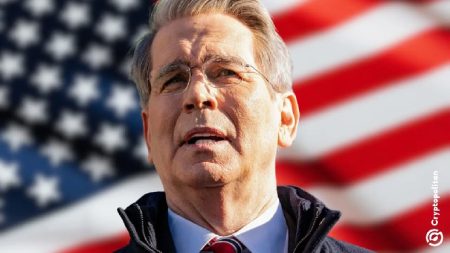
In the ever-shifting theater of global finance, where headlines can pivot from ominous to absurd in a matter of days, Jurrien Timmer, Director of Global Macro at Fidelity Investments, offers a grounded perspective amid the turmoil. He likens the current market environment to “another wild ride,” a phrase that captures the bewildering barrage of news from geopolitical flare-ups to sudden price swings. Yet, beneath the surface chaos, Timmer maintains a discerning optimism, asserting that these storms are not as treacherous as they seem. In an exclusive interview with CoinDesk, he elaborated on how markets are adapting to ongoing crises, particularly the escalating tensions with Iran. Far from succumbing to despair, Timmer argues that investors can find respite in historical precedents and subtle indicators that signal resilience rather than collapse. Drawing on decades of macroeconomic analysis, he paints a picture of a financial world that’s learning to brace against shocks, much like a seasoned sailor navigating unpredictable seas. This doesn’t mean ignoring the dangers—far from it—but rather recognizing them as part of a larger, cyclical dance where opportunity often lurks in the shadows of uncertainty.
Central to Timmer’s analysis is the stark reality of oil prices, which have rocketed past the $100-per-barrel mark, fueling widespread apprehension about global energy dynamics. However, he points to the “backwardation” in the futures curve as a telling sign: near-term contracts command premium prices, while those further out are trading about $40 lower. This phenomenon, Timmer explains, suggests the market perceives the current disruptions—chiefly linked to Iran and the critical choke point of the Strait of Hormuz—as temporary bottlenecks rather than the harbinger of a drawn-out catastrophe. It’s a subtle reassurance in a world that’s grown accustomed to overreacting to short-term supply hiccups. Perhaps ironically, oil’s dramatic ascent and recent retreat in response to U.S. President Donald Trump’s ceasefire announcement with Iran underscore this viewpoint. Prices plunged over 17% in a single day, with the West Texas Intermediate benchmark rebounding but not erasing the sense of reprieve. Elsewhere, the S&P 500, having dipped to a roughly 9% loss at its nadir, has clawed back to a mere 1% drawdown, demonstrating that market reflexes are sharpening. Credit spreads, those barometers of systemic strain, remain subdued, indicating that while nerves are frayed, the foundational pillars of finance hold firm. Even defensive stalwarts like gold and U.S. Treasuries have exhibited unusual synchronicity, moving in tandem as countries grapple with liquidity needs amid energy transport constraints. Timmer attributes this anomaly to global capital flows, where nations reliant on Strait of Hormuz shipping opt to liquidate prized assets to bolster their positions, blending financial dynamics in ways that defy traditional correlations.
Blending into this intricate market mosaic is the enigmatic realm of cryptocurrencies, where Bitcoin emerges as a wildcard with deepening ties to traditional safe havens like gold. Timmer observes that Bitcoin has increasingly mirrored gold’s volatility-dampening role, while gold, in turn, has occasionally echoed the digital asset’s speculative fervor. This interplay hit a crescendo last October, when Bitcoin’s meteoric rise to $126,000 prompted a swift exodus of fast-moving capital into gold ETFs, visible in tangible fund flows. Today, with Bitcoin down 50-60% from its heights, Timmer notes a marked depletion of so-called “paper hands”—novice investors quick to bail—leaving the market more hardened. Meanwhile, gold, after its expressive surge, looks primed for a potential downturn. Despite these headwinds, Timmer retains bullish undertones for both. Bitcoin, in particular, intrigues him technically, with the $65,000 threshold forming a sturdy support level that could underpin a recovery base. He cautions, though, that an external catalyst—like regulatory clarity or broader economic shifts—will be essential to propel it upward. At press time, the world’s premier cryptocurrency hovered in the low $70,000s, a testament to its enduring allure and fragility in uncertain times.
Turning to equities, Timmer contends that the stock market is effectively “priced for success,” weathering geopolitical whirlwinds with only modest, single-digit declines. This fortitude, he insists, stems from robust corporate earnings that anchor valuations against perturbation. It’s worth noting that the pre-Iran backdrop was already favorable: the U.S. Supreme Court’s tariff reductions had ushered in a more hospitable investment climate, and speculative fears of an AI-fueled bubble had fizzled. To Timmer, the persistent skepticism toward AI and tech giants’ valuations is a healthy antidote—a far cry from the unblinking euphoria of true mania, where questions go unanswered. Such scrutiny, he believes, has inoculated the market from reckless excesses, fostering a environment where informed bets outweigh blind faith. This measured approach is evolving, shaped by lessons from past shocks, like last year’s 21% S&P 500 tumble amid tariff disputes, which proved to be another false alarm. Investors now adopt a “show me” mentality, sifting evidence rather than panicking at every shadow, eroding the sway of weak-handed traders.
Yet, Timmer doesn’t sugarcoat the perils; the Middle East’s instability harbors a spectrum of dark possibilities. In a grim worst-case unfolding, Iran’s aggression could extend to Gulf energy infrastructure, disrupting the 20% of global oil routed through Hormuz and triggering stagflation—a toxic mix of soaring inflation and sputtering growth that could cripple economies. This fluidity demands vigilance, Timmer urges, highlighting concentration risk in tech heavyweights like the “Magnificent Seven” and the creeping threat of interest rate hikes. The 10-year Treasury yield nearing 4.5%, with whispers of 5%, sends a clear signal: monetary tightening persists despite geopolitical distractions. Rather than retreat, Timmer advocates managing these risks proactively, reminding us that volatility isn’t an enemy but a feature of the landscape, one that separates the reactive from the prepared.
Ultimately, Timmer frames moments of turbulence as double-edged swords—laden with peril but ripe with promise for the astute. He champions transforming crises into chances, positioning investors as liquidity givers in a marketplace of fear. Those who flee in haste become casualties of the downturn, mere price takers in a buyer’s market. By contrast, disciplined long-haulers can seize the reins as price makers, rebalancing portfolios when sentiment sours. At Fidelity, this ethos translates to embracing volatility, injecting capital where others withdraw, and capitalizing on dislocations. Geopolitical uncertainty is inevitable, he acknowledges, but cowering on the sidelines invites its own regrets. A diversified strategy, paired with the nerve to act amid stress, emerges as the pragmatic blueprint. In Timmer’s eyes, markets are not plazas of despair but arenas of adaptation, where today’s wild rides pave paths for tomorrow’s reckonings, urging us all to navigate with eyes wide open.