

Trump’s Fed Chairman Selection: Market Predictions Point to Hassett and Warsh as Frontrunners
Prediction Markets Signal January Announcement as Powell’s Term Nears End
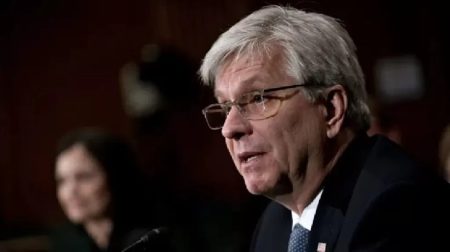
In the high-stakes world of economic policy, attention is increasingly focusing on who will next lead America’s central bank. As Federal Reserve Chairman Jerome Powell’s term approaches its conclusion in May, prediction markets are providing early signals about potential successors under President Donald Trump’s second administration. These forecast platforms, which aggregate collective insights from traders willing to stake money on outcomes, are coalescing around several prominent candidates, with former economic advisers Kevin Hassett and Kevin Warsh emerging as the clear frontrunners.
According to pricing data from various prediction markets, Trump is expected to announce his preferred candidate for Federal Reserve Chairman in January, giving markets and economic stakeholders several months to adjust to the coming transition. This timeline would represent a typical approach to central bank leadership changes, providing sufficient runway for confirmation proceedings and an orderly handover of responsibilities. The early announcement would also align with Trump’s stated intentions to move quickly on key appointments in his second term, particularly for positions he has repeatedly highlighted as critical to his economic agenda.
Market Odds Favor Two Kevins in Fed Chair Race
The prediction markets have generated clear probability distributions regarding potential nominees, with two candidates commanding the lion’s share of investor confidence. Kevin Hassett, who previously served as Chairman of the Council of Economic Advisers during Trump’s first term, currently leads the field with a 39% probability. His familiarity with the administration’s economic thinking and established relationship with the president likely contribute to his frontrunner status. Following closely is Kevin Warsh at 31%, a former Federal Reserve Governor who was previously considered for the chairmanship in 2017 before Trump ultimately selected Powell. Warsh’s experience within the Federal Reserve System and his reputation as a monetary policy hawk align with Trump’s recent criticisms of the current Fed leadership.
The markets assign significantly lower probabilities to other potential nominees. Christopher Waller, a current member of the Federal Reserve Board of Governors appointed during Trump’s first term, stands at 14%. BlackRock’s Chief Investment Officer for Fixed Income, Rick Rieder, shows at just 4%, while three additional candidates – Scott Bessent of Key Square Group, current Fed Governor Michelle Bowman, and gold standard advocate Judy Shelton – each register at approximately 2%. These market-derived probabilities reflect collective assessments about each candidate’s alignment with Trump’s economic priorities, professional qualifications, and likelihood of securing Senate confirmation in what will likely be a narrowly divided chamber.
Trump’s Intensifying Criticism of Powell Signals Imminent Leadership Change
President Trump has recently amplified his criticism of Jerome Powell, the man he nominated to the Federal Reserve chairmanship in 2017 but soon came to view as insufficiently aligned with his economic vision. In recent statements, Trump has revived rhetoric from his first term, suggesting that the possibility of removing Powell before his term concludes remains “on the table.” While legal experts generally agree the president’s authority to dismiss a Fed chair is highly constrained, the intensifying criticism signals Trump’s determination to install leadership at the central bank that more closely shares his economic philosophy, particularly regarding monetary policy and interest rates.
The relationship between Trump and Powell has been characterized by tension since 2018, when the Fed began raising interest rates to combat inflationary pressures. Trump has consistently criticized what he perceives as excessively tight monetary policy, arguing that higher interest rates have unnecessarily constrained economic growth. This fundamental disagreement about the appropriate balance between controlling inflation and stimulating economic expansion appears poised to result in new leadership at the Federal Reserve in 2025, with candidates more sympathetic to Trump’s growth-focused approach receiving the strongest consideration, according to prediction market participants.
January Rate Decision Expectations Reveal Market Confidence in Fed’s Current Path
Beyond speculating on personnel changes, prediction markets are also pricing in expectations for the Federal Reserve’s upcoming monetary policy decisions. For the January Federal Open Market Committee meeting, these markets overwhelmingly anticipate policy continuity, with an 88% probability assigned to the Fed maintaining current interest rates. Only 11% of market participants expect a modest quarter-point (25 basis point) reduction, while a mere 1% anticipate a more aggressive cut of 50 basis points or more. These projections suggest market confidence that the current Federal Reserve leadership will maintain its cautious approach to monetary easing, prioritizing inflation containment even as economic indicators show some signs of cooling.
This strong market consensus regarding the January rate decision presents an interesting counterpoint to Trump’s vocal criticism of current monetary policy. While the president-elect has advocated for more aggressive interest rate reductions, market participants appear to believe the existing Federal Reserve leadership will maintain its independent course through the remainder of Powell’s chairmanship. This dichotomy highlights the institutional independence of the Federal Reserve and the markets’ assessment that significant monetary policy shifts will likely await new leadership rather than emerge in the final months of the current chair’s term.
Potential Economic Implications of Fed Leadership Transition
The selection of a new Federal Reserve Chair represents one of the most consequential economic decisions of any presidency, with implications extending far beyond financial markets to impact employment, economic growth, and inflation across the broader economy. Both Hassett and Warsh, the current market favorites, would likely represent shifts in monetary philosophy compared to Powell’s approach. Hassett, known primarily as a fiscal policy expert, would bring a fresh perspective to an institution traditionally led by monetary specialists. His academic background and previous advisory role suggest he might favor policies supporting robust economic growth, potentially tolerating moderately higher inflation to achieve employment gains.
Warsh, with his Federal Reserve experience and reputation for hawkish views on inflation, might pursue a different balance—potentially favoring price stability while remaining sensitive to Trump’s growth priorities. His previous criticism of the Fed’s quantitative easing programs suggests he might accelerate the unwinding of the central bank’s balance sheet while potentially supporting regulatory reforms favored by the financial sector. Regardless of who ultimately receives the nomination, market participants, economic stakeholders, and everyday Americans will be watching closely as the leadership transition approaches. The new chair will inherit an economy at a crucial juncture, navigating the complex balance between maintaining growth momentum and ensuring long-term economic stability—a challenge that will define the financial landscape for years to come.
This article represents analysis of market predictions and political developments, not investment advice.