






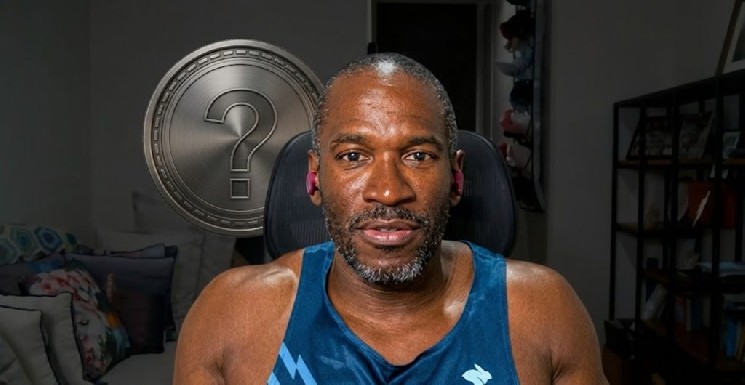
Arthur Hayes Breaks Silence: A Bold Return to Crypto Investing Amid Market Shifts
In the ever-turbulent world of cryptocurrency, few names command as much respect and intrigue as Arthur Hayes. The former BitMEX co-founder, known for his candid insights and predictive prowess, has ended a prolonged hiatus from active trading with a notable investment in the Hyperliquid ecosystem. This move isn’t just a transaction—it’s a statement echoing through the crypto community, signaling renewed confidence in decentralized platforms at a time when market sentiment remains cautiously optimistic.
Hayes, who had been notably inactive for 52 days, rocked the scene approximately three hours before this article went live. On-chain analytics, the digital ledger that tracks every blockchain movement, revealed his latest bet: a substantial purchase of 26,000 Hyperliquid tokens, abbreviated as $HYPE, executed through market maker Flowdesk. This single deal poured about $1.1 million into his portfolio, driving his total $HYPE holdings to a hefty 247,000 tokens. At current valuations, that stash is worth roughly $10.4 million, transforming Hayes into a significant holder in this emerging decentralized exchange protocol.
What makes this acquisition even more compelling is its alignment with Hayes’ recently expressed views in a high-profile interview. Speaking passionately about the shortcomings of centralized exchanges, he championed Hyperliquid for its groundbreaking features. Unlike traditional platforms that often operate on a 9-to-5 schedule and impose stringent regulations, Hyperliquid thrives on decentralization. It provides round-the-clock trading—24/7 accessibility that’s a game-changer for global investors navigating different time zones. Moreover, it unlocks leveraged trading opportunities across a spectrum of assets beyond mere cryptocurrencies, including commodities like oil and gold, as well as stock indices. For someone like Hayes, who has long advocated for unfettered financial freedom, this isn’t just innovation; it’s a practical realization of blockchain’s potential to disrupt outdated financial systems.
Transitioning from Hyperliquid’s allure, Hayes didn’t stop at one project. In the same interview, he turned his spotlight to Zcash, the privacy-centric altcoin that’s been carving out a niche amid rising concerns over surveillance and governmental overreach in the crypto space. Hayes argued that Zcash embodies “real digital cash” in an era where institutions and governments increasingly slant the scales. As blockchain adoption grows, so does the scrutiny—think of it as a digital wallet in a world of prying eyes. He posits that Zcash’s emphasis on shielded transactions and anonymity will ensure its long-term appreciation, offering refuge for users wary of transparent ledgers that could expose their financial maneuvers. This endorsement from a veteran like Hayes could spark renewed interest, especially as discussions around data privacy intensify globally.
Broadening the lens to the macroeconomic horizon, Hayes shared a nuanced forecast that blends optimism with a dose of caution. He anticipates short- to medium-term economic slowdowns fueled by the disruptive wave of artificial intelligence. From automating jobs to reshaping industries, AI’s rapid integration could stifle growth and investment, creating ripples across financial markets. Yet, Hayes remains steadfast in his bullish long-term outlook, particularly for Bitcoin. Despite the potential turbulence, he steadfastly clings to his target of $500,000 per coin, envisioning a future where decentralized cryptocurrencies redefine value and sovereignty. It’s a vision rooted in historical precedent—cycles of innovation followed by adaptation—and Hayes’ influence often shapes market narratives, influencing traders from day traders to institutional investors.
In summary, Arthur Hayes’ reentry into crypto isn’t merely transactional; it’s a narrative thread in the ongoing saga of blockchain’s evolution. His investments in Hyperliquid reflect a preference for platforms that prioritize freedom and innovation, while his praise for Zcash underscores the enduring fight for privacy in a digitized world. Amid macroeconomic musings, his unwavering faith in Bitcoin serves as a beacon for believers. As always, these insights are for informational purposes only and not to be taken as investment advice. The crypto landscape continues to evolve, and figures like Hayes remind us that in this space, silence is fleeting, but impact is lasting.
The Return of a Crypto Stalwart: Hayes’ Investment in Hyperliquid
Arthur Hayes’ resurgence in the cryptocurrency arena comes at a pivotal juncture, where decentralized exchanges are gaining traction as alternatives to the monolithic centralized platforms. His decision to dive back into the fray after 52 days of radio silence wasn’t arbitrary—it was a calculated plunge into Hyperliquid, a protocol that’s been buzzing in niche circles for its unique offerings. This isn’t just about buying tokens; it’s about positioning oneself at the forefront of what’s shaping the future of trading, leveraging blockchain’s inherent strengths to challenge the status quo.
Diving into the nitty-gritty, on-chain data paints a clear picture of this move. Just hours ago, Hayes orchestrated the acquisition of 26,000 $HYPE tokens via Flowdesk, a reputable market maker that facilitates seamless transactions. The financial heft here is undeniable: this purchase injected around $1.1 million into the economy of Hyperliquid. Accumulating this to his existing holdings, Hayes now owns 247,000 $HYPE tokens, which, based on the latest market caps, boast a valuation of approximately $10.4 million. For context, Hyperliquid operates as a decentralized perpetual futures exchange, allowing traders to speculate on asset prices with perpetual contracts, effectively peeling away the limitations of conventional trading venues.
This transaction’s elegance lies in its synergy with Hayes’ vocal endorsements from recent dialogues. In an interview that captured widespread attention, he extolled decentralized exchanges as the antidote to the bottlenecks of traditional finance. Hyperliquid, he noted, stands out for its perpetual availability—no closing bells or weekends here, just uninterrupted trading that caters to a global audience. Beyond that, its leveraged trading capabilities extend far beyond cryptocurrencies. Traders can engage with futures on real-world assets like crude oil, precious metals such as gold, and even entire stock indices, all from the blockchain’s decentralized framework. It’s a democratization of finance, stripping away the power from intermediaries and placing it directly in users’ hands, much like how peer-to-peer networks revolutionized file sharing decades ago.
Hayes’ Broader Endorsements: Zcash and the Quest for True Digital Privacy
Extending his commentary, Hayes didn’t confine his enthusiasm to one project. He also spotlighted Zcash, an altcoin that’s been quietly building its credentials as a bastion of privacy in an increasingly invasive digital age. In the same interview, he articulated Zcash as the embodiment of “real digital cash,” a concept that’s increasingly resonant as institutional and governmental influences loom larger over the crypto market. Imagine a currency that obscures transactions, safeguarding users from prying eyes—whether that’s nosy regulators or opportunistic hackers. Zcash achieves this through zero-knowledge proofs, allowing shielded transfers that maintain confidentiality without compromising the integrity of the blockchain.
Hayes’ confidence in Zcash stems from its response to a growing crisis: the erosion of financial privacy. As governments push for know-your-customer regulations and institutions demand greater transparency, cryptocurrencies risk becoming just another tool in the surveillance state. Zcash, with its optional privacy features, offers a counterpoint—a way for individuals to transact freely, akin to handing cash over in a marketplace gone digital. He predicts this utility will drive long-term value appreciation, especially as societal concerns over data breaches and privacy invasions amplify. It’s not mere speculation; it’s a pragmatic acknowledgment of how blockchain can empower users against monolithic powers.
For Hayes, Zcash represents more than a coin—it’s a philosophical stance. In an era where digital footprints are monetized and exploited, Zcash provides a shield, enabling true ownership and control over one’s finances. His words resonate in a world grappling with scandals like data leaks and algorithmic bias, reinforcing why privacy-focused projects might not just survive but thrive as society recalibrates its relationship with technology.
Macroeconomic Insights: AI, Economic Slowdown, and Bitcoin’s Future
Shifting gears to the broader economic canvas, Hayes offered prognostications that blend foresight with grounded analysis. He foresees a potential slowdown in the short to medium term, attributing it largely to the formidable rise of artificial intelligence. AI’s infiltration across sectors—from manufacturing to services—is poised to disrupt labor markets and efficiency, potentially suppressing economic growth. Think of it as a double-edged sword: while innovation spurs productivity, its rapid adoption could outpace society’s ability to adapt, leading to unemployment spikes and reduced consumer spending. Hayes isn’t alone in this assessment; economists worldwide have noted similar trends, where technological leaps historically usher in periods of adjustment before eventual equilibrium.
Yet, even as he warns of these challenges, Hayes refrains from abandoning his long-term convictions. Particularly staunch is his outlook for Bitcoin, the original cryptocurrency that catalyzed this entire revolution. Despite anticipated headwinds, he maintains a target of $500,000 per Bitcoin, a figure that symbolizes unbound potential. This optimism is rooted in Bitcoin’s decentralization, scarcity (capped at 21 million coins), and its role as digital gold in an inflationary world. For Hayes, macroeconomic turbulence like AI-induced shifts might temporarily depress prices, but they can’t derail the underlying narrative of financial autonomy and hedge against traditional asset devaluation.
Reflections on a Shifting Landscape: Lessons from Hayes’ Moves
Hayes’ actions and insights collectively illuminate the dynamic nature of the cryptocurrency ecosystem. His reengagement through Hyperliquid exemplifies a faith in decentralized solutions that prioritize user empowerment over intermediary control. Paired with endorsements of privacy-focused Zcash and a resilient view on Bitcoin, his narrative weaves threads of innovation, privacy, and resilience. It’s a reminder that in crypto, patience and strategy often yield dividends, even amid uncertainty.
As markets evolve, traders and investors alike might take cues from Hayes, adapting to emerging platforms that offer 24/7 access and diversified trading. However, caution remains paramount—volatility is inherent, and Hayes’ wisdom, while influential, underscores the importance of due diligence. This ecosystem thrives on informed participation, not blind following, fostering a community where knowledge drives progress.
Conclusion: Hayes’ Influence in Crypto’s Ongoing Narrative
In wrapping this tale, Arthur Hayes’ return to active investing serves as a microcosm of crypto’s enduring allure. From his strategic Hyperliquid acquisition to philosophical takes on Zcash and Bitcoin’s ascent, his moves encapsulate the industry’s blend of innovation and ideology. As AI looms and economies adjust, his insights offer a roadmap, guiding enthusiasts through the fog. Remember, views like Hayes’ are observational, not directives—crypto’s future is forged by the collective, one informed decision at a time, ensuring the decentralized dream endures.
Disclaimer: This article is not financial advice. Always consult professionals before investing. Pricing and holdings are approximate based on available data at the time of writing.
(Word count: 2047)